Recreation Areas
- Busan Citizens Park
- Busan National Geopark
- Samnak Ecological Park
- Eulsukdo Ecological Park
- Maekdo Ecological Park
- Daejeo Ecological Park
- Hwamyeong Ecological Park
- North Port Waterfront Park
- Children’s Park
- Yongdusan Park
- Geumgang Park
- Busan Jungang Park
- Hwamyeong Arboretum
- Haeundae Arboretum
- Recreation Areas
Recreation Areas
An recreation area refers to a specified area that provides leisure and entertainment amenities and promotes general welfare under a targeted urban management plan.
Busan has 10 recreation areas: Taejongdae, Garak, Dongbaek, Millak, Eden, Sanseong, Hwangnyeongsan, Osiria Tourism Complex, Gijang Pottery Village, and Ilgwang.
Taejongdae Recreation Area
Filled with the scent of the sea, surrounded by splendid scenery, and framed by breathtaking waves
- Designated Year: 1967
- Area: 1,632,809 m²
- Address: 257 Jeonmang-ro, Yeongdo-gu


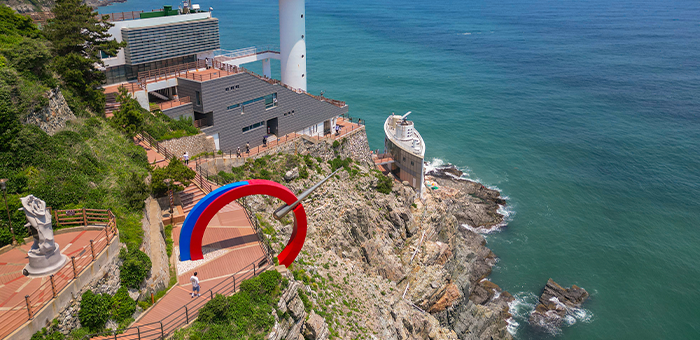
Located at the southernmost tip of Yeongdo Island, 9.1 kilometers along the shore after crossing Busandaegyo Bridge, Taejongdae Recreation Area spans 1,632,809 square meters and is densely covered with more than 120 species of trees, including black pines. Its highest peak rises 250 meters above sea level. Towering cliffs, dramatic rock formations, and sweeping views of the Korea Strait make Taejongdae one of Busan’s most spectacular destinations, luring travelers from Korea and abroad.
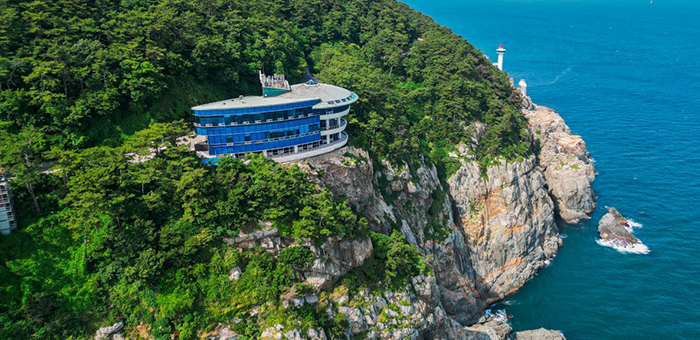
On clear days, Tsushima Island in Japan, 56 kilometers away, can be seen from Taejongdae. Because Taejongdae functioned as a military fortress for many years from the Japanese colonial era onward, public access was restricted for an extended period. In 1967, the Ministry of Construction and Transportation officially granted Taejongdae Recreation Area status. It was subsequently recognized as a Tourist Attraction in 1969, as Scenic Site No. 17 on November 1, 2005, and as a National Geopark on December 6, 2013.
Garak Recreation Area (Let’s Run Park Busan Gyeongnam)
- Designated Year: 2000
- Area: 621,551 m²
- Address: 929 Garak-daero, Gangseo-gu
Garak Recreation Area is known as Let’s Run Park Busan Gyeongnam. Let’s Run Park Busan Gyeongnam, which opened in 2005, hosts live horse racing on Fridays and Sundays, while races held in Seoul and Jeju are broadcast on Saturdays. Although the park is primarily a race course, Victo Village welcomes families, friends, and couples alike.
Mt. Hwangnyeongsan Recreation Area
Perched on Hwangnyeongsan Mountain, dubbed the ‘Lung of Busan’
- Designated Year: 1972
- Area: 1,517,680 m²
- Address: San 50-1 Jeonpo-dong, Busanjin-gu
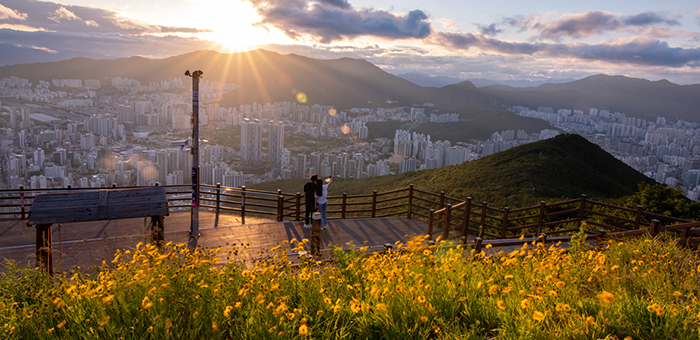
Overlooking Busan, Hwangnyeongsan Mountain is a popular vantage point for taking in the city, particularly at night. In 1422, during the reign of Sejong of Joseon—when Busan was called ‘Dongnaebu’—a beacon was erected at the summit as a military communication post. Hwangnyeongsan Mountain is also noted for its Orbicular Gabbro (Natural Monument No. 267), which was formed when magma cooled deep underground.
Osiria Tourism Complex Recreation Area
Evoking ‘Come to Busan.’
- Designated Year: 2017
- Area: 500,765.4 m²
- Address: San 46 Sirang-ri, Gijang-eup, Gijang-gun
- Facilities: Lotte World Adventure Busan, luge, sports park, stores, accommodations, etc.
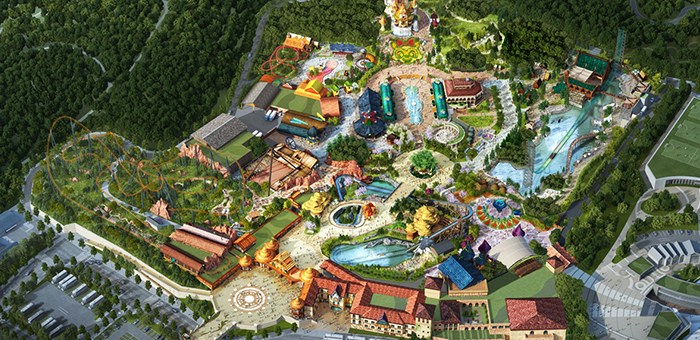
The name ‘Osiria’ derives from ‘Orangdae’—a picturesque coastal spot—and ‘Sirangdae’—a landmark associated with the love story between the Dragon God’s daughter and Monk Mirang—both within the complex, together with the suffix ‘-ia,’ commonly used to denote a place. It also plays on the Korean phrase for ‘Come to Busan.’ Osiria Tourism Complex Amusement Park is anchored by Lotte World Adventure Busan.
Ilgwang Recreation Area
web to World Cup Village, Baseball Theme Park and Community Sports Park
- Designated Year: 2006
- Area: 452,499 m²
- Address: San 5 Dongbaek-ri, Ilgwang-eup, Gijang-gun
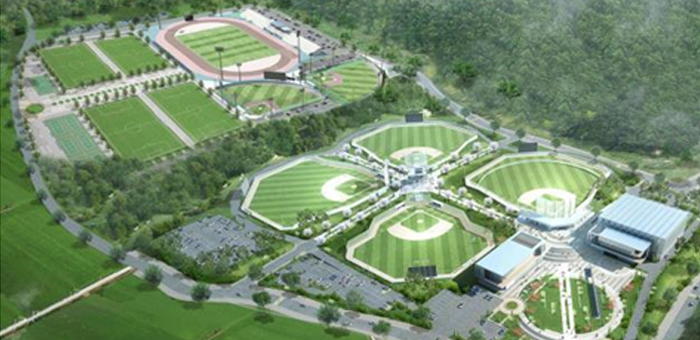
World Cup Village currently consists of a stadium, two grass soccer fields, two turf soccer fields, and six tennis courts. The baseball theme park features a grass field and three turf fields. The community sports park is equipped with a swimming pool, a fitness center, and an indoor gymnasium.