News
-
 Busan climbs to 22nd in Global Financial Centres Index, a new high
source: Busan Tourism ArchiveBusan placed 22nd of 117 cities in the Global Financial Centres Index, its highest ranking since joining the index in 2014.The GFCI 40, published by U.K. consultancy Z/Yen, was announced Sept. 16 at the BIFC Global Finance Symposium.The city rose from 23rd in March's GFCI 39, and its score climbed 11 points to 737. It has gained 15 places since March 2023 and has stayed in the global top 30 for six consecutive evaluations. In the Asia-Pacific region, it ranked ninth.City officials attribute the rise to continued investment in financial infrastructure and growth in maritime and digital finance.Completion of Phase 3 of the Busan International Finance Center has expanded space for financial institutions, and the Munhyeon Financial District and North Port area have been designated Financial Opportunity Development Zones. The city is also building up policy funds for venture investment and industrial transition.In maritime finance, the Ministry of Oceans and Fisheries, HMM and other shipping-related institutions have relocated to Busan. Global shipbroker Clarksons Korea and maritime asset manager Waterline Partners have also established a presence in the city.In digital finance, the KDX Consortium, which includes the Korea Exchange and financial IT firm Koscom, became the first in the country to receive preliminary approval for an over-the-counter exchange for fractional investment products. The city also operates the Busan Blockchain Regulation-Free Special Zone.A Busan City official called the ranking "a meaningful accomplishment demonstrating the city's steady growth as a global financial center." He said Busan aims to rank among the world's top 20 financial centers and Asia's top five by 2030, with planned investment in ship finance, marine insurance and green shipping for the emerging Arctic route.<Today's Vocabulary - 오늘의 단어>consecutive: 연속되는 evaluation: 평가 attribute: ~의 덕분으로 보다 preliminary: 예비의Editor: Song SoomiCopy Editors: Ryu Hyoseung, Anton J. Mapoy
Busan climbs to 22nd in Global Financial Centres Index, a new high
source: Busan Tourism ArchiveBusan placed 22nd of 117 cities in the Global Financial Centres Index, its highest ranking since joining the index in 2014.The GFCI 40, published by U.K. consultancy Z/Yen, was announced Sept. 16 at the BIFC Global Finance Symposium.The city rose from 23rd in March's GFCI 39, and its score climbed 11 points to 737. It has gained 15 places since March 2023 and has stayed in the global top 30 for six consecutive evaluations. In the Asia-Pacific region, it ranked ninth.City officials attribute the rise to continued investment in financial infrastructure and growth in maritime and digital finance.Completion of Phase 3 of the Busan International Finance Center has expanded space for financial institutions, and the Munhyeon Financial District and North Port area have been designated Financial Opportunity Development Zones. The city is also building up policy funds for venture investment and industrial transition.In maritime finance, the Ministry of Oceans and Fisheries, HMM and other shipping-related institutions have relocated to Busan. Global shipbroker Clarksons Korea and maritime asset manager Waterline Partners have also established a presence in the city.In digital finance, the KDX Consortium, which includes the Korea Exchange and financial IT firm Koscom, became the first in the country to receive preliminary approval for an over-the-counter exchange for fractional investment products. The city also operates the Busan Blockchain Regulation-Free Special Zone.A Busan City official called the ranking "a meaningful accomplishment demonstrating the city's steady growth as a global financial center." He said Busan aims to rank among the world's top 20 financial centers and Asia's top five by 2030, with planned investment in ship finance, marine insurance and green shipping for the emerging Arctic route.<Today's Vocabulary - 오늘의 단어>consecutive: 연속되는 evaluation: 평가 attribute: ~의 덕분으로 보다 preliminary: 예비의Editor: Song SoomiCopy Editors: Ryu Hyoseung, Anton J. Mapoy
-
 Busan climbs to 22nd in Global Financial Centres Index, a new high
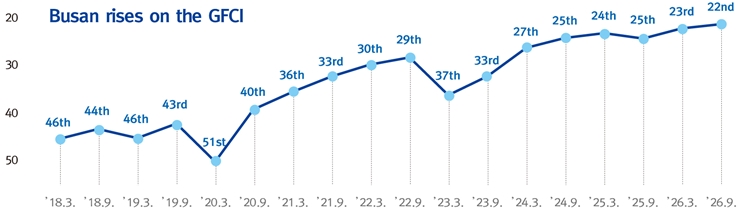
Busan placed 22nd of 117 cities in the Global Financial Centres Index, its highest ranking since joining the index in 2014. The GFCI 40, published by U.K. consultancy Z/Yen, was announced Sept. 16 at the BIFC Global Finance Symposium. The city rose from 23rd in March's GFCI 39, and its score climbed 11 points to 737. It has gained 15 places since March 2023 and has stayed in the global top 30 for six consecutive evaluations. In the Asia-Pacific region, it ranked ninth. City officials attribute the rise to continued investment in financial infrastructure and growth in maritime and digital finance.Busan International Finance CenterBusan North Port Completion of Phase 3 of the Busan International Finance Center has expanded space for financial institutions, and the Munhyeon Financial District and North Port area have been designated Financial Opportunity Development Zones. The city is also building up policy funds for venture investment and industrial transition. In maritime finance, the Ministry of Oceans and Fisheries, HMM and other shipping-related institutions have relocated to Busan. Global shipbroker Clarksons Korea and maritime asset manager Waterline Partners have also established a presence in the city. In digital finance, the KDX Consortium, which includes the Korea Exchange and financial IT firm Koscom, became the first in the country to receive preliminary approval for an over-the-counter exchange for fractional investment products. The city also operates the Busan Blockchain Regulation-Free Special Zone. A Busan City official called the ranking "a meaningful accomplishment demonstrating the city's steady growth as a global financial center." He said Busan aims to rank among the world's top 20 financial centers and Asia's top five by 2030, with planned investment in ship finance, marine insurance and green shipping for the emerging Arctic route.
Busan climbs to 22nd in Global Financial Centres Index, a new high
Busan placed 22nd of 117 cities in the Global Financial Centres Index, its highest ranking since joining the index in 2014. The GFCI 40, published by U.K. consultancy Z/Yen, was announced Sept. 16 at the BIFC Global Finance Symposium. The city rose from 23rd in March's GFCI 39, and its score climbed 11 points to 737. It has gained 15 places since March 2023 and has stayed in the global top 30 for six consecutive evaluations. In the Asia-Pacific region, it ranked ninth. City officials attribute the rise to continued investment in financial infrastructure and growth in maritime and digital finance.Busan International Finance CenterBusan North Port Completion of Phase 3 of the Busan International Finance Center has expanded space for financial institutions, and the Munhyeon Financial District and North Port area have been designated Financial Opportunity Development Zones. The city is also building up policy funds for venture investment and industrial transition. In maritime finance, the Ministry of Oceans and Fisheries, HMM and other shipping-related institutions have relocated to Busan. Global shipbroker Clarksons Korea and maritime asset manager Waterline Partners have also established a presence in the city. In digital finance, the KDX Consortium, which includes the Korea Exchange and financial IT firm Koscom, became the first in the country to receive preliminary approval for an over-the-counter exchange for fractional investment products. The city also operates the Busan Blockchain Regulation-Free Special Zone. A Busan City official called the ranking "a meaningful accomplishment demonstrating the city's steady growth as a global financial center." He said Busan aims to rank among the world's top 20 financial centers and Asia's top five by 2030, with planned investment in ship finance, marine insurance and green shipping for the emerging Arctic route.
-
 Summer swells: Busan’s beaches post record visitor numbers
source: Busan Tourism ArchiveBusan’s beach season has officially ended, closing on a high note. Haeundae Beach, the last to close, ended its season Sept. 15, capping a summer that saw record-breaking visitor numbers.Seven of the city’s eight beaches, including Songjeong, closed Aug. 31. Haeundae remained open two additional weeks, running extra hands-on tourism programs that helped boost its numbers further. Haeundae and Songjeong had opened the season together on June 26, giving Busan’s coastline nearly three months in the summer spotlight.The result was a record 22.53 million beachgoers this year, up 2.54% from last year. This marks the second consecutive year that Busan’s beaches have surpassed 20 million visitors, underscoring the city’s continued appeal as a summer destination.Haeundae Beach accounted for much of that growth, drawing more than 10 million visitors on its own, a first for any beach in Korea.Songdo Beach also had a strong year, with visitors up 5.96% to 3.2 million. Located in western Busan, Songdo continues to attract domestic and international visitors, aided by nearby attractions such as the Busan Air Cruise cable car and Amnam Park’s coastal cliffs. The beach is emerging as a peer to Haeundae and Gwangalli among the city’s leading destinations.Safety remained a priority throughout the season. Electronic information boards, banners and regular announcements kept beachgoers informed of safety rules and crowd-control measures, while personnel patrolled every beach, with additional coverage during peak-risk hours. Multilingual announcements ensured international visitors received the same guidance.Although the official season has ended, safety measures will continue. Guidance staff will keep patrolling and inspecting the beaches, and visitors are advised to avoid entering the water now that the swimming season is over.<Today's Vocabulary - 오늘의 단어>consecutive: 연속되는 underscore: 분명히 보여주다 patrol: 순찰 돌다 guidance: 안내Editor: Song SoomiCopy Editors: Ryu Hyoseung, Anton J. Mapoy
Summer swells: Busan’s beaches post record visitor numbers
source: Busan Tourism ArchiveBusan’s beach season has officially ended, closing on a high note. Haeundae Beach, the last to close, ended its season Sept. 15, capping a summer that saw record-breaking visitor numbers.Seven of the city’s eight beaches, including Songjeong, closed Aug. 31. Haeundae remained open two additional weeks, running extra hands-on tourism programs that helped boost its numbers further. Haeundae and Songjeong had opened the season together on June 26, giving Busan’s coastline nearly three months in the summer spotlight.The result was a record 22.53 million beachgoers this year, up 2.54% from last year. This marks the second consecutive year that Busan’s beaches have surpassed 20 million visitors, underscoring the city’s continued appeal as a summer destination.Haeundae Beach accounted for much of that growth, drawing more than 10 million visitors on its own, a first for any beach in Korea.Songdo Beach also had a strong year, with visitors up 5.96% to 3.2 million. Located in western Busan, Songdo continues to attract domestic and international visitors, aided by nearby attractions such as the Busan Air Cruise cable car and Amnam Park’s coastal cliffs. The beach is emerging as a peer to Haeundae and Gwangalli among the city’s leading destinations.Safety remained a priority throughout the season. Electronic information boards, banners and regular announcements kept beachgoers informed of safety rules and crowd-control measures, while personnel patrolled every beach, with additional coverage during peak-risk hours. Multilingual announcements ensured international visitors received the same guidance.Although the official season has ended, safety measures will continue. Guidance staff will keep patrolling and inspecting the beaches, and visitors are advised to avoid entering the water now that the swimming season is over.<Today's Vocabulary - 오늘의 단어>consecutive: 연속되는 underscore: 분명히 보여주다 patrol: 순찰 돌다 guidance: 안내Editor: Song SoomiCopy Editors: Ryu Hyoseung, Anton J. Mapoy
Enjoy Busan
-
 What to do this weekend: 2026 Busan Craft Beer Masters Challenge
The 2026 Busan Craft Beer Masters Challenge is coming to the North Port Landmark area from Oct. 16 to 18, where visitors can enjoy locally brewed beers, food and live entertainment against the backdrop of the harbor. The festival offers a lively yet laid-back weekend by the water. A highlight of the festival is a competition spotlighting Busan’s craft beer scene. Local breweries will vie for top honors, with results determined by on-site sales and evaluations from citizen judges, nicknamed Viking Judges, alongside three beer and food experts. The winner will be announced on Oct. 18 after the festival's sales figures are tallied and will receive a certificate. Apart from the competition, visitors can explore pop-up booths from eight Busan-based craft breweries. Food from 15 vendors will provide plenty of dishes to pair with a cold beer. Other activities include a workshop to make miniature beer glasses, an AI photo booth and a craft market. A dedicated picnic mat area will offer a place to settle in and enjoy the festivities. Live performances are also scheduled throughout all three days. YouTube creator Yoo’s Desk, known for blending comedy and music, will perform on opening day, followed by singer Psyburger on Oct. 17. DJ Suvin and the Lotte Giants cheerleading squad will take the stage on Oct. 18. Tickets can be purchased through the Catch Table app or at the venue. Early-bird tickets are available exclusively online for 12,000 won and include a 15,000-won beer voucher. Viking Judge tickets cost 20,000 won and include the opportunity to judge the competition. As benefits vary by ticket type, visitors are encouraged to check the details before purchasing. ※ 2026 Busan Craft Beer Masters Challenge, Oct. 16-18◎ Hours: 4 to 9 p.m.◎ North Port Waterfront Park: 164 Yi Sun-shin-daero, Dong-gu◎ Google Maps: Click ◎ Tickets: Click ◎ Instagram: @craftbeer.busan_official◎ Participating breweries: -와일드캣브루잉 Wildcat Brewing -고릴라 브루잉 Gorilla Brewing Company -컬러드 Coloredd Brew -툼브로이 Turmbräu -프라하크래프트브루어리㈜ Praha 993 -허심청 브로이 Hurshimchung Bräu -주식회사 부산맥주 Busan Beer -허그어스 Hugus Brewery<Today's Vocabulary - 오늘의 단어>vie: 어깨를 나란히 하다 evaluation: 평가 vendor: 상점 exclusively: 독점적으로 Editor: Song SoomiCopy Editors: Ryu Hyoseung, Anton J. Mapoy
What to do this weekend: 2026 Busan Craft Beer Masters Challenge
The 2026 Busan Craft Beer Masters Challenge is coming to the North Port Landmark area from Oct. 16 to 18, where visitors can enjoy locally brewed beers, food and live entertainment against the backdrop of the harbor. The festival offers a lively yet laid-back weekend by the water. A highlight of the festival is a competition spotlighting Busan’s craft beer scene. Local breweries will vie for top honors, with results determined by on-site sales and evaluations from citizen judges, nicknamed Viking Judges, alongside three beer and food experts. The winner will be announced on Oct. 18 after the festival's sales figures are tallied and will receive a certificate. Apart from the competition, visitors can explore pop-up booths from eight Busan-based craft breweries. Food from 15 vendors will provide plenty of dishes to pair with a cold beer. Other activities include a workshop to make miniature beer glasses, an AI photo booth and a craft market. A dedicated picnic mat area will offer a place to settle in and enjoy the festivities. Live performances are also scheduled throughout all three days. YouTube creator Yoo’s Desk, known for blending comedy and music, will perform on opening day, followed by singer Psyburger on Oct. 17. DJ Suvin and the Lotte Giants cheerleading squad will take the stage on Oct. 18. Tickets can be purchased through the Catch Table app or at the venue. Early-bird tickets are available exclusively online for 12,000 won and include a 15,000-won beer voucher. Viking Judge tickets cost 20,000 won and include the opportunity to judge the competition. As benefits vary by ticket type, visitors are encouraged to check the details before purchasing. ※ 2026 Busan Craft Beer Masters Challenge, Oct. 16-18◎ Hours: 4 to 9 p.m.◎ North Port Waterfront Park: 164 Yi Sun-shin-daero, Dong-gu◎ Google Maps: Click ◎ Tickets: Click ◎ Instagram: @craftbeer.busan_official◎ Participating breweries: -와일드캣브루잉 Wildcat Brewing -고릴라 브루잉 Gorilla Brewing Company -컬러드 Coloredd Brew -툼브로이 Turmbräu -프라하크래프트브루어리㈜ Praha 993 -허심청 브로이 Hurshimchung Bräu -주식회사 부산맥주 Busan Beer -허그어스 Hugus Brewery<Today's Vocabulary - 오늘의 단어>vie: 어깨를 나란히 하다 evaluation: 평가 vendor: 상점 exclusively: 독점적으로 Editor: Song SoomiCopy Editors: Ryu Hyoseung, Anton J. Mapoy
-
 Reset and recharge at the 2026 Busan Healing Festa
source: visitbusanThe 2026 Busan Healing Festa will take place at Beomeosa Temple and the surrounding area from Oct. 23 to 25, taking advantage of the temple’s peaceful setting amid the wooded slopes of Geumjeongsan Mountain. The festival offers a variety of wellness activities, inviting visitors to relax, recharge and reconnect with nature in the crisp autumn air. All programs require pre-registration, with bookings opening gradually on the festival’s official website. Spaces are limited and available on a first-come, first-served basis, so anyone interested in joining is encouraged to sign up for booking alerts through the Google Form linked below. The festival’s official Instagram account will also share updates on upcoming reservation openings. Highlights include Temple Yoga, Sound Meditation, Temple Meditation, Forest Trail Running and Forest Strolling. Depending on their interests, visitors can slow down with a mindful handwriting and traditional tea ceremony program, or join a guided evening walk through the temple grounds under the moonlight. For those looking for something more active, open-air yoga and barre sessions are available.For program schedules, reservations and further details, visit the official website or Instagram page at the links below.※ 2026 Busan Healing Festa at Beomesa Temple, Oct. 23-25◎ Beomesa Temple: 250, Beomeosa-ro, Geumjeong-gu◎ Google Maps: Click ◎ Website: Click ◎ Instagram: @busanhealingfesta◎ Get notified when program bookings open (Google Form): Click <Today's Vocabulary - 오늘의 단어>recharge: 재충전하다 gradually: 점진적으로 alert: 알림 meditation: 명상 Editor: Song SoomiCopy Editors: Ryu Hyoseung, Anton J. Mapoy
Reset and recharge at the 2026 Busan Healing Festa
source: visitbusanThe 2026 Busan Healing Festa will take place at Beomeosa Temple and the surrounding area from Oct. 23 to 25, taking advantage of the temple’s peaceful setting amid the wooded slopes of Geumjeongsan Mountain. The festival offers a variety of wellness activities, inviting visitors to relax, recharge and reconnect with nature in the crisp autumn air. All programs require pre-registration, with bookings opening gradually on the festival’s official website. Spaces are limited and available on a first-come, first-served basis, so anyone interested in joining is encouraged to sign up for booking alerts through the Google Form linked below. The festival’s official Instagram account will also share updates on upcoming reservation openings. Highlights include Temple Yoga, Sound Meditation, Temple Meditation, Forest Trail Running and Forest Strolling. Depending on their interests, visitors can slow down with a mindful handwriting and traditional tea ceremony program, or join a guided evening walk through the temple grounds under the moonlight. For those looking for something more active, open-air yoga and barre sessions are available.For program schedules, reservations and further details, visit the official website or Instagram page at the links below.※ 2026 Busan Healing Festa at Beomesa Temple, Oct. 23-25◎ Beomesa Temple: 250, Beomeosa-ro, Geumjeong-gu◎ Google Maps: Click ◎ Website: Click ◎ Instagram: @busanhealingfesta◎ Get notified when program bookings open (Google Form): Click <Today's Vocabulary - 오늘의 단어>recharge: 재충전하다 gradually: 점진적으로 alert: 알림 meditation: 명상 Editor: Song SoomiCopy Editors: Ryu Hyoseung, Anton J. Mapoy
-
_부산돼지국밥대전메인포스터(QR코드포함).jpg&fileext=jpg&filetype=image/jpeg&filesize=134135) Busan’s favorite bowls of gukbap, all in one place
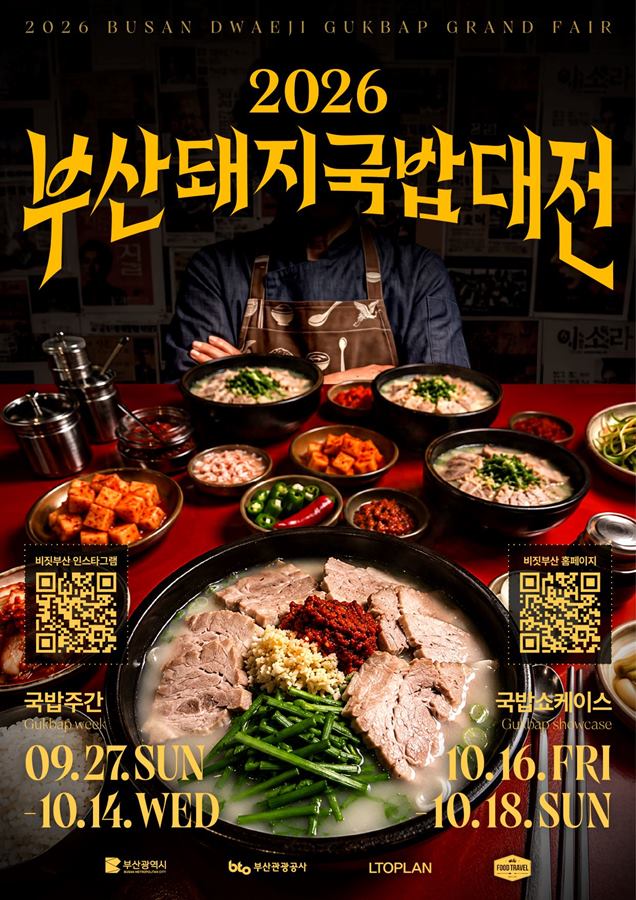
What began in August with people nominating their favorite dwaeji gukbap restaurants is now heading toward a flavorful finale. The Gukbap Showcase, running from Oct. 16 to 18, will wrap up the 2026 Busan Dwaeji Gukbap Grand Fair, a series of events celebrating the city’s beloved dish. The showcase offers tastings, talks and hands-on programs at Now Arriving on the third floor of the Busan International Finance Center in Nam-gu District, daily from 4 to 9 p.m. Under the theme “The People Behind Busan's Signature Bowl,” the showcase features a lineup of programs, including Gukbap Salon and Gukbap Awards, with something different to enjoy each day. On Oct. 16, the Gukbap Awards will reveal the results of a public vote for Busan’s favorite pork soup restaurants. Starting at 7 p.m., the ceremony will announce the top 20, top 10 and top three establishments. Earlier, at 5:30 p.m., culinary expert Leo Kang will host Gukbap Salon, a talk exploring personal preferences, tips for enjoying the perfect bowl, and the dish’s history and evolving trends, with a look at long-established restaurants and rising newcomers. On Oct. 17 and 18, food columnist Sang-hyun Park will take over Gukbap Salon at 6 p.m. each day. Visitors can also test their knowledge and taste buds with Gukbap Golden Bell, a quiz about the dish, and Gukbap Sommelier, a blind tasting challenge to identify restaurants by broth alone. Of the 20 restaurants selected through public vote, 11 will serve their signature pork soup at the showcase. Four restaurants will participate each day, with Subyeon Choego Dwaeji Gukbap joining on two days. Smaller portions, roughly half the usual size, make it easier to sample bowls from different vendors. Soju and makgeolli will also be available to pair with the rich, savory broth. Visitors who register in advance can enjoy a special tasting platter featuring pork soup from three different restaurants. Registration details will be announced on Instagram at @studio_foovel.There’s more than food to take home. Visitors can browse gukbap-inspired merchandise, including T-shirts and keychains, or join free, first-come, first-served craft activities. For participating establishments and program details, visit the official Visit Busan website at the link below. The latest updates will also be shared on Studio Foovel’s Instagram account. As cooler autumn days settle in, it’s a great time to explore Busan’s favorite comfort food, and maybe find a new favorite bowl. ※ 2026 Busan Dwaeji Gukbap Grand Fair: Gukbap Showcase, October 16-18◎ Address: 3F, 128, Namdongcheon-ro, Nam-gu◎ Google Maps: Click ◎ Hours: 4-9 p.m. daily◎ Visit Busan: Click ◎ Instagram: @visitbusan.kr◎ Pre-registration for gukbap platter: @studio_foovel<Today's Vocabulary - 오늘의 단어>nominate: 후보에 지명되다 wrap up: 마무리하다 preference: 선호도 identify: 특정하다 broth: 육수Editor: Song SoomiCopy Editors: Ryu Hyoseung, Anton J. Mapoy
Busan’s favorite bowls of gukbap, all in one place
What began in August with people nominating their favorite dwaeji gukbap restaurants is now heading toward a flavorful finale. The Gukbap Showcase, running from Oct. 16 to 18, will wrap up the 2026 Busan Dwaeji Gukbap Grand Fair, a series of events celebrating the city’s beloved dish. The showcase offers tastings, talks and hands-on programs at Now Arriving on the third floor of the Busan International Finance Center in Nam-gu District, daily from 4 to 9 p.m. Under the theme “The People Behind Busan's Signature Bowl,” the showcase features a lineup of programs, including Gukbap Salon and Gukbap Awards, with something different to enjoy each day. On Oct. 16, the Gukbap Awards will reveal the results of a public vote for Busan’s favorite pork soup restaurants. Starting at 7 p.m., the ceremony will announce the top 20, top 10 and top three establishments. Earlier, at 5:30 p.m., culinary expert Leo Kang will host Gukbap Salon, a talk exploring personal preferences, tips for enjoying the perfect bowl, and the dish’s history and evolving trends, with a look at long-established restaurants and rising newcomers. On Oct. 17 and 18, food columnist Sang-hyun Park will take over Gukbap Salon at 6 p.m. each day. Visitors can also test their knowledge and taste buds with Gukbap Golden Bell, a quiz about the dish, and Gukbap Sommelier, a blind tasting challenge to identify restaurants by broth alone. Of the 20 restaurants selected through public vote, 11 will serve their signature pork soup at the showcase. Four restaurants will participate each day, with Subyeon Choego Dwaeji Gukbap joining on two days. Smaller portions, roughly half the usual size, make it easier to sample bowls from different vendors. Soju and makgeolli will also be available to pair with the rich, savory broth. Visitors who register in advance can enjoy a special tasting platter featuring pork soup from three different restaurants. Registration details will be announced on Instagram at @studio_foovel.There’s more than food to take home. Visitors can browse gukbap-inspired merchandise, including T-shirts and keychains, or join free, first-come, first-served craft activities. For participating establishments and program details, visit the official Visit Busan website at the link below. The latest updates will also be shared on Studio Foovel’s Instagram account. As cooler autumn days settle in, it’s a great time to explore Busan’s favorite comfort food, and maybe find a new favorite bowl. ※ 2026 Busan Dwaeji Gukbap Grand Fair: Gukbap Showcase, October 16-18◎ Address: 3F, 128, Namdongcheon-ro, Nam-gu◎ Google Maps: Click ◎ Hours: 4-9 p.m. daily◎ Visit Busan: Click ◎ Instagram: @visitbusan.kr◎ Pre-registration for gukbap platter: @studio_foovel<Today's Vocabulary - 오늘의 단어>nominate: 후보에 지명되다 wrap up: 마무리하다 preference: 선호도 identify: 특정하다 broth: 육수Editor: Song SoomiCopy Editors: Ryu Hyoseung, Anton J. Mapoy
Food
-
_부산돼지국밥대전메인포스터(QR코드포함).jpg&fileext=jpg&filetype=image/jpeg&filesize=136366) The people have spoken: Busan’s top 20 gukbap restaurants
Which pork soup spot reigns supreme in Busan? Twenty restaurants have been selected for the 2026 Busan Dwaeji Gukbap Grand Fair, following a public nomination drive that ran from Aug. 16 to Sept. 2.The campaign drew strong public interest. More than 10,800 nominations poured in online and in person, naming 254 restaurants across the city — proof that when it comes to Busan's favorite comfort food, everyone has an opinion. Picks covered well-known establishments, multigenerational institutions and neighborhood favorites loaded with personal memories.The buzz carried over online. A short-form video inviting viewers to name their favorite gukbap spot pulled in 2.05 million views and 34,000 shares in just two days. A follow-up video, "The Gukbap Debate," featuring chefs Leo Kang and Do-yoon Kim, added more than 170,000 views of its own.With the top 20 locked in, the festival rolls on with a lineup of events. On Sept. 19, Gukbap Talk brings together Sang-jin Han, Busan City's promotional ambassador and a well-known actor, along with culinary expert Leo Kang and local gukbap fans for a conversation on the dish's history, culture and what makes a bowl truly great.The spotlight then shifts to the 20 finalists during Gukbap Week, running Sept. 28 to Oct. 14. Locals and visitors can vote for their favorites through KakaoMap, whether they're recalling a past visit or trying the restaurants for the first time. Voting will narrow the field from 20 to 10, then down to a final three.Those top three restaurants will take the spotlight next at the Gukbap Showcase.For more information, visit the official Visit Busan website or its Instagram account.※ 2026 Busan Dwaeji Gukbap Grand Fair◎ Website: Click ◎ Instagram: @visitbusan_kr◎ Notice on the Visit Busan website: Click ◎ List of 20 selected Gukbap restaurants 1. 1953 Hyeongje Dwaeji Gukbap, Main Branch (Nam-gu) 2. Ssangdungi Dwaeji Gukbap, Main Branch (Nam-gu)3. Hapcheon Gukbapjip, Yongho Branch (Nam-gu)4. Subyeon Choego Dwaeji Gukbap, Millak Main Branch (Suyeong-gu)5. Suyeong Dwaeji Gukbap (Suyeong-gu)6. Sikbok Dwaeji Gukbap (Suyeong-gu)7. Jamae Gukbap (Suyeong-gu)8. Cheonghwabaek Dwaeji Gukbap, Gwangalli Main Branch (Suyeong-gu)9. 70nyeon Jeontong Halmae Gukbap (Dong-gu)10. Uri Dwaeji Gukbap (Dong-gu)11. Du Beonjjae Neulhaerang (Busanjin-gu)12. Mokchon Dwaeji Gukbap, Yeonsan City Hall Branch (Yeonje-gu)13. Seo Jin-seop Dwaeji Gukbap (Jung-gu)14. Somunnan Dwaeji Gukbap, Bupyeong Branch (Jung-gu)15. Sinchang Gukbap, Main Branch (Seo-gu)16. Yeongjin Dwaeji Gukbap, Main Branch (Saha-gu)17. Onammae Dwaeji Gukbap, Jeonggwan Branch (Gijang-gun)18. Ibagu Gukbap (Sasang-gu)19. Haeundae Halmaejip (Haeundae-gu)20. Hwanamjeong Dwaeji Gukbap, Choeup Main Branch (Busanjin-gu)<Today's Vocabulary - 오늘의 단어>reign: 평정하다 supreme: 최고의 nomination: 지명 debate: 논쟁 culinary: 요리의Editor: Song SoomiCopy Editors: Ryu Hyoseung, Anton J. Mapoy
The people have spoken: Busan’s top 20 gukbap restaurants
Which pork soup spot reigns supreme in Busan? Twenty restaurants have been selected for the 2026 Busan Dwaeji Gukbap Grand Fair, following a public nomination drive that ran from Aug. 16 to Sept. 2.The campaign drew strong public interest. More than 10,800 nominations poured in online and in person, naming 254 restaurants across the city — proof that when it comes to Busan's favorite comfort food, everyone has an opinion. Picks covered well-known establishments, multigenerational institutions and neighborhood favorites loaded with personal memories.The buzz carried over online. A short-form video inviting viewers to name their favorite gukbap spot pulled in 2.05 million views and 34,000 shares in just two days. A follow-up video, "The Gukbap Debate," featuring chefs Leo Kang and Do-yoon Kim, added more than 170,000 views of its own.With the top 20 locked in, the festival rolls on with a lineup of events. On Sept. 19, Gukbap Talk brings together Sang-jin Han, Busan City's promotional ambassador and a well-known actor, along with culinary expert Leo Kang and local gukbap fans for a conversation on the dish's history, culture and what makes a bowl truly great.The spotlight then shifts to the 20 finalists during Gukbap Week, running Sept. 28 to Oct. 14. Locals and visitors can vote for their favorites through KakaoMap, whether they're recalling a past visit or trying the restaurants for the first time. Voting will narrow the field from 20 to 10, then down to a final three.Those top three restaurants will take the spotlight next at the Gukbap Showcase.For more information, visit the official Visit Busan website or its Instagram account.※ 2026 Busan Dwaeji Gukbap Grand Fair◎ Website: Click ◎ Instagram: @visitbusan_kr◎ Notice on the Visit Busan website: Click ◎ List of 20 selected Gukbap restaurants 1. 1953 Hyeongje Dwaeji Gukbap, Main Branch (Nam-gu) 2. Ssangdungi Dwaeji Gukbap, Main Branch (Nam-gu)3. Hapcheon Gukbapjip, Yongho Branch (Nam-gu)4. Subyeon Choego Dwaeji Gukbap, Millak Main Branch (Suyeong-gu)5. Suyeong Dwaeji Gukbap (Suyeong-gu)6. Sikbok Dwaeji Gukbap (Suyeong-gu)7. Jamae Gukbap (Suyeong-gu)8. Cheonghwabaek Dwaeji Gukbap, Gwangalli Main Branch (Suyeong-gu)9. 70nyeon Jeontong Halmae Gukbap (Dong-gu)10. Uri Dwaeji Gukbap (Dong-gu)11. Du Beonjjae Neulhaerang (Busanjin-gu)12. Mokchon Dwaeji Gukbap, Yeonsan City Hall Branch (Yeonje-gu)13. Seo Jin-seop Dwaeji Gukbap (Jung-gu)14. Somunnan Dwaeji Gukbap, Bupyeong Branch (Jung-gu)15. Sinchang Gukbap, Main Branch (Seo-gu)16. Yeongjin Dwaeji Gukbap, Main Branch (Saha-gu)17. Onammae Dwaeji Gukbap, Jeonggwan Branch (Gijang-gun)18. Ibagu Gukbap (Sasang-gu)19. Haeundae Halmaejip (Haeundae-gu)20. Hwanamjeong Dwaeji Gukbap, Choeup Main Branch (Busanjin-gu)<Today's Vocabulary - 오늘의 단어>reign: 평정하다 supreme: 최고의 nomination: 지명 debate: 논쟁 culinary: 요리의Editor: Song SoomiCopy Editors: Ryu Hyoseung, Anton J. Mapoy
-
.jpg&fileext=jpg&filetype=image/jpeg&filesize=94215) A sweet escape: Busan's best bingsu
source: Busan Tourism ArchiveFew things offer a sweeter escape from Korea's hot, humid summer than a bowl of bingsu. Made with ice shaved as fine and light as fresh snow, Korea's signature summer dessert comes in countless varieties - from timeless classics topped with sweet red beans, condensed milk and chewy injeolmi rice cakes to modern creations featuring fresh seasonal fruit, rich matcha and silky cream.Sampling different styles is part of the fun for locals and visitors alike, and bingsu's eye-catching presentation makes each bowl as enjoyable to photograph as it is to eat.To help readers find some of Busan's best bingsu, the Blue Ribbon Survey - Korea's first restaurant guide - recommends nine establishments known for their distinctive takes on the dessert. Head out and grab a bowl or two. After all, the hotter the summer gets, the more refreshing every spoonful becomes.🍨 Bingsu Eateries in Busan : Click <Today's Vocabulary - 오늘의 단어>escape: 도피 variety: 다양한 종류 recommend: 추천하다 establishment: 시설 distinctive: 특별한 Editor: Song SoomiCopy Editors: Ryu Hyoseung, Anton J. Mapoy
A sweet escape: Busan's best bingsu
source: Busan Tourism ArchiveFew things offer a sweeter escape from Korea's hot, humid summer than a bowl of bingsu. Made with ice shaved as fine and light as fresh snow, Korea's signature summer dessert comes in countless varieties - from timeless classics topped with sweet red beans, condensed milk and chewy injeolmi rice cakes to modern creations featuring fresh seasonal fruit, rich matcha and silky cream.Sampling different styles is part of the fun for locals and visitors alike, and bingsu's eye-catching presentation makes each bowl as enjoyable to photograph as it is to eat.To help readers find some of Busan's best bingsu, the Blue Ribbon Survey - Korea's first restaurant guide - recommends nine establishments known for their distinctive takes on the dessert. Head out and grab a bowl or two. After all, the hotter the summer gets, the more refreshing every spoonful becomes.🍨 Bingsu Eateries in Busan : Click <Today's Vocabulary - 오늘의 단어>escape: 도피 variety: 다양한 종류 recommend: 추천하다 establishment: 시설 distinctive: 특별한 Editor: Song SoomiCopy Editors: Ryu Hyoseung, Anton J. Mapoy
-
 A sweet escape: Busan's best bingsu
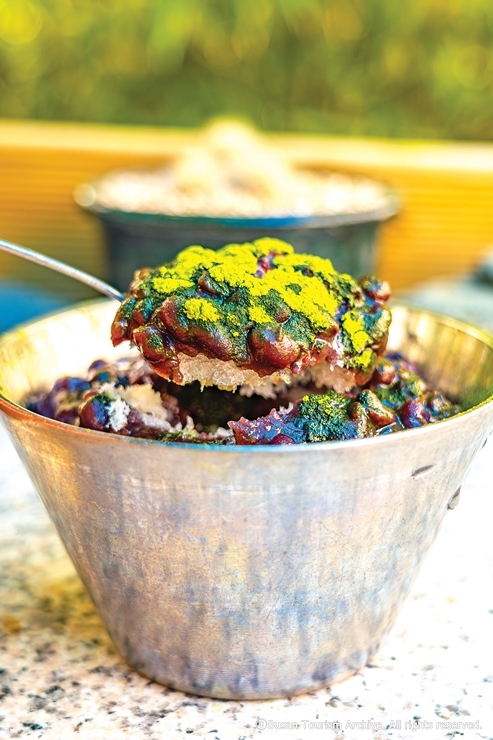
Few things offer a sweeter escape from Korea's hot, humid summer than a bowl of bingsu. Made with ice shaved as fine and light as fresh snow, Korea's signature summer dessert comes in countless varieties - from timeless classics topped with sweet red beans, condensed milk and chewy injeolmi rice cakes to modern creations featuring fresh seasonal fruit, rich matcha and silky cream. Sampling different styles is part of the fun for locals and visitors alike, and bingsu's eye-catching presentation makes each bowl as enjoyable to photograph as it is to eat. To help readers find some of Busan's best bingsu, the Blue Ribbon Survey - Korea's first restaurant guide - recommends nine establishments known for their distinctive takes on the dessert. Head out and grab a bowl or two. After all, the hotter the summer gets, the more refreshing every spoonful becomes.Namcheon Nokcha Patbingsu in Suyeong-gu is best known for its signature Boseong green tea patbingsu. The dessert features sweet red beans and green tea powder over finely shaved ice.Peach Bingsu at DADAE DE LAMugwort Rice Cake Bingsu (left) and Blueberry Bingsu (right) at GojaeClassic Patbingsu at Baekro AnggeumGoogle Maps: Click
A sweet escape: Busan's best bingsu
Few things offer a sweeter escape from Korea's hot, humid summer than a bowl of bingsu. Made with ice shaved as fine and light as fresh snow, Korea's signature summer dessert comes in countless varieties - from timeless classics topped with sweet red beans, condensed milk and chewy injeolmi rice cakes to modern creations featuring fresh seasonal fruit, rich matcha and silky cream. Sampling different styles is part of the fun for locals and visitors alike, and bingsu's eye-catching presentation makes each bowl as enjoyable to photograph as it is to eat. To help readers find some of Busan's best bingsu, the Blue Ribbon Survey - Korea's first restaurant guide - recommends nine establishments known for their distinctive takes on the dessert. Head out and grab a bowl or two. After all, the hotter the summer gets, the more refreshing every spoonful becomes.Namcheon Nokcha Patbingsu in Suyeong-gu is best known for its signature Boseong green tea patbingsu. The dessert features sweet red beans and green tea powder over finely shaved ice.Peach Bingsu at DADAE DE LAMugwort Rice Cake Bingsu (left) and Blueberry Bingsu (right) at GojaeClassic Patbingsu at Baekro AnggeumGoogle Maps: Click
Life
-
 Busan Museum of Art reopens after two years
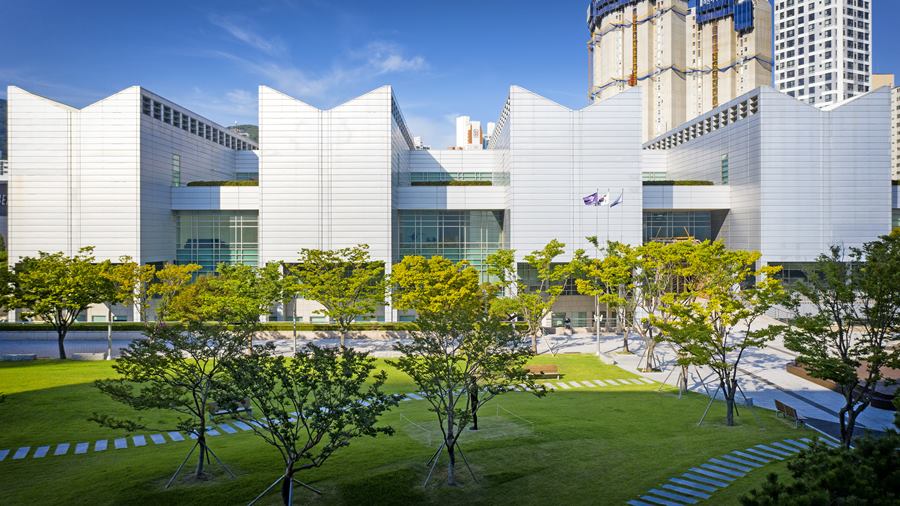
source: Busan Tourism ArchiveBusan Museum of Art reopened Sept. 17 following a renovation that took nearly two years and cost approximately 46.9 billion won. The project brought upgraded temperature and humidity controls, redesigned exhibition galleries, and expanded storage and visitor amenities. The museum also relocated its main entrance to the side facing BEXCO, making it easier to access. Since opening in 1998, the museum has organized roughly 330 exhibitions alongside a range of educational programs, lectures and performances. The renovation signals a broader vision for the museum as a space where people, technology and nature can come together to create new possibilities.Four exhibitions mark the reopening. “Future Museology,” organized with a network of nine museums in Korea and abroad, examines the evolving role of art museums and explores how they might engage more directly with the public. “Still We Are Borne on These Waves: 1945-1953” draws on roughly 250 artworks and 450 archival materials to examine Korean society and art in the years following liberation, including materials tied to Busan’s earliest generation of painters. “Dear All the Yesterdays” traces the museum’s own institutional and architectural history. “Safe Base,” presented in the Children’s Gallery, invites children to explore the museum through hands-on, sensory-based activities grounded in attachment theory. Visitors can also explore the permanent exhibition at Space Lee Ufan, a separate gallery next to the museum’s main building. Admission to the museum is currently free.※ Busan Museum of Art◎ Website: Click ◎ Address: 58, APEC-ro, Haeundae-gu◎ Google Maps: Click ◎ Hours: 10 a.m. to 6 p.m. (Closed on Mondays) <Today's Vocabulary - 오늘의 단어>reopen: 재개관 humidity: 습도 exhibition: 전시 admission: 입장료Editor: Song SoomiCopy Editors: Ryu Hyoseung, Anton J. Mapoy
Busan Museum of Art reopens after two years
source: Busan Tourism ArchiveBusan Museum of Art reopened Sept. 17 following a renovation that took nearly two years and cost approximately 46.9 billion won. The project brought upgraded temperature and humidity controls, redesigned exhibition galleries, and expanded storage and visitor amenities. The museum also relocated its main entrance to the side facing BEXCO, making it easier to access. Since opening in 1998, the museum has organized roughly 330 exhibitions alongside a range of educational programs, lectures and performances. The renovation signals a broader vision for the museum as a space where people, technology and nature can come together to create new possibilities.Four exhibitions mark the reopening. “Future Museology,” organized with a network of nine museums in Korea and abroad, examines the evolving role of art museums and explores how they might engage more directly with the public. “Still We Are Borne on These Waves: 1945-1953” draws on roughly 250 artworks and 450 archival materials to examine Korean society and art in the years following liberation, including materials tied to Busan’s earliest generation of painters. “Dear All the Yesterdays” traces the museum’s own institutional and architectural history. “Safe Base,” presented in the Children’s Gallery, invites children to explore the museum through hands-on, sensory-based activities grounded in attachment theory. Visitors can also explore the permanent exhibition at Space Lee Ufan, a separate gallery next to the museum’s main building. Admission to the museum is currently free.※ Busan Museum of Art◎ Website: Click ◎ Address: 58, APEC-ro, Haeundae-gu◎ Google Maps: Click ◎ Hours: 10 a.m. to 6 p.m. (Closed on Mondays) <Today's Vocabulary - 오늘의 단어>reopen: 재개관 humidity: 습도 exhibition: 전시 admission: 입장료Editor: Song SoomiCopy Editors: Ryu Hyoseung, Anton J. Mapoy
-
 Daily Busan asks readers: What do you want to see next?
source: getty imageDaily Busan is inviting readers to take part in its 2026 satisfaction survey, open from Oct. 1 to 31. The survey asks about readers’ overall satisfaction with the publication, its ease of use and ideas for new features. Responses will help Daily Busan identify what readers value most and where its content and services can be improved.As Busan City’s official online publication, Daily Busan publishes articles daily covering news and useful information about the city. It also produces “Friday Special,” a weekly language-learning series with three segments: Study with Daily Busan, Unlock English with Movies and K-Words You Need to Know. The series offers something for readers looking to improve their everyday Korean or pick up natural English expressions. For those who prefer a weekly summary, Daily Talk delivers a roundup of the week’s articles to subscribers via KakaoTalk every Friday.The survey is open to everyone and can be accessed by scanning the QR code. Regular and occasional readers alike are encouraged to participate, as their input will help shape Daily Busan’s future stories, features and services.As a thank-you, 30 participants will be randomly selected to receive a mobile voucher for a hamburger combo meal. Readers are encouraged to take a few minutes to share their thoughts and help make Daily Busan more useful for everyone.◎ Survey: Click<Today's Vocabulary - 오늘의 단어>satisfaction: 만족 publish: 발행하다 segment: 부분 summary: 요약 regular: 정기적인 Editor: Song SoomiCopy Editors: Ryu Hyoseung, Anton J. Mapoy
Daily Busan asks readers: What do you want to see next?
source: getty imageDaily Busan is inviting readers to take part in its 2026 satisfaction survey, open from Oct. 1 to 31. The survey asks about readers’ overall satisfaction with the publication, its ease of use and ideas for new features. Responses will help Daily Busan identify what readers value most and where its content and services can be improved.As Busan City’s official online publication, Daily Busan publishes articles daily covering news and useful information about the city. It also produces “Friday Special,” a weekly language-learning series with three segments: Study with Daily Busan, Unlock English with Movies and K-Words You Need to Know. The series offers something for readers looking to improve their everyday Korean or pick up natural English expressions. For those who prefer a weekly summary, Daily Talk delivers a roundup of the week’s articles to subscribers via KakaoTalk every Friday.The survey is open to everyone and can be accessed by scanning the QR code. Regular and occasional readers alike are encouraged to participate, as their input will help shape Daily Busan’s future stories, features and services.As a thank-you, 30 participants will be randomly selected to receive a mobile voucher for a hamburger combo meal. Readers are encouraged to take a few minutes to share their thoughts and help make Daily Busan more useful for everyone.◎ Survey: Click<Today's Vocabulary - 오늘의 단어>satisfaction: 만족 publish: 발행하다 segment: 부분 summary: 요약 regular: 정기적인 Editor: Song SoomiCopy Editors: Ryu Hyoseung, Anton J. Mapoy
-
 Busan Sea Library opens weekends of reading at Dadaepo Beach Park
The second season of the 2026 Busan Sea Library turns Dadaepo Beach Park into an open-air reading space every Saturday and Sunday through Oct. 11. Running from 3 to 9 p.m., the event blends Busan’s coastal charm with the joy of reading. Visitors can spend a leisurely weekend in the crisp autumn breeze reading against the backdrop of Dadaepo sunsets.More than just a place to read, this season's Sea Library offers 18 programs across three categories: Reading Zone, Five-Senses Reading and Book Connection. Visitors can explore themed reading areas, take part in hands-on activities and connect with culture and each other through books.Reading Zone features a curated selection of around 2,900 books suited to the season and a variety of interests. Visitors can settle in with a book at the main reading area, enjoy an outdoor reading session with a book picnic kit, or spend time with their pets at the Book-Paw Zone.Five-Senses Reading offers a variety of ways to experience books beyond just turning pages. Highlights include a talk with author Ji-a Jeong on her novel “My Father's Liberation,” a “human book” conversation with Gwang-bok Oh, a former newspaper delivery worker in Gamcheon Village, and an Art Book Exhibition. The Switch OFF, Reading Party ON program offers a device-free reading session for a digital detox, while the Science Lounge invites visitors to explore science-themed books and observe the night sky from the beach.Book Connection encourages visitors to continue their reading journey beyond the event. The B-Book Spot booth introduces local libraries and helps visitors discover more reading opportunities around the city. A specially curated bookshelf at the nearby Haewoldang Dadaepo café also brings books into an everyday setting.Everyone is welcome to join the Busan Sea Library, though some programs require pre-registration online. For more details, visit the Busan Sea Library's official website or follow its Instagram account.※ 2026 Busan Sea Library, every weekend through Oct. 11 *Program subject to temporary suspension on rainy days◎ Location: Dadaepo Beach Park ◎ Google Map: Click ◎ Website: Click ◎ Instagram: @bibliotheca_busan<Today's Vocabulary - 오늘의 단어>backdrop: 배경 feature: 특징으로 하다 curate: 엄선하다 encourage: 장려하다 Editor: Song SoomiCopy Editors: Ryu Hyoseung, Anton J. Mapoy
Busan Sea Library opens weekends of reading at Dadaepo Beach Park
The second season of the 2026 Busan Sea Library turns Dadaepo Beach Park into an open-air reading space every Saturday and Sunday through Oct. 11. Running from 3 to 9 p.m., the event blends Busan’s coastal charm with the joy of reading. Visitors can spend a leisurely weekend in the crisp autumn breeze reading against the backdrop of Dadaepo sunsets.More than just a place to read, this season's Sea Library offers 18 programs across three categories: Reading Zone, Five-Senses Reading and Book Connection. Visitors can explore themed reading areas, take part in hands-on activities and connect with culture and each other through books.Reading Zone features a curated selection of around 2,900 books suited to the season and a variety of interests. Visitors can settle in with a book at the main reading area, enjoy an outdoor reading session with a book picnic kit, or spend time with their pets at the Book-Paw Zone.Five-Senses Reading offers a variety of ways to experience books beyond just turning pages. Highlights include a talk with author Ji-a Jeong on her novel “My Father's Liberation,” a “human book” conversation with Gwang-bok Oh, a former newspaper delivery worker in Gamcheon Village, and an Art Book Exhibition. The Switch OFF, Reading Party ON program offers a device-free reading session for a digital detox, while the Science Lounge invites visitors to explore science-themed books and observe the night sky from the beach.Book Connection encourages visitors to continue their reading journey beyond the event. The B-Book Spot booth introduces local libraries and helps visitors discover more reading opportunities around the city. A specially curated bookshelf at the nearby Haewoldang Dadaepo café also brings books into an everyday setting.Everyone is welcome to join the Busan Sea Library, though some programs require pre-registration online. For more details, visit the Busan Sea Library's official website or follow its Instagram account.※ 2026 Busan Sea Library, every weekend through Oct. 11 *Program subject to temporary suspension on rainy days◎ Location: Dadaepo Beach Park ◎ Google Map: Click ◎ Website: Click ◎ Instagram: @bibliotheca_busan<Today's Vocabulary - 오늘의 단어>backdrop: 배경 feature: 특징으로 하다 curate: 엄선하다 encourage: 장려하다 Editor: Song SoomiCopy Editors: Ryu Hyoseung, Anton J. Mapoy
Views
-
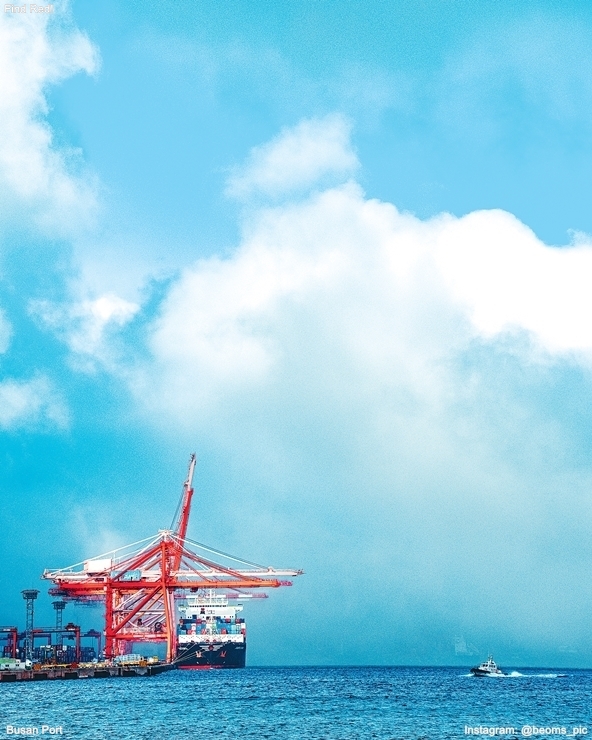 COLOR HUNTING
Busan is a city filled with color. Discover its hidden shades, tucked within the streets and landscapes you thought you already knew. ※Find out more: https://www.instagram.com/busancity_globe/?hl=en
Correction: Photos credited to @dancheong_pic in the print edition have been credited to @cheezedonkas. We apologize for the error.
COLOR HUNTING
Busan is a city filled with color. Discover its hidden shades, tucked within the streets and landscapes you thought you already knew. ※Find out more: https://www.instagram.com/busancity_globe/?hl=en
Correction: Photos credited to @dancheong_pic in the print edition have been credited to @cheezedonkas. We apologize for the error.
-
 Chuseok seen through children's eyes
The Busan Children Newspaper held a contest to select the cover artwork for its autumn edition. Participants had to depict what Chuseok, Korea’s major autumn harvest holiday, means to them. Here are the five award-winning entries. From joyful family gatherings to whimsical scenes, each piece displays the warmth and festive spirit of Chuseok. [Grand Prize]Title: My Family’s Bountiful and Peaceful ChuseokArtist: Sumin Kim (3rd grader, Geoje Elementary School)Explanation:
My painting was inspired by “Irworobongdo,” a folding screen from the Joseon Dynasty, traditionally placed behind the king, symbolizing wishes for the nation's peace and prosperity and abundant harvests for the people. In the same spirit, I wanted to express my wishes for my family’s health and happiness as we celebrate Chuseok, a holiday associated with abundance and gratitude. Along with the iconic elements of Irowobongdo—the sun, moon and five peaks—I wanted to depict the abundance of the autumn harvest. My family dressed in Hanbok, traditional Korean clothing, is also featured in the painting, capturing a joyful holiday moment and highlighting the beauty of Korean traditions.
[Excellent Prize]Title: Happy Chuseok with a Spoonful of Moon Artist: Bomi Seo (6th grader, Dalsan Elementary School)Explanation:
My painting captures a happy family moment, with everyone gathered together and enjoying the Chuseok holiday. By climbing the ladder to the moon, we get ingredients for songpyeon, half-moon-shaped rice cakes traditionally enjoyed during Chuseok, and make this special holiday treat together.
[Excellent Prize]Title: Happy Chuseok Artist: Minha Kim (2nd grader, Sangdang Elementary School)Explanation:
I painted a delightful Chuseok moment with my family, with a wooden boat floating on a clear river. Since the number seven symbolizes good luck, I included seven persimmons, a classic autumn fruit.
[Participation Prize]Title: Moon Rabbit Is Showering Us with Happy Songpyeon Artist: Dayun Park (2nd grader, Gaya Elementary School)Explanation:
I imagined a special Chuseok scene, in which a moon rabbit brings happiness and smiles to my family from the huge full moon. With songpyeon and sparkling stars raining down on us, my painting captures my family smiling together and enjoying a wonderful Chuseok night.
[Participation Prize]Title: My family Travels with the Moonlight Whale on Chuseok Artist: Jiwoo Yun (6th grader, Mujeong Elementary School)Explanation:
The moonlight whale travels across Busan’s vast ocean, carrying my family’s love, hope, smiles, health and happiness. In the prosperous spirit of Chuseok, I wish happiness and all the best to every family celebrating the holiday.
Chuseok seen through children's eyes
The Busan Children Newspaper held a contest to select the cover artwork for its autumn edition. Participants had to depict what Chuseok, Korea’s major autumn harvest holiday, means to them. Here are the five award-winning entries. From joyful family gatherings to whimsical scenes, each piece displays the warmth and festive spirit of Chuseok. [Grand Prize]Title: My Family’s Bountiful and Peaceful ChuseokArtist: Sumin Kim (3rd grader, Geoje Elementary School)Explanation:
My painting was inspired by “Irworobongdo,” a folding screen from the Joseon Dynasty, traditionally placed behind the king, symbolizing wishes for the nation's peace and prosperity and abundant harvests for the people. In the same spirit, I wanted to express my wishes for my family’s health and happiness as we celebrate Chuseok, a holiday associated with abundance and gratitude. Along with the iconic elements of Irowobongdo—the sun, moon and five peaks—I wanted to depict the abundance of the autumn harvest. My family dressed in Hanbok, traditional Korean clothing, is also featured in the painting, capturing a joyful holiday moment and highlighting the beauty of Korean traditions.
[Excellent Prize]Title: Happy Chuseok with a Spoonful of Moon Artist: Bomi Seo (6th grader, Dalsan Elementary School)Explanation:
My painting captures a happy family moment, with everyone gathered together and enjoying the Chuseok holiday. By climbing the ladder to the moon, we get ingredients for songpyeon, half-moon-shaped rice cakes traditionally enjoyed during Chuseok, and make this special holiday treat together.
[Excellent Prize]Title: Happy Chuseok Artist: Minha Kim (2nd grader, Sangdang Elementary School)Explanation:
I painted a delightful Chuseok moment with my family, with a wooden boat floating on a clear river. Since the number seven symbolizes good luck, I included seven persimmons, a classic autumn fruit.
[Participation Prize]Title: Moon Rabbit Is Showering Us with Happy Songpyeon Artist: Dayun Park (2nd grader, Gaya Elementary School)Explanation:
I imagined a special Chuseok scene, in which a moon rabbit brings happiness and smiles to my family from the huge full moon. With songpyeon and sparkling stars raining down on us, my painting captures my family smiling together and enjoying a wonderful Chuseok night.
[Participation Prize]Title: My family Travels with the Moonlight Whale on Chuseok Artist: Jiwoo Yun (6th grader, Mujeong Elementary School)Explanation:
The moonlight whale travels across Busan’s vast ocean, carrying my family’s love, hope, smiles, health and happiness. In the prosperous spirit of Chuseok, I wish happiness and all the best to every family celebrating the holiday.
-
 Busan hosts largest UNESCO heritage gathering ever
The 48th session of the UNESCO World Heritage Committee, held in Busan, concluded successfully as the first edition hosted in Korea. A record 3,111 participants from 162 countries attended, the largest gathering in the committee's history. The sprawling Korea Pavilion at BEXCO drew more than 10,000 visitors daily, while merchandise sales topped 100 million won within five days.An installation inspired by the 19th-century painting "Gangsan Mujindo"(Rivers and Mountains Without End).Exhibition space inspired by "Seowon," the Confucian academies of the Joseon Dynasty.A child experiencing the "Yeongsanjae," a ritual that reenacts Buddha delivering the Lotus Sutra.Posters depicting Korea's cultural heritage.Children's drawings of Busan's national heritage.Media art combines the glow of ancient tombs with the melodies of the gayageum."Gakjajang," traditional calligraphic engraving."Geobukseon," Korea's iconic Turtle Ship.Busan Pavilion.
Busan hosts largest UNESCO heritage gathering ever
The 48th session of the UNESCO World Heritage Committee, held in Busan, concluded successfully as the first edition hosted in Korea. A record 3,111 participants from 162 countries attended, the largest gathering in the committee's history. The sprawling Korea Pavilion at BEXCO drew more than 10,000 visitors daily, while merchandise sales topped 100 million won within five days.An installation inspired by the 19th-century painting "Gangsan Mujindo"(Rivers and Mountains Without End).Exhibition space inspired by "Seowon," the Confucian academies of the Joseon Dynasty.A child experiencing the "Yeongsanjae," a ritual that reenacts Buddha delivering the Lotus Sutra.Posters depicting Korea's cultural heritage.Children's drawings of Busan's national heritage.Media art combines the glow of ancient tombs with the melodies of the gayageum."Gakjajang," traditional calligraphic engraving."Geobukseon," Korea's iconic Turtle Ship.Busan Pavilion.

 busan.go.kr +