News
-
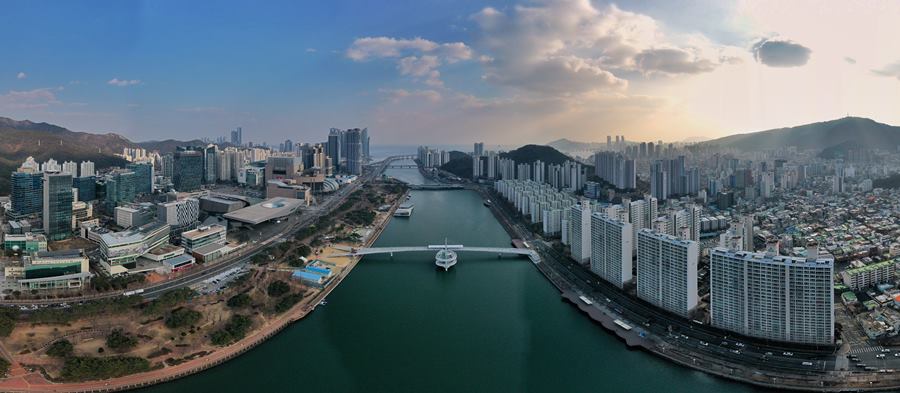 The Suyeonggang Human Bridge embodies Busan's 15-minute city philosophy
The Suyeonggang Human Bridge is now complete, establishing a pedestrian walkway across the Suyeonggang River. The footbridge connects both banks of the river to provide barrier-free access between residential areas and APEC Naru Park and Busan Cinema Center.Before the bridge opening, the walk from the Hyeopseong Renaissance Apartment complex, on the Suyeong-gu bank of the river, to APEC Naru Park, on the Haeundae-gu side, covered about 1.3 kilometers. Pedestrians had to cross either the Suyeonggyo Bridge or the Jwasuyeonggyo Bridge alongside vehicle traffic. Now, however, the walk is roughly 250 meters.First promoted in 2020, the Suyeonggang Human Bridge Development Project is a key element of Busan's 15-Minute City initiative. Construction began in 2023 to enhance pedestrian mobility and expand waterfront cultural and tourism spaces. The completion of the bridge creates a continuous walkway between the commercial and cultural spaces of Centum City, the leisure and tourism spots of Gwangalli and the residential neighborhoods between.The curving walkway spans 254 meters across and stands four meters above the water. Cine Island, a 20-meter-high observation deck in the middle of the bridge, features 360-degree views of the river and the surrounding cityscape. Suyeonggang Human Bridge is expected to attract residents and visitors and may serve as a venue for future cultural events and performances.As a barrier-free walkway, the bridge is equipped with elevators and gentle ramps to ensure accessibility for everyone, especially for individuals in wheelchairs and families with strollers. In addition, Busan plans to designate the bridge as the city's first pedestrian-only thoroughfare, prohibiting vehicles, bicycles and personal mobility devices to create a safe and pleasant environment.A Busan City official stated, "The Suyeonggang Human Bridge is a symbolic example that best embodies the 15-minute city philosophy our city has pursued. It will serve as a cultural axis connecting mountains, rivers, beaches and Busan's major attractions through pedestrian-oriented routes, beginning from neighborhood walking paths near one's home." The official added, "We will strive to make Busan a city where everyday life - where citizens walk and meet neighbors, sharing the warmth of community - becomes its present and future, a city people would choose to live in even if born again."<Today's Vocabulary - 오늘의 단어>pedestrian: 보행자 mobility: 이동성 expand: 확장하다 stroller: 유모차 attraction: 관광명소 Editor: Song SoomiCopy Editors: Ryu Hyoseung, Anton J. Mapoy
The Suyeonggang Human Bridge embodies Busan's 15-minute city philosophy
The Suyeonggang Human Bridge is now complete, establishing a pedestrian walkway across the Suyeonggang River. The footbridge connects both banks of the river to provide barrier-free access between residential areas and APEC Naru Park and Busan Cinema Center.Before the bridge opening, the walk from the Hyeopseong Renaissance Apartment complex, on the Suyeong-gu bank of the river, to APEC Naru Park, on the Haeundae-gu side, covered about 1.3 kilometers. Pedestrians had to cross either the Suyeonggyo Bridge or the Jwasuyeonggyo Bridge alongside vehicle traffic. Now, however, the walk is roughly 250 meters.First promoted in 2020, the Suyeonggang Human Bridge Development Project is a key element of Busan's 15-Minute City initiative. Construction began in 2023 to enhance pedestrian mobility and expand waterfront cultural and tourism spaces. The completion of the bridge creates a continuous walkway between the commercial and cultural spaces of Centum City, the leisure and tourism spots of Gwangalli and the residential neighborhoods between.The curving walkway spans 254 meters across and stands four meters above the water. Cine Island, a 20-meter-high observation deck in the middle of the bridge, features 360-degree views of the river and the surrounding cityscape. Suyeonggang Human Bridge is expected to attract residents and visitors and may serve as a venue for future cultural events and performances.As a barrier-free walkway, the bridge is equipped with elevators and gentle ramps to ensure accessibility for everyone, especially for individuals in wheelchairs and families with strollers. In addition, Busan plans to designate the bridge as the city's first pedestrian-only thoroughfare, prohibiting vehicles, bicycles and personal mobility devices to create a safe and pleasant environment.A Busan City official stated, "The Suyeonggang Human Bridge is a symbolic example that best embodies the 15-minute city philosophy our city has pursued. It will serve as a cultural axis connecting mountains, rivers, beaches and Busan's major attractions through pedestrian-oriented routes, beginning from neighborhood walking paths near one's home." The official added, "We will strive to make Busan a city where everyday life - where citizens walk and meet neighbors, sharing the warmth of community - becomes its present and future, a city people would choose to live in even if born again."<Today's Vocabulary - 오늘의 단어>pedestrian: 보행자 mobility: 이동성 expand: 확장하다 stroller: 유모차 attraction: 관광명소 Editor: Song SoomiCopy Editors: Ryu Hyoseung, Anton J. Mapoy
-
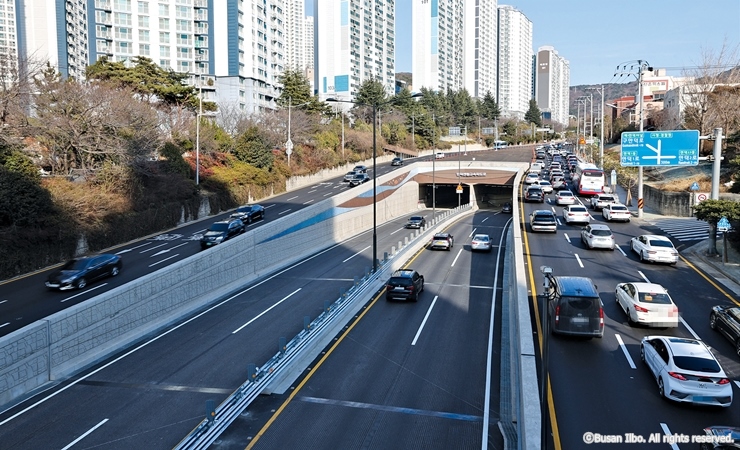 New expressway significantly reduces travel times between Mandeok and Centum
The Mandeok-Centum Expressway will dramatically improve traffic flow. On Feb. 10, the Mandeok-Centum Urban Expressway, Busan's first deep underground urban expressway, officially opened to the public. Stretching 9.62 km with four lanes, this deep-level tunnel reaches depths of 60 to 120 meters, connecting Mandeok-dong in Buk-gu District to Centum City along the Suyeonggang-byeon-daero in Haeundae-gu District. By bypassing surface traffic entirely, this new infrastructure forms a vital transport axis, marking a significant turning point in the shift toward an advanced underground traffic system. Designed to provide a fast and safe link between eastern and western Busan, the expressway is expected to drastically ease chronic congestion on Mandeok-daero and alleviate bottlenecks on major arterial roads like Chungnyeol-daero and Suyeong gang-byeon-daero, transforming traffic flow across the city. The impact on travel time is significant. Previously, travelling this route at an average speed of 18.2 kph took roughly 42 minutes. The new expressway boosts that speed to 61.7 kph, slashing travel time to just under 12 minutes. Even the journey from Gimhae International Airport to Haeundae, which used to take an hour, is now expected to be cut in half. Tolls vary by time of day. During peak commuting hours (7 a.m. to noon, 4 to 9 p.m.), the toll for passenger cars travelling from Mandeok IC to Centum IC is 2,500 won. Between midnight and 5 a.m., the toll is 1,100 won; all other hours it is 1,600 won. Tolls are automatically collected via Hi-Pass, registration on the Mandeok-Centum Expressway homepage, or manually via the website or customer call center.
New expressway significantly reduces travel times between Mandeok and Centum
The Mandeok-Centum Expressway will dramatically improve traffic flow. On Feb. 10, the Mandeok-Centum Urban Expressway, Busan's first deep underground urban expressway, officially opened to the public. Stretching 9.62 km with four lanes, this deep-level tunnel reaches depths of 60 to 120 meters, connecting Mandeok-dong in Buk-gu District to Centum City along the Suyeonggang-byeon-daero in Haeundae-gu District. By bypassing surface traffic entirely, this new infrastructure forms a vital transport axis, marking a significant turning point in the shift toward an advanced underground traffic system. Designed to provide a fast and safe link between eastern and western Busan, the expressway is expected to drastically ease chronic congestion on Mandeok-daero and alleviate bottlenecks on major arterial roads like Chungnyeol-daero and Suyeong gang-byeon-daero, transforming traffic flow across the city. The impact on travel time is significant. Previously, travelling this route at an average speed of 18.2 kph took roughly 42 minutes. The new expressway boosts that speed to 61.7 kph, slashing travel time to just under 12 minutes. Even the journey from Gimhae International Airport to Haeundae, which used to take an hour, is now expected to be cut in half. Tolls vary by time of day. During peak commuting hours (7 a.m. to noon, 4 to 9 p.m.), the toll for passenger cars travelling from Mandeok IC to Centum IC is 2,500 won. Between midnight and 5 a.m., the toll is 1,100 won; all other hours it is 1,600 won. Tolls are automatically collected via Hi-Pass, registration on the Mandeok-Centum Expressway homepage, or manually via the website or customer call center.
-
 The Suyeonggang Human Bridge embodies Busan's 15-minute city philosophy
The Suyeonggang Human Bridge makes Busan more walkable and adds a new attraction for citizens and visitors to enjoy. The Suyeonggang Human Bridge is now complete, establishing a pedestrian walkway across the Suyeonggang River. The footbridge connects both banks of the river to provide barrier-free access between residential areas and APEC Naru Park and Busan Cinema Center. Before the bridge opening, the walk from the Hyeopseong Renaissance Apartment complex, on the Suyeong-gu bank of the river, to APEC Naru Park, on the Haeundae-gu side, covered about 1.3 kilometers. Pedestrians had to cross either the Suyeonggyo Bridge or the Jwasuyeonggyo Bridge alongside vehicle traffic. Now, however, the walk is roughly 250 meters. First promoted in 2020, the Suyeonggang Human Bridge Development Project is a key element of Busan's 15-Minute City initiative. Construction began in 2023 to enhance pedestrian mobility and expand waterfront cultural and tourism spaces. The completion of the bridge creates a continuous walkway between the commercial and cultural spaces of Centum City, the leisure and tourism spots of Gwangalli and the residential neighborhoods between. The curving walkway spans 254 meters across and stands four meters above the water. Cine Island, a 20-meter-high observation deck in the middle of the bridge, features 360-degree views of the river and the surrounding cityscape. Suyeonggang Human Bridge is expected to attract residents and visitors and may serve as a venue for future cultural events and performances. As a barrier-free walkway, the bridge is equipped with elevators and gentle ramps to ensure accessibility for everyone, especially for individuals in wheelchairs and families with strollers. In addition, Busan plans to designate the bridge as the city's first pedestrian-only thoroughfare, prohibiting vehicles, bicycles and personal mobility devices to create a safe and pleasant environment. A Busan City official stated, "The Suyeonggang Human Bridge is a symbolic example that best embodies the 15-minute city philosophy our city has pursued. It will serve as a cultural axis connecting mountains, rivers, beaches and Busan's major attractions through pedestrian-oriented routes, beginning from neighborhood walking paths near one's home." The official added, "We will strive to make Busan a city where everyday life - where citizens walk and meet neighbors, sharing the warmth of community - becomes its present and future, a city people would choose to live in even if born again."The bridge will be a pedestrian-only road.
The Suyeonggang Human Bridge embodies Busan's 15-minute city philosophy
The Suyeonggang Human Bridge makes Busan more walkable and adds a new attraction for citizens and visitors to enjoy. The Suyeonggang Human Bridge is now complete, establishing a pedestrian walkway across the Suyeonggang River. The footbridge connects both banks of the river to provide barrier-free access between residential areas and APEC Naru Park and Busan Cinema Center. Before the bridge opening, the walk from the Hyeopseong Renaissance Apartment complex, on the Suyeong-gu bank of the river, to APEC Naru Park, on the Haeundae-gu side, covered about 1.3 kilometers. Pedestrians had to cross either the Suyeonggyo Bridge or the Jwasuyeonggyo Bridge alongside vehicle traffic. Now, however, the walk is roughly 250 meters. First promoted in 2020, the Suyeonggang Human Bridge Development Project is a key element of Busan's 15-Minute City initiative. Construction began in 2023 to enhance pedestrian mobility and expand waterfront cultural and tourism spaces. The completion of the bridge creates a continuous walkway between the commercial and cultural spaces of Centum City, the leisure and tourism spots of Gwangalli and the residential neighborhoods between. The curving walkway spans 254 meters across and stands four meters above the water. Cine Island, a 20-meter-high observation deck in the middle of the bridge, features 360-degree views of the river and the surrounding cityscape. Suyeonggang Human Bridge is expected to attract residents and visitors and may serve as a venue for future cultural events and performances. As a barrier-free walkway, the bridge is equipped with elevators and gentle ramps to ensure accessibility for everyone, especially for individuals in wheelchairs and families with strollers. In addition, Busan plans to designate the bridge as the city's first pedestrian-only thoroughfare, prohibiting vehicles, bicycles and personal mobility devices to create a safe and pleasant environment. A Busan City official stated, "The Suyeonggang Human Bridge is a symbolic example that best embodies the 15-minute city philosophy our city has pursued. It will serve as a cultural axis connecting mountains, rivers, beaches and Busan's major attractions through pedestrian-oriented routes, beginning from neighborhood walking paths near one's home." The official added, "We will strive to make Busan a city where everyday life - where citizens walk and meet neighbors, sharing the warmth of community - becomes its present and future, a city people would choose to live in even if born again."The bridge will be a pedestrian-only road.
Enjoy Busan
-
 Explore Busan’s past and present on foot
source: www.biacf.or.krWhy not spend your weekend exploring the art and science of building design and construction? The “Ttu-buk Ttu-buk Walking Architecture Tour” (뚜벅뚜벅부산건축투어) has returned to showcase Busan’s unique architectural charms. This engaging program invites participants to walk through diverse neighborhoods across the city and discover the history and value behind treasured buildings.There are five courses to choose from:1) Centum CityThis tour provides an overview of Busan’s modern urban architecture. A key highlight is Space Lee Ufan at the Busan Museum of Art, where visitors can immerse themselves in the restrained aesthetics of the Mono-ha art movement. The route also includes BEXCO, Shinsegae Centum City Mall and the Busan Cinema Center. 2) United Nations Culture ZoneParticipants will undergo a detailed exploration of Busan during and after the Korean War, featuring sites such as the Busan Cultural Center, the U.N. Memorial Cemetery, the National Museum of Forced Mobilization Under Japanese Occupation and the U.N. Peace Memorial Hall. 3) Old TownThis tour gives visitors a look at Busan’s storied past—and budding future—via its historic downtown. Buildings include the Baeksan Memorial Hall, the Busan Provincial Meteorological Administration and the Busan Modern & Contemporary History Museum Annex.4) DongnaeDongnae-gu District, located in the center of the city, has a long history dating back to the Silla Kingdom. It was once the southernmost gate of the peninsula and featured military installations intended to protect the main road leading north to modern-day Seoul. The tour covers several landmarks of historical importance, including the Janggwan-cheong (Office of Military Affairs), the Dongnae-bu Magistrate’s Office and the Dongnae-hyanggyo Local Confucian School.5) Sanbok RoadDiscover winding hills where the old town and harbor mingle like a framed painting. Kicking off at the Busan Eurasia Platform, this route showcases Busan’s port-city identity and features the iconic inclined elevator to the 168 Stairs Observatory. Tours begin at 2 p.m. on Saturdays and 10 a.m. on Sundays; each course takes roughly 2.5 hours to complete. Each tour costs 5,000 won per person, which includes a souvenir. Groups of more than 7 people are welcome on weekdays, and registration should be made via the phone number provided below. Tours are not available on Mondays and national holidays.Visit the Busan International Architecture Festival's official website to book a tour. Note that participants under 15 must be accompanied by a guardian. ※ Ttu-buk Ttu-buk Walking Architecture Tour◎ Busan International Architecture Festival: Click ◎ Participate: Click ◎ Contact for group tours: 051-744-7762<Today's Vocabulary - 오늘의 단어>construction: 건축물 diverse: 다양한 neighborhood: 지역 restrained: 절제된 aesthetic: 미학 souvenir: 기념품 guardian: 보호자 Editor: Song SoomiCopy Editors: Ryu Hyoseung, Anton J. Mapoy
Explore Busan’s past and present on foot
source: www.biacf.or.krWhy not spend your weekend exploring the art and science of building design and construction? The “Ttu-buk Ttu-buk Walking Architecture Tour” (뚜벅뚜벅부산건축투어) has returned to showcase Busan’s unique architectural charms. This engaging program invites participants to walk through diverse neighborhoods across the city and discover the history and value behind treasured buildings.There are five courses to choose from:1) Centum CityThis tour provides an overview of Busan’s modern urban architecture. A key highlight is Space Lee Ufan at the Busan Museum of Art, where visitors can immerse themselves in the restrained aesthetics of the Mono-ha art movement. The route also includes BEXCO, Shinsegae Centum City Mall and the Busan Cinema Center. 2) United Nations Culture ZoneParticipants will undergo a detailed exploration of Busan during and after the Korean War, featuring sites such as the Busan Cultural Center, the U.N. Memorial Cemetery, the National Museum of Forced Mobilization Under Japanese Occupation and the U.N. Peace Memorial Hall. 3) Old TownThis tour gives visitors a look at Busan’s storied past—and budding future—via its historic downtown. Buildings include the Baeksan Memorial Hall, the Busan Provincial Meteorological Administration and the Busan Modern & Contemporary History Museum Annex.4) DongnaeDongnae-gu District, located in the center of the city, has a long history dating back to the Silla Kingdom. It was once the southernmost gate of the peninsula and featured military installations intended to protect the main road leading north to modern-day Seoul. The tour covers several landmarks of historical importance, including the Janggwan-cheong (Office of Military Affairs), the Dongnae-bu Magistrate’s Office and the Dongnae-hyanggyo Local Confucian School.5) Sanbok RoadDiscover winding hills where the old town and harbor mingle like a framed painting. Kicking off at the Busan Eurasia Platform, this route showcases Busan’s port-city identity and features the iconic inclined elevator to the 168 Stairs Observatory. Tours begin at 2 p.m. on Saturdays and 10 a.m. on Sundays; each course takes roughly 2.5 hours to complete. Each tour costs 5,000 won per person, which includes a souvenir. Groups of more than 7 people are welcome on weekdays, and registration should be made via the phone number provided below. Tours are not available on Mondays and national holidays.Visit the Busan International Architecture Festival's official website to book a tour. Note that participants under 15 must be accompanied by a guardian. ※ Ttu-buk Ttu-buk Walking Architecture Tour◎ Busan International Architecture Festival: Click ◎ Participate: Click ◎ Contact for group tours: 051-744-7762<Today's Vocabulary - 오늘의 단어>construction: 건축물 diverse: 다양한 neighborhood: 지역 restrained: 절제된 aesthetic: 미학 souvenir: 기념품 guardian: 보호자 Editor: Song SoomiCopy Editors: Ryu Hyoseung, Anton J. Mapoy
-
 Geumjeongsan: Busan's mountain escape
Geumjeongsanseong Fortress (pictured) is the largest mountain fortress in Korea. In the past, it was a strategic point for defending against maritime incursions. On March 3, Geumjeongsan Mountain was officially designated as Korea's 24th national park. Nestled in the heart of Busan, the mountain is an everyday retreat where long history and lush nature coexist. Accessible by subway and bus, Geumjeongsan makes for a perfect half-day escape without ever leaving the city. The mountain reveals a different face to every visitor. Whether you're drawn to ridge trekking, a challenging summit climb or the quiet charm of a traditional mountain village, there's something here for everyone. As the winter chill fades and spring stirs the forest back to life, March is an ideal time to explore.Geumgang Park Cable Car■ Geumgang Park Cable Car → South Gate → Sanggyebong Peak First-timers will feel right at home on this route. From Oncheonjang Station, a 20-minute walk leads to the Geumgang Park Cable Car, which has been in operation since the 1960s and welcomes visitors with its charming, retro vibe. As the car glides above the forest, a cinematic panorama of the city unfolds. From the upper station, a gentle ridge trail winds past Geumjeongsanseong Fortress, where ancient walls weave through the trees. The trail to Sanggyebong Peak rewards hikers with stunning views of both the city and the surrounding peaks.Beomeosa TempleGeumsaem SpringGodangbong Peak■ Beomeosa Temple → North Gate → Geumsaem Spring → Godangbong Peak This is the quintessential Geumjeongsan experience. Starting at Beomeosa Temple - a short bus ride from Beomeosa Station - the city noise quickly fades into the deep hush of the mountain. Stone steps and ridge trails lead to Geumsaem Spring, a natural rock pool that gives the mountain its name. Legend has it that the water never runs dry, glows with a golden hue and that a fish descended from heaven to play in the spring. At the top, Godangbong Peak delivers a breathtaking 360-degree view of downtown Busan, the Nakdonggang River, and the East Sea. There are no facilities at the summit, so bring plenty of water and snacks. In spring, watch your footing as thawing ground can make trails slippery.Makgeolli Making Experience■ Sanseong Village → Geumjeongsanseong Fortress → West Gate This route blends history with local culture. Sanseong Village, tucked high in the mountain valleys, is a unique destination where ancient fortress walls and towering peaks are simply part of daily life. It's easily reached by bus from the Oncheonjang area. Gentle forest and valley trails lead toward the West Gate, where the fortress walls make clever use of the natural terrain. After the walk, the village itself is worth exploring. Sanseong is famous for its traditional makgeolli (rice wine), brewed here using centuries-old methods. Visitors can even join a hands-on brewing program that costs 35,000 won per person and takes approximately two hours. After a trek, there is no better way to wind down than with local food and a bowl of freshly made makgeolli. Travel TipsSince Geumjeongsan Mountain is a national park, nature conservation regulations are strictly enforced. Visitors must stay on designated trails and carry out all trash to protect the environment. As March brings significant temperature swings, carrying a light jacket is highly recommended.
Geumjeongsan: Busan's mountain escape
Geumjeongsanseong Fortress (pictured) is the largest mountain fortress in Korea. In the past, it was a strategic point for defending against maritime incursions. On March 3, Geumjeongsan Mountain was officially designated as Korea's 24th national park. Nestled in the heart of Busan, the mountain is an everyday retreat where long history and lush nature coexist. Accessible by subway and bus, Geumjeongsan makes for a perfect half-day escape without ever leaving the city. The mountain reveals a different face to every visitor. Whether you're drawn to ridge trekking, a challenging summit climb or the quiet charm of a traditional mountain village, there's something here for everyone. As the winter chill fades and spring stirs the forest back to life, March is an ideal time to explore.Geumgang Park Cable Car■ Geumgang Park Cable Car → South Gate → Sanggyebong Peak First-timers will feel right at home on this route. From Oncheonjang Station, a 20-minute walk leads to the Geumgang Park Cable Car, which has been in operation since the 1960s and welcomes visitors with its charming, retro vibe. As the car glides above the forest, a cinematic panorama of the city unfolds. From the upper station, a gentle ridge trail winds past Geumjeongsanseong Fortress, where ancient walls weave through the trees. The trail to Sanggyebong Peak rewards hikers with stunning views of both the city and the surrounding peaks.Beomeosa TempleGeumsaem SpringGodangbong Peak■ Beomeosa Temple → North Gate → Geumsaem Spring → Godangbong Peak This is the quintessential Geumjeongsan experience. Starting at Beomeosa Temple - a short bus ride from Beomeosa Station - the city noise quickly fades into the deep hush of the mountain. Stone steps and ridge trails lead to Geumsaem Spring, a natural rock pool that gives the mountain its name. Legend has it that the water never runs dry, glows with a golden hue and that a fish descended from heaven to play in the spring. At the top, Godangbong Peak delivers a breathtaking 360-degree view of downtown Busan, the Nakdonggang River, and the East Sea. There are no facilities at the summit, so bring plenty of water and snacks. In spring, watch your footing as thawing ground can make trails slippery.Makgeolli Making Experience■ Sanseong Village → Geumjeongsanseong Fortress → West Gate This route blends history with local culture. Sanseong Village, tucked high in the mountain valleys, is a unique destination where ancient fortress walls and towering peaks are simply part of daily life. It's easily reached by bus from the Oncheonjang area. Gentle forest and valley trails lead toward the West Gate, where the fortress walls make clever use of the natural terrain. After the walk, the village itself is worth exploring. Sanseong is famous for its traditional makgeolli (rice wine), brewed here using centuries-old methods. Visitors can even join a hands-on brewing program that costs 35,000 won per person and takes approximately two hours. After a trek, there is no better way to wind down than with local food and a bowl of freshly made makgeolli. Travel TipsSince Geumjeongsan Mountain is a national park, nature conservation regulations are strictly enforced. Visitors must stay on designated trails and carry out all trash to protect the environment. As March brings significant temperature swings, carrying a light jacket is highly recommended.
-
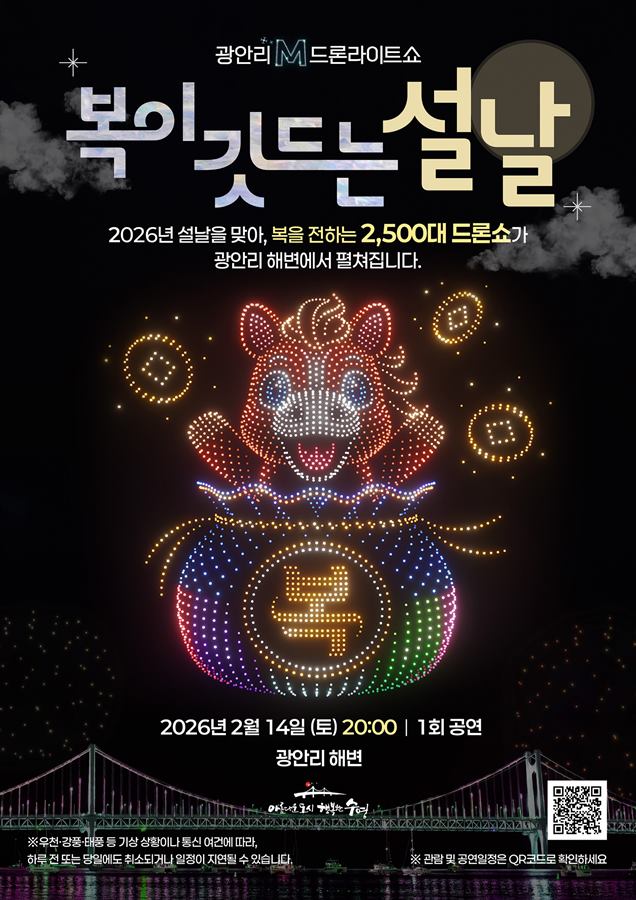 Celebrate Lunar New Year with a spectacular drone show
source: visitbusanCelebrate the joyous beginning of the Lunar New Year holiday at Gwangalli Beach. On Feb. 14, the Gwangalli M Drone Light Show will present a delightful spectacle, featuring 2,500 drones dancing across the night sky. The drones will weave intricate patterns representing the spirit of the New Year, as if Busan is sending a message of grand fortune to all, wishing everyone a fruitful and inspired year ahead. Scheduled for 8 p.m., this exclusive performance will take place only once, making it a must-see event for residents and visitors alike. To ensure safety and smooth operation, traffic restrictions will be in place from 7 to 9 p.m. on Feb. 14, covering the area from the Gwangalli SUP Zone intersection to Millak Hoe Town. Visitors are encouraged to arrive early and use public transportation when possible.Additionally, because the drones use frequency bands similar to Wi-Fi, free public Wi-Fi and mobile carrier Wi-Fi services will be temporarily suspended from 7 to 9 p.m. Attendees are also advised to turn off Wi-Fi on their mobile devices during the performance to help maintain stable drone flightsPlease note that, in the event of technical issues or adverse weather conditions, such as rain or strong winds, the show may be canceled or postponed, with updates provided up to the day of the event.As the long Lunar New Year holiday approaches, this dazzling display will fill the air with a festive and rich ambiance. Why not immerse yourself in these vivid visuals and exchange well-wishes for the year ahead against the iconic backdrop of Gwangalli?※ Gwangalli Marvelous Drone Light Show: A Seollal filled with Blessings ◎ Time: 8 p.m. on Feb. 14◎ Watch live on YouTube: @suyeongguTV<Today's Vocabulary - 오늘의 단어>intricate: 복잡한 restriction: 제한 postpone: 지연하다 ambiance: 분위기Editor: Song SoomiCopy Editors: Ryu Hyoseung, Anton J. Mapoy
Celebrate Lunar New Year with a spectacular drone show
source: visitbusanCelebrate the joyous beginning of the Lunar New Year holiday at Gwangalli Beach. On Feb. 14, the Gwangalli M Drone Light Show will present a delightful spectacle, featuring 2,500 drones dancing across the night sky. The drones will weave intricate patterns representing the spirit of the New Year, as if Busan is sending a message of grand fortune to all, wishing everyone a fruitful and inspired year ahead. Scheduled for 8 p.m., this exclusive performance will take place only once, making it a must-see event for residents and visitors alike. To ensure safety and smooth operation, traffic restrictions will be in place from 7 to 9 p.m. on Feb. 14, covering the area from the Gwangalli SUP Zone intersection to Millak Hoe Town. Visitors are encouraged to arrive early and use public transportation when possible.Additionally, because the drones use frequency bands similar to Wi-Fi, free public Wi-Fi and mobile carrier Wi-Fi services will be temporarily suspended from 7 to 9 p.m. Attendees are also advised to turn off Wi-Fi on their mobile devices during the performance to help maintain stable drone flightsPlease note that, in the event of technical issues or adverse weather conditions, such as rain or strong winds, the show may be canceled or postponed, with updates provided up to the day of the event.As the long Lunar New Year holiday approaches, this dazzling display will fill the air with a festive and rich ambiance. Why not immerse yourself in these vivid visuals and exchange well-wishes for the year ahead against the iconic backdrop of Gwangalli?※ Gwangalli Marvelous Drone Light Show: A Seollal filled with Blessings ◎ Time: 8 p.m. on Feb. 14◎ Watch live on YouTube: @suyeongguTV<Today's Vocabulary - 오늘의 단어>intricate: 복잡한 restriction: 제한 postpone: 지연하다 ambiance: 분위기Editor: Song SoomiCopy Editors: Ryu Hyoseung, Anton J. Mapoy
Food
-
.jpg&fileext=jpg&filetype=image/jpeg&filesize=73169) A new star joins the show
Busan’s gourmet scene is blooming like a meticulously curated garden. The city is now home to four Michelin-starred restaurants, marking a new era for local gastronomy. Le DORER, a contemporary Korean fine-dining establishment, recently earned one star in the 2026 Michelin Guide Seoul and Busan, released on March 5. The restaurant joins Mori, Palate and Fiotto – all boasting one star – atop Busan’s dining landscape.Furthermore, Busan welcomed a diverse array of eateries officially selected for the Michelin Guide. The list features Jin Dweji Gomtang, renowned for its deep, savory pork broth, and Moemiljip, which showcases the unique texture of 100% Korean buckwheat noodles. Other notable entries include Pyeongsanok, boasting a century of heritage with its signature slices of boiled pork; Unaju, famous for its grilled eel served over rice; and Iwa, acclaimed for its distinctive fish-ageing techniques. source: Michelin Guide⭐ Le DORER 르도헤 (Michelin One Star)A young yet remarkably accomplished head chef showcases an astonishing interpretation of Korean cuisine through sophisticated techniques. This chef from Busan offers a delightful exploration of the region’s seasonal ingredients, filtered through a modern perspective. While starting its journey as a Korean restaurant, Le DORER has evolved to redefine the genre’s essence with contemporary flair. Infused with French and Japanese techniques, each course offers an expansive, exciting experience, presenting familiar ingredients with bold and unexpected twists. Address: 2F, 37 Marine city 3-ro, Haeundae-guNaver Map: Click Hours: Lunch 12-2:30 p.m. / Dinner 5-10 p.m. Closed on Mondays and Tuesdays.Menu: Lunch Course 120,000 won / Dinner Course 210,000 wonsource: Michelin Guide🍜 Moemiljip 뫼밀집 (Bib Gourmand)Its signature noodles, made in-house entirely from Korean buckwheat, instantly awaken your senses to what authentic texture and taste truly feel like. The unique chewiness, combined with buckwheat’s deep, earthy flavor, is remarkably distinctive. These noodles pair perfectly with Moemiljip’s slices of boiled pork—bouncy, collagen-rich and deeply satisfying.Address: 2F, Orange Plaza, 23 Marine City 3-ro, Haeundae-guNaver Map: Click Hours: Lunch 11:30 a.m. – 3:30 p.m. Dinner 5-8:30 p.m. (Last orders 3, 8 p.m.). Closed on Mondays.Menu: Buckwheat Noodles with Perilla Oil 17,000 won.source: Michelin Guide🥣 Jin Dweji Gomtang 진돼지곰탕 Established in 2024, this eatery went viral almost immediately, drawing a younger crowd with its clear, savory pork broth. Dishes are made with Berkshire K black pigs from Jirisan; the prized breed is renowned for producing high-quality, heavily marbled and tender meat.Although Busan is traditionally known for Dwaeji-gukbap (Pork soup with rice), Jin Dweji Gomtang carves out its own lane with a different approach to similar ingredients: The broth is built around meat rather than bones, resulting in a clean, light soup that keeps diners craving another spoonful.The restaurant’s main location is near Gwangalli Beach, and another branch recently opened near Busan Station.Address: 2F, 4 Gwanganhaebyeon-ro 284 beon-gil, Suyeong-guNaver Map (Suyeong): Click Naver Map (Busan Station): Click Hours: Open daily from 9:30 a.m. to 9 p.m. (Last order 8:40 p.m.)Menu: Dweji Gomtang 13,000 won source: Michelin Guide🍱 Unaju 우나쥬Following the original recipes of Shirakawa, a grilled-eel-specialist restaurant in Nagoya founded in 1948, Unaju’s grilled eel is nothing short of artistry. With meticulous technique and patience, each fresh eel is double-grilled to perfection, yielding a crispy exterior that gives way to a delightfully springy, succulent interior.Address: 39 Cheongsapo-ro 67beon-gil, Haeundae-guNaver Map: Click Hours: Lunch 11 a.m. to 3 p.m. Dinner 5-10 p.m. (Last order 8:30 p.m.)Signature: Hitsumabushi (Nagoya-style grilled eel) 39,000 wonsource: Michelin Guide🦐 Iwa 이와Holding a patent for its specialized fish-ageing technique, Iwa’s chef is a true master of the unique characteristics and conditions of every catch. By bringing out the absolute best qualities in each fish, the chef presents meticulously aged sashimi that reveals a next-level texture and profound depth of flavor. At Iwa, guests can indulge in exquisite omakase-style courses at remarkably reasonable prices. Address: 2F, 13 Haeundaehaebyeon-ro 209 beon-gil, Haeundae-guNaver Map: Click Hours: Open from 12 to 10 p.m. Closed on Sundays.Menu: Omakase (Prices may vary)source: Busan City's official Naver Blog🥩 Pyeongsanok 평산옥Pyeongsanok, a local institution operated by the same family over four generations, specializes in “suyuk,” tender slices of boiled pork, and noodles. The restaurant has been serving guests for over a century, proving that simple food done well is always in demand. Address: 26, Choryangjung-ro, Dong-guNaver Map: Click Hours: Open from 11 a.m. to 8 p.m. Closed on Sundays.Menu: Suyuk 10,000 won※Restaurant information may be subject to change.<Today's Vocabulary - 오늘의 단어>astonishing: 놀라운 perspective: 관점 twists: 반전 buckwheat: 메밀 chewiness: 씹히는 맛 broth: 육수 branch: 지점 exquisite: 정교한 Editor: Song SoomiCopy Editors: Ryu Hyoseung, Anton J. Mapoy
A new star joins the show
Busan’s gourmet scene is blooming like a meticulously curated garden. The city is now home to four Michelin-starred restaurants, marking a new era for local gastronomy. Le DORER, a contemporary Korean fine-dining establishment, recently earned one star in the 2026 Michelin Guide Seoul and Busan, released on March 5. The restaurant joins Mori, Palate and Fiotto – all boasting one star – atop Busan’s dining landscape.Furthermore, Busan welcomed a diverse array of eateries officially selected for the Michelin Guide. The list features Jin Dweji Gomtang, renowned for its deep, savory pork broth, and Moemiljip, which showcases the unique texture of 100% Korean buckwheat noodles. Other notable entries include Pyeongsanok, boasting a century of heritage with its signature slices of boiled pork; Unaju, famous for its grilled eel served over rice; and Iwa, acclaimed for its distinctive fish-ageing techniques. source: Michelin Guide⭐ Le DORER 르도헤 (Michelin One Star)A young yet remarkably accomplished head chef showcases an astonishing interpretation of Korean cuisine through sophisticated techniques. This chef from Busan offers a delightful exploration of the region’s seasonal ingredients, filtered through a modern perspective. While starting its journey as a Korean restaurant, Le DORER has evolved to redefine the genre’s essence with contemporary flair. Infused with French and Japanese techniques, each course offers an expansive, exciting experience, presenting familiar ingredients with bold and unexpected twists. Address: 2F, 37 Marine city 3-ro, Haeundae-guNaver Map: Click Hours: Lunch 12-2:30 p.m. / Dinner 5-10 p.m. Closed on Mondays and Tuesdays.Menu: Lunch Course 120,000 won / Dinner Course 210,000 wonsource: Michelin Guide🍜 Moemiljip 뫼밀집 (Bib Gourmand)Its signature noodles, made in-house entirely from Korean buckwheat, instantly awaken your senses to what authentic texture and taste truly feel like. The unique chewiness, combined with buckwheat’s deep, earthy flavor, is remarkably distinctive. These noodles pair perfectly with Moemiljip’s slices of boiled pork—bouncy, collagen-rich and deeply satisfying.Address: 2F, Orange Plaza, 23 Marine City 3-ro, Haeundae-guNaver Map: Click Hours: Lunch 11:30 a.m. – 3:30 p.m. Dinner 5-8:30 p.m. (Last orders 3, 8 p.m.). Closed on Mondays.Menu: Buckwheat Noodles with Perilla Oil 17,000 won.source: Michelin Guide🥣 Jin Dweji Gomtang 진돼지곰탕 Established in 2024, this eatery went viral almost immediately, drawing a younger crowd with its clear, savory pork broth. Dishes are made with Berkshire K black pigs from Jirisan; the prized breed is renowned for producing high-quality, heavily marbled and tender meat.Although Busan is traditionally known for Dwaeji-gukbap (Pork soup with rice), Jin Dweji Gomtang carves out its own lane with a different approach to similar ingredients: The broth is built around meat rather than bones, resulting in a clean, light soup that keeps diners craving another spoonful.The restaurant’s main location is near Gwangalli Beach, and another branch recently opened near Busan Station.Address: 2F, 4 Gwanganhaebyeon-ro 284 beon-gil, Suyeong-guNaver Map (Suyeong): Click Naver Map (Busan Station): Click Hours: Open daily from 9:30 a.m. to 9 p.m. (Last order 8:40 p.m.)Menu: Dweji Gomtang 13,000 won source: Michelin Guide🍱 Unaju 우나쥬Following the original recipes of Shirakawa, a grilled-eel-specialist restaurant in Nagoya founded in 1948, Unaju’s grilled eel is nothing short of artistry. With meticulous technique and patience, each fresh eel is double-grilled to perfection, yielding a crispy exterior that gives way to a delightfully springy, succulent interior.Address: 39 Cheongsapo-ro 67beon-gil, Haeundae-guNaver Map: Click Hours: Lunch 11 a.m. to 3 p.m. Dinner 5-10 p.m. (Last order 8:30 p.m.)Signature: Hitsumabushi (Nagoya-style grilled eel) 39,000 wonsource: Michelin Guide🦐 Iwa 이와Holding a patent for its specialized fish-ageing technique, Iwa’s chef is a true master of the unique characteristics and conditions of every catch. By bringing out the absolute best qualities in each fish, the chef presents meticulously aged sashimi that reveals a next-level texture and profound depth of flavor. At Iwa, guests can indulge in exquisite omakase-style courses at remarkably reasonable prices. Address: 2F, 13 Haeundaehaebyeon-ro 209 beon-gil, Haeundae-guNaver Map: Click Hours: Open from 12 to 10 p.m. Closed on Sundays.Menu: Omakase (Prices may vary)source: Busan City's official Naver Blog🥩 Pyeongsanok 평산옥Pyeongsanok, a local institution operated by the same family over four generations, specializes in “suyuk,” tender slices of boiled pork, and noodles. The restaurant has been serving guests for over a century, proving that simple food done well is always in demand. Address: 26, Choryangjung-ro, Dong-guNaver Map: Click Hours: Open from 11 a.m. to 8 p.m. Closed on Sundays.Menu: Suyuk 10,000 won※Restaurant information may be subject to change.<Today's Vocabulary - 오늘의 단어>astonishing: 놀라운 perspective: 관점 twists: 반전 buckwheat: 메밀 chewiness: 씹히는 맛 broth: 육수 branch: 지점 exquisite: 정교한 Editor: Song SoomiCopy Editors: Ryu Hyoseung, Anton J. Mapoy
-
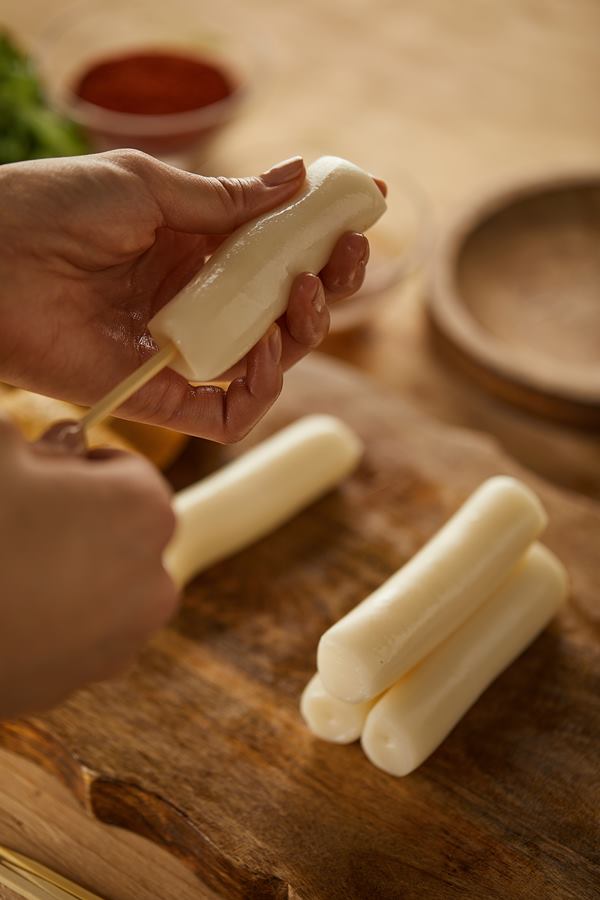 The street foods that define Busan winters
source: getty imageIn any neighborhood and at any hour, people will stand around vinyl tents, warmed by steam emanating from cooktops. These food stalls, ubiquitous nationwide, specialize in Korean snacks and beckon peckish passersby with promises of soul-warming meals. Through that magic combination of flavor and nostalgia, these comfort foods have the power to cure whatever ails you.Broken heart? Tteokbokki. Job-related stress? Gimbap. Existential crisis? Ramyeon.When what ails you is the weather, specifically biting winds and freezing temperatures, healing comes in two forms: "Eomuk," fish cakes, or "multteok," rice cakes in broth. These cold-weather staples warm the body and the mind.🍥 MultteokEomuk's longtime partner is multteok, long, chewy rice cakes skewered and gently soaked in the same fish cake broth. The result is a tender, springy and subtly savory snack. Common at Busan snack stalls since at least the 1960s, multteok is rarely found outside the region.Sometimes used as a base for tteokbokki, multteok adds an extra layer of depth to the familiar sweet-spicy dish. For the most authentic experience, head to traditional markets in Jagalchi or Bujeon, where eomuk and multteok attract long lines at bustling street stalls.<Today's Vocabulary - 오늘의 단어>neighborhood: 지역 tender: 부드러운 springy: 탄력 있는 authentic: 정통의Editor: Song SoomiCopy Editors: Ryu Hyoseung, Anton J. Mapoy
The street foods that define Busan winters
source: getty imageIn any neighborhood and at any hour, people will stand around vinyl tents, warmed by steam emanating from cooktops. These food stalls, ubiquitous nationwide, specialize in Korean snacks and beckon peckish passersby with promises of soul-warming meals. Through that magic combination of flavor and nostalgia, these comfort foods have the power to cure whatever ails you.Broken heart? Tteokbokki. Job-related stress? Gimbap. Existential crisis? Ramyeon.When what ails you is the weather, specifically biting winds and freezing temperatures, healing comes in two forms: "Eomuk," fish cakes, or "multteok," rice cakes in broth. These cold-weather staples warm the body and the mind.🍥 MultteokEomuk's longtime partner is multteok, long, chewy rice cakes skewered and gently soaked in the same fish cake broth. The result is a tender, springy and subtly savory snack. Common at Busan snack stalls since at least the 1960s, multteok is rarely found outside the region.Sometimes used as a base for tteokbokki, multteok adds an extra layer of depth to the familiar sweet-spicy dish. For the most authentic experience, head to traditional markets in Jagalchi or Bujeon, where eomuk and multteok attract long lines at bustling street stalls.<Today's Vocabulary - 오늘의 단어>neighborhood: 지역 tender: 부드러운 springy: 탄력 있는 authentic: 정통의Editor: Song SoomiCopy Editors: Ryu Hyoseung, Anton J. Mapoy
-
 The street foods that define Busan winters
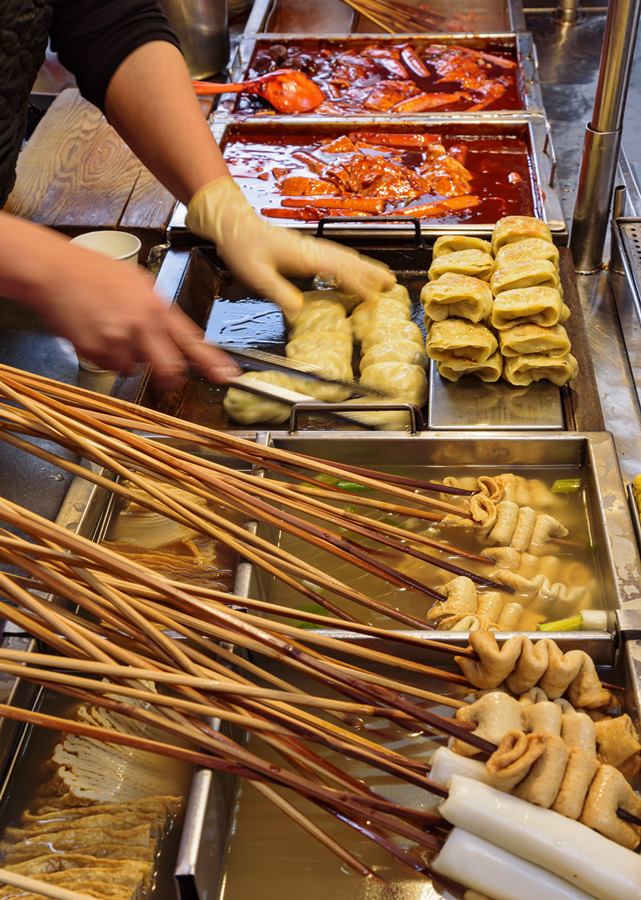
source: getty imageIn any neighborhood and at any hour, people will stand around vinyl tents, warmed by steam emanating from cooktops. These food stalls, ubiquitous nationwide, specialize in Korean snacks and beckon peckish passersby with promises of soul-warming meals. Through that magic combination of flavor and nostalgia, these comfort foods have the power to cure whatever ails you.Broken heart? Tteokbokki. Job-related stress? Gimbap.Existential crisis? Ramyeon.When what ails you is the weather, specifically biting winds and freezing temperatures, healing comes in two forms: "Eomuk," fish cakes, or "multteok," rice cakes in broth. These cold-weather staples warm the body and the mind.🍥 Busan eomukWhen it's cold out, many Koreans instinctively reach for eomuk. If you've spent any time wandering Busan streets, you know exactly what that is: Ribbons of skewered fish cakes relaxing in a warm and savory broth.While enjoyed nationwide, Busan eomuk stands apart. Thanks to Busan's coastal location and access to fresh seafood, Busan eomuk delivers rich flavor and a firm bite, earning its place among the city's must-try specialties.Eomuk traces its roots to Japanese "kamaboko" and "oden," the most familiar version being the pink-and-white half-moon fish cakes floating in a bowl of ramen. Fish cakes were introduced in Korea during the Japanese Occupation. Given Busan's port and proximity to Japan, several fish cake factories were established in the city. After liberation, Korean producers adapted the fish cakes to suit local tastes, creating what is now recognized as authentic, Busan-style eomuk.What truly distinguishes Busan eomuk today is quality. Many Busan producers use up to 70 percent fish meat, well above the typical 50 to 60 percent of other producers, resulting in a cleaner, more robust taste (the filler is usually starch, flour and vegetables). Innovation continues with creative additions like black sesame or cream cheese, as well as playful forms such as eomuk noodles and croquettes. The classics remain, but there is always something new to discover.<Today's Vocabulary - 오늘의 단어>neighborhood: 지역 ubiquitous: 어디에나 있는 beckon: 손짓하다 peckish: 약간 배가 고픈 nostalgia: 향수 broth: 육수 liberation: 해방 Editor: Song SoomiCopy Editors: Ryu Hyoseung, Anton J. Mapoy
The street foods that define Busan winters
source: getty imageIn any neighborhood and at any hour, people will stand around vinyl tents, warmed by steam emanating from cooktops. These food stalls, ubiquitous nationwide, specialize in Korean snacks and beckon peckish passersby with promises of soul-warming meals. Through that magic combination of flavor and nostalgia, these comfort foods have the power to cure whatever ails you.Broken heart? Tteokbokki. Job-related stress? Gimbap.Existential crisis? Ramyeon.When what ails you is the weather, specifically biting winds and freezing temperatures, healing comes in two forms: "Eomuk," fish cakes, or "multteok," rice cakes in broth. These cold-weather staples warm the body and the mind.🍥 Busan eomukWhen it's cold out, many Koreans instinctively reach for eomuk. If you've spent any time wandering Busan streets, you know exactly what that is: Ribbons of skewered fish cakes relaxing in a warm and savory broth.While enjoyed nationwide, Busan eomuk stands apart. Thanks to Busan's coastal location and access to fresh seafood, Busan eomuk delivers rich flavor and a firm bite, earning its place among the city's must-try specialties.Eomuk traces its roots to Japanese "kamaboko" and "oden," the most familiar version being the pink-and-white half-moon fish cakes floating in a bowl of ramen. Fish cakes were introduced in Korea during the Japanese Occupation. Given Busan's port and proximity to Japan, several fish cake factories were established in the city. After liberation, Korean producers adapted the fish cakes to suit local tastes, creating what is now recognized as authentic, Busan-style eomuk.What truly distinguishes Busan eomuk today is quality. Many Busan producers use up to 70 percent fish meat, well above the typical 50 to 60 percent of other producers, resulting in a cleaner, more robust taste (the filler is usually starch, flour and vegetables). Innovation continues with creative additions like black sesame or cream cheese, as well as playful forms such as eomuk noodles and croquettes. The classics remain, but there is always something new to discover.<Today's Vocabulary - 오늘의 단어>neighborhood: 지역 ubiquitous: 어디에나 있는 beckon: 손짓하다 peckish: 약간 배가 고픈 nostalgia: 향수 broth: 육수 liberation: 해방 Editor: Song SoomiCopy Editors: Ryu Hyoseung, Anton J. Mapoy
Life
-
 Study Busan Hub can now process fingerprint registration for international students
source: getty imageSince opening on Feb. 10, Study Busan Hub has helped international students acclimate to living and studying in the city. It recently launched a fingerprint registration service, in collaboration with the Busan Immigration Office, that will further streamline the immigration process.Fingerprint registration is mandatory for immigrants to obtain an Alien Registration Card. Students typically complete this process by visiting the immigration office in Jung-gu District.Now, students can get their fingerprints taken at Study Busan Hub, located at the National Pension Service Building in Yeonje-gu District. The service ensures a prompt, easy process with minimal wait times, and is particularly beneficial to students whose campuses are far from the immigration office in Jung-gu.In addition, Busan immigration authorities will also provide on-campus services periodically, enabling students to undertake the immigration process in their own backyards. On March 26, immigration officers are slated to visit Dong-Eui University to complete fingerprint registration for approximately 200 international students.Study Busan Hub is committed to supporting international students and fostering an environment that helps global talents flourish in and out of the classroom.◎ Study Busan Hub: 2F, National Pension Service Busan Office, 1000 Jungang-daero, Yeonje-gu (about four minutes from City Hall Station, Exit 2)◎ Google Maps: Click <Today's Vocabulary - 오늘의 단어>acclimate: 적응하다 fingerprint: 지문 registration: 등록 prompt: 즉시 be committed to: ~에 헌신하다Editor: Song SoomiCopy Editors: Ryu Hyoseung, Anton J. Mapoy
Study Busan Hub can now process fingerprint registration for international students
source: getty imageSince opening on Feb. 10, Study Busan Hub has helped international students acclimate to living and studying in the city. It recently launched a fingerprint registration service, in collaboration with the Busan Immigration Office, that will further streamline the immigration process.Fingerprint registration is mandatory for immigrants to obtain an Alien Registration Card. Students typically complete this process by visiting the immigration office in Jung-gu District.Now, students can get their fingerprints taken at Study Busan Hub, located at the National Pension Service Building in Yeonje-gu District. The service ensures a prompt, easy process with minimal wait times, and is particularly beneficial to students whose campuses are far from the immigration office in Jung-gu.In addition, Busan immigration authorities will also provide on-campus services periodically, enabling students to undertake the immigration process in their own backyards. On March 26, immigration officers are slated to visit Dong-Eui University to complete fingerprint registration for approximately 200 international students.Study Busan Hub is committed to supporting international students and fostering an environment that helps global talents flourish in and out of the classroom.◎ Study Busan Hub: 2F, National Pension Service Busan Office, 1000 Jungang-daero, Yeonje-gu (about four minutes from City Hall Station, Exit 2)◎ Google Maps: Click <Today's Vocabulary - 오늘의 단어>acclimate: 적응하다 fingerprint: 지문 registration: 등록 prompt: 즉시 be committed to: ~에 헌신하다Editor: Song SoomiCopy Editors: Ryu Hyoseung, Anton J. Mapoy
-
 Busan provides up to 500,000 won for multi-child families
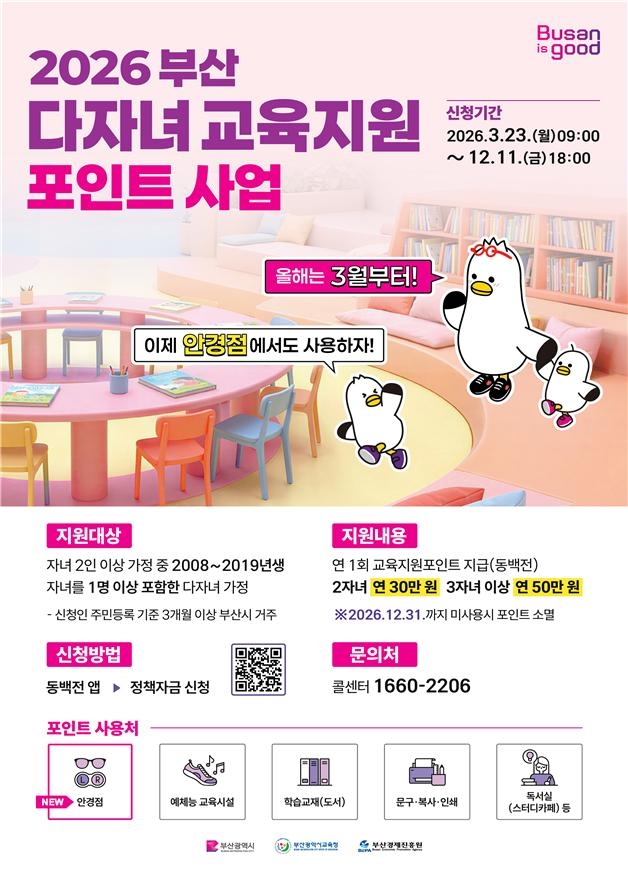
Is Busan good for families with children? Absolutely! To help ease the financial burden of education, Busan City and the Busan Metropolitan Office of Education are providing a subsidy to families with two or more children. Launched in 2024, this initiative has been continuously improved with a simplified procedure and an expanded application period. Notably, starting this year, the subsidy can now be used at optical shops. The program is open to all eligible residents, regardless of income or property holdings. To qualify, families must have at least one child born between 2008 and 2019 and must have been registered residents of Busan for at least three months. For multicultural families, foreign parents are eligible if their children hold Korean nationality. However, the subsidy is not available if every family member is a foreign national, or if both parents and children are not officially registered in Busan.When approved, households with two children will receive 300,000 won, while those with three or more children will receive 500,000 won. The subsidy is issued in Dongbaek Jeon Points, Busan’s local currency. Therefore, applicants must have a Dongbaek Jeon account in advance.The points can be used for educational expenses at various child-related facilities, including local bookstores, study cafes, arts and sports academies and print shops. The inclusion of optical shops this year further ensures support for children’s health.While online purchases are generally restricted, a special exception allows usage at four designated retailers: Kyobo Bookstore, Aladin, Youngpoong Bookstore and Yes24. To support the value of public education, the subsidy cannot be used at private tutoring academies for core subjects such as Korean, English or math. Applications are open until 6 p.m. on Dec. 11 via the Dongbaek Jeon mobile app. To apply, navigate to: Dongbaek Jeon App > Policy Fund Application > 2026 Multi-Child Education Support Points (2026 다자녀 교육지원포인트). Subsidies are typically paid immediately upon approval if all children are registered under the same household. If children are registered separately, additional verification of family relationships is required, which may delay the process.Applicants without a mobile device under their name, or those using a basic cell phone, can call the Busan Multi-Child Education Support Points Call Center at 1660-2206 for assistance.※ 2026 Busan Multi-Child Education Support Points◎ Dedicated Call Center: 1660-2206◎ Dongbaek Jeon Customer Service: 1577-1432<Today's Vocabulary - 오늘의 단어>burden: 부담 subsidy: 보조금 optical shop: 안경원 regardless of: ~와 관계없이 multicultural: 다문화의 in advance: 사전에 expense: 비용 exception: 예외 immediately: 즉시 Editor: Song SoomiCopy Editors: Ryu Hyoseung, Anton J. Mapoy
Busan provides up to 500,000 won for multi-child families
Is Busan good for families with children? Absolutely! To help ease the financial burden of education, Busan City and the Busan Metropolitan Office of Education are providing a subsidy to families with two or more children. Launched in 2024, this initiative has been continuously improved with a simplified procedure and an expanded application period. Notably, starting this year, the subsidy can now be used at optical shops. The program is open to all eligible residents, regardless of income or property holdings. To qualify, families must have at least one child born between 2008 and 2019 and must have been registered residents of Busan for at least three months. For multicultural families, foreign parents are eligible if their children hold Korean nationality. However, the subsidy is not available if every family member is a foreign national, or if both parents and children are not officially registered in Busan.When approved, households with two children will receive 300,000 won, while those with three or more children will receive 500,000 won. The subsidy is issued in Dongbaek Jeon Points, Busan’s local currency. Therefore, applicants must have a Dongbaek Jeon account in advance.The points can be used for educational expenses at various child-related facilities, including local bookstores, study cafes, arts and sports academies and print shops. The inclusion of optical shops this year further ensures support for children’s health.While online purchases are generally restricted, a special exception allows usage at four designated retailers: Kyobo Bookstore, Aladin, Youngpoong Bookstore and Yes24. To support the value of public education, the subsidy cannot be used at private tutoring academies for core subjects such as Korean, English or math. Applications are open until 6 p.m. on Dec. 11 via the Dongbaek Jeon mobile app. To apply, navigate to: Dongbaek Jeon App > Policy Fund Application > 2026 Multi-Child Education Support Points (2026 다자녀 교육지원포인트). Subsidies are typically paid immediately upon approval if all children are registered under the same household. If children are registered separately, additional verification of family relationships is required, which may delay the process.Applicants without a mobile device under their name, or those using a basic cell phone, can call the Busan Multi-Child Education Support Points Call Center at 1660-2206 for assistance.※ 2026 Busan Multi-Child Education Support Points◎ Dedicated Call Center: 1660-2206◎ Dongbaek Jeon Customer Service: 1577-1432<Today's Vocabulary - 오늘의 단어>burden: 부담 subsidy: 보조금 optical shop: 안경원 regardless of: ~와 관계없이 multicultural: 다문화의 in advance: 사전에 expense: 비용 exception: 예외 immediately: 즉시 Editor: Song SoomiCopy Editors: Ryu Hyoseung, Anton J. Mapoy
-
 City taxis to provide receipts in English and Korean
source: getty imageA new initiative is in place to alleviate miscommunication between Busan taxi drivers and their non-Korean-speaking passengers. Starting March 30, all taxis will issue receipts with key information detailed in Korean and English.The new receipts are a response to issues regarding international visitors’ taxi experiences. About half of all complaints lodged against taxi services last year were about fare gouging.The bilingual receipts will include trip details such as pick-up and drop-off times, as well as itemized surcharges. As of March 2026, Busan has approximately 18,000 taxis in operation, comprising 13,000 private and 5,000 company-owned vehicles.<Today's Vocabulary - 오늘의 단어>alleviate: 완화하다 receipt: 영수증 gouge: 바가지를 씌우다 surcharge: 추가요금Editor: Song SoomiCopy Editors: Ryu Hyoseung, Anton J. Mapoy
City taxis to provide receipts in English and Korean
source: getty imageA new initiative is in place to alleviate miscommunication between Busan taxi drivers and their non-Korean-speaking passengers. Starting March 30, all taxis will issue receipts with key information detailed in Korean and English.The new receipts are a response to issues regarding international visitors’ taxi experiences. About half of all complaints lodged against taxi services last year were about fare gouging.The bilingual receipts will include trip details such as pick-up and drop-off times, as well as itemized surcharges. As of March 2026, Busan has approximately 18,000 taxis in operation, comprising 13,000 private and 5,000 company-owned vehicles.<Today's Vocabulary - 오늘의 단어>alleviate: 완화하다 receipt: 영수증 gouge: 바가지를 씌우다 surcharge: 추가요금Editor: Song SoomiCopy Editors: Ryu Hyoseung, Anton J. Mapoy
Views
-
![[SNAPSHOT BUSAN] Busan springs to life after a long winter thumbnail](/ImagePrint.do?dir=smartEditor&savename=a90fefe5f80846829a9b2653c40b4aa0&realname=8-1cw24리틀야구_이민재.jpg&fileext=jpg&filetype=image/jpeg&filesize=317945) [SNAPSHOT BUSAN] Busan springs to life after a long winter
While Busan is a global hub of commerce, culture and technology, it is also a city where ordinary people live out their daily lives. Away from the glitz and glamour, people chase dreams, spend time with loved ones and experience the highs and lows of a life well lived. Snapshot Busan captures these quiet moments and shows the inherent beauty in daily routines. This edition features Busan citizens spending time outdoors and embracing the early spring. The promise of warmer weather and longer days imbues each scene with a revitalizing energy. All images were taken at Hwamyeong Eco Park in Buk-gu District by photographer Minjae Lee.Cherry blossoms don't just herald the arrival of spring; they are a sign that it's baseball season. In Busan, baseball is a family heirloom, a joy passed from one generation to the next.Busanites also love soccer, where a passion for the game pulls people onto the pitch.A familiar sight when the weather is nice; Fathers chasing after their energetic children.
[SNAPSHOT BUSAN] Busan springs to life after a long winter
While Busan is a global hub of commerce, culture and technology, it is also a city where ordinary people live out their daily lives. Away from the glitz and glamour, people chase dreams, spend time with loved ones and experience the highs and lows of a life well lived. Snapshot Busan captures these quiet moments and shows the inherent beauty in daily routines. This edition features Busan citizens spending time outdoors and embracing the early spring. The promise of warmer weather and longer days imbues each scene with a revitalizing energy. All images were taken at Hwamyeong Eco Park in Buk-gu District by photographer Minjae Lee.Cherry blossoms don't just herald the arrival of spring; they are a sign that it's baseball season. In Busan, baseball is a family heirloom, a joy passed from one generation to the next.Busanites also love soccer, where a passion for the game pulls people onto the pitch.A familiar sight when the weather is nice; Fathers chasing after their energetic children.
-
![[SNAPSHOT BUSAN] The people who start Busan's day thumbnail](/ImagePrint.do?dir=smartEditor&savename=b019a64a8ed14f72b63e319f203884a6&realname=8-1cw28송도해수욕장_이민재.jpg&fileext=jpg&filetype=image/jpeg&filesize=267618) [SNAPSHOT BUSAN] The people who start Busan's day
Busan remains where it is, yet the city wears countless layers of captivating moments. A fleeting slice of time may pass quickly, but it leaves a deep trace of the city's day behind. "Snapshot Busan" finds a tranquil angle on these scenes and captures them. In this edition, we turn our gaze toward morning people, those who breathe life into the city. Even before the sun rises, Busan's "morning larks" are already busy working, waking the city with their vibrant energy. These unheralded citizens rise early to make sure the rest of us have everything we need to make it through the day.Songdo Beach, Korea's oldest beach, has welcomed countless people for generations. like the grandmother and granddaughter in the photo, who are enjoying their morning exercise.Busan Cooperative Fish Market buzzes with energy from dawn.Baristas around the city make espresso shots that power Busan's labor force.
[SNAPSHOT BUSAN] The people who start Busan's day
Busan remains where it is, yet the city wears countless layers of captivating moments. A fleeting slice of time may pass quickly, but it leaves a deep trace of the city's day behind. "Snapshot Busan" finds a tranquil angle on these scenes and captures them. In this edition, we turn our gaze toward morning people, those who breathe life into the city. Even before the sun rises, Busan's "morning larks" are already busy working, waking the city with their vibrant energy. These unheralded citizens rise early to make sure the rest of us have everything we need to make it through the day.Songdo Beach, Korea's oldest beach, has welcomed countless people for generations. like the grandmother and granddaughter in the photo, who are enjoying their morning exercise.Busan Cooperative Fish Market buzzes with energy from dawn.Baristas around the city make espresso shots that power Busan's labor force.
-
%20%EC%98%A4%EB%9E%91%EB%8C%80_%EA%B0%88%EB%A7%B7%EA%B8%B8.jpg&fileext=jpg&filetype=image/jpeg&filesize=314941) Going the extra mile to understand Busan
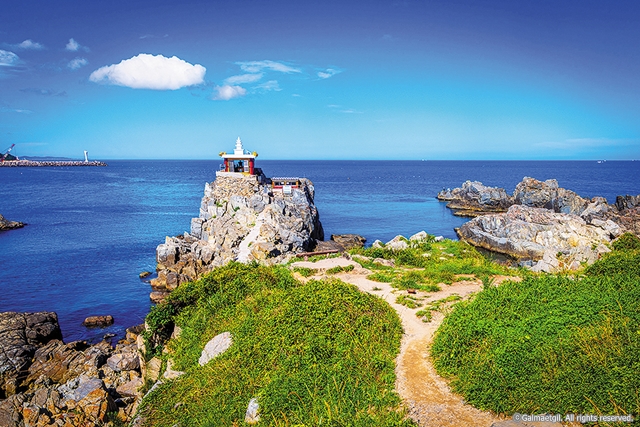
The Busan Galmaetgil is a sweeping walking trail that traces the city's natural outline, gradually connecting Busan into a single vibrant loop. Stretching about 279 kilometers, the route is divided into nine main courses and 23 sections, designed to showcase the city's exceptional natural assets and modern urban charm. Along the way, dramatic seascapes meet lush green mountains, while soaring cityscapes blend effortlessly with the warmth of intimate communities. Walking the Galmaetgil offers an immediate sense of Busan's rhythm. The trail moves from the steady crash of waves to forested slopes, then slips into quiet alleys where everyday life unfolds at an unhurried pace. Rather than presenting the city as a series of landmarks, the path reveals how Busan is shaped and lived in, step by step. Accessibility is one of Galmaetgil's strongest features. Many sections begin near subway stations or bus stops, making it easy to choose routes that match different schedules and energy levels. The thoughtful design allows walkers of varying abilities to enjoy the experience comfortably, whether for a short stroll or a full-day hike. More than a sightseeing route, the Galmaetgil invites understanding. It passes fishing villages, harbors and timeworn streets, offering an honest look at daily life. By following these paths, visitors gain a clear sense of Busan's character and the places that shape the people who live here.Orangdae (Route 1-2) Dongbaekseom Island (Route 2-1) Yeongdo Sky Observatory (Route 3-3) Dudo Observatory (Route 4-1) Yeondae Peak (Route 5-2) Samnak Ecological Park Lotus Complex (Route 6-1) Seongjigok Reservoir Cypress Forest Trail (Route 7-1) Hoedong-dong Suyeong Riverside Trail (Route 8-1) Yongso Well-Being Park (Route 9-2) <Today's Vocabulary - 오늘의 단어>Accessibility: 접근성 Sightseeing: 관광 Cityscape: 도시 풍경Editor: Song SoomiCopy Editors: Ryu Hyoseung, Anton J. Mapoy
Going the extra mile to understand Busan
The Busan Galmaetgil is a sweeping walking trail that traces the city's natural outline, gradually connecting Busan into a single vibrant loop. Stretching about 279 kilometers, the route is divided into nine main courses and 23 sections, designed to showcase the city's exceptional natural assets and modern urban charm. Along the way, dramatic seascapes meet lush green mountains, while soaring cityscapes blend effortlessly with the warmth of intimate communities. Walking the Galmaetgil offers an immediate sense of Busan's rhythm. The trail moves from the steady crash of waves to forested slopes, then slips into quiet alleys where everyday life unfolds at an unhurried pace. Rather than presenting the city as a series of landmarks, the path reveals how Busan is shaped and lived in, step by step. Accessibility is one of Galmaetgil's strongest features. Many sections begin near subway stations or bus stops, making it easy to choose routes that match different schedules and energy levels. The thoughtful design allows walkers of varying abilities to enjoy the experience comfortably, whether for a short stroll or a full-day hike. More than a sightseeing route, the Galmaetgil invites understanding. It passes fishing villages, harbors and timeworn streets, offering an honest look at daily life. By following these paths, visitors gain a clear sense of Busan's character and the places that shape the people who live here.Orangdae (Route 1-2) Dongbaekseom Island (Route 2-1) Yeongdo Sky Observatory (Route 3-3) Dudo Observatory (Route 4-1) Yeondae Peak (Route 5-2) Samnak Ecological Park Lotus Complex (Route 6-1) Seongjigok Reservoir Cypress Forest Trail (Route 7-1) Hoedong-dong Suyeong Riverside Trail (Route 8-1) Yongso Well-Being Park (Route 9-2) <Today's Vocabulary - 오늘의 단어>Accessibility: 접근성 Sightseeing: 관광 Cityscape: 도시 풍경Editor: Song SoomiCopy Editors: Ryu Hyoseung, Anton J. Mapoy

 busan.go.kr +