News
-
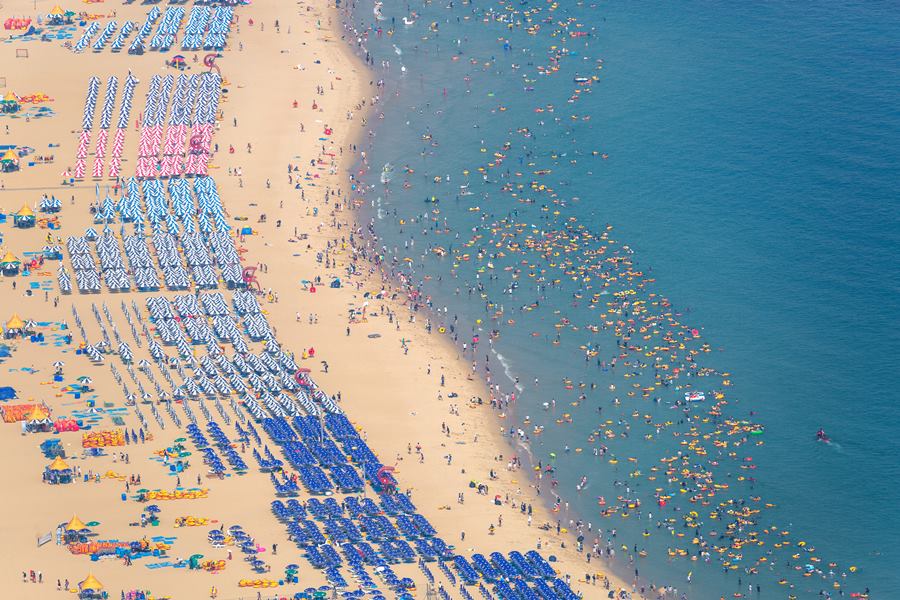 Busan sets tourism records in consecutive months
source: Busan Tourism ArchiveBusan welcomed 2,927,674 international visitors from January to July, putting the city on track to reach its goal of 4 million international visitors for the year. The figure represents a 46.1% year-over-year increase and already accounts for 73.2% of the city’s yearly target. Busan saw its highest monthly visitor total of the year in July, when 507,045 international tourists visited the city. This surpassed the previous monthly record of 484,057 visitors set in June, setting a new high for a consecutive month. With monthly visitor counts generally ranging between 400,000 and 500,000, Busan was expected to surpass the 3 million mark in early August, needing just over 72,000 more visitors to reach the milestone. Last year, the city passed the 3-million threshold for the first time in October, while this year, it was expected to reach the figure two months earlier. The city will release the official August figures at the end of September.In July alone, Taiwan ranked first with 128,000 visitors, followed by China with 125,000, Japan with 49,000 and the United States with 40,000. The latest figures also point to particularly strong growth from the U.S. market. From January to July, visitors from the United States rose 78.4% year over year, from 145,535 to 259,675. Given the current lack of direct flights between the two destinations, the sharp increase suggests that Busan is extending its reach beyond nearby Asian markets and gaining traction as a destination for long-haul travelers. The influx of international visitors is also driving higher spending in the city. International visitors’ card spending in Busan reached 742.3 billion won from January to July, up 50.8% from the same period last year. This put Busan second nationwide, behind Seoul. Medical tourism spending was particularly notable, soaring 118.4% year over year and giving Busan a 37% share of medical tourism spending outside Seoul. Building on this momentum, Busan plans to further strengthen its tourism sector through a series of major events and visitor-focused initiatives. Starting in September, “2026 Busan Global City Week” will bring together the city and its global partner cities to strengthen cooperation and expand international networks. October will also be packed with major international events, including Festival Shiwol, the Busan International Rock Festival, Busan UN Week, and the Global City Tourism Summit. The city is also rolling out measures to make travel more convenient for international visitors. Visit Busan Pass kiosks will be installed at Gimhae International Airport and Busan Station, allowing travelers to purchase the pass conveniently at major transportation hubs. Busan will also upgrade its tourism information systems at popular attractions across the city, making it easier for visitors to find the information they need and enjoy a more seamless travel experience. <Today's Vocabulary - 오늘의 단어>surpass: 능가하다 consecutive: 연속되는 traction: 견인 strengthen: 강화하다 conveniently: 편리하게Editor: Song SoomiCopy Editors: Ryu Hyoseung, Anton J. Mapoy
Busan sets tourism records in consecutive months
source: Busan Tourism ArchiveBusan welcomed 2,927,674 international visitors from January to July, putting the city on track to reach its goal of 4 million international visitors for the year. The figure represents a 46.1% year-over-year increase and already accounts for 73.2% of the city’s yearly target. Busan saw its highest monthly visitor total of the year in July, when 507,045 international tourists visited the city. This surpassed the previous monthly record of 484,057 visitors set in June, setting a new high for a consecutive month. With monthly visitor counts generally ranging between 400,000 and 500,000, Busan was expected to surpass the 3 million mark in early August, needing just over 72,000 more visitors to reach the milestone. Last year, the city passed the 3-million threshold for the first time in October, while this year, it was expected to reach the figure two months earlier. The city will release the official August figures at the end of September.In July alone, Taiwan ranked first with 128,000 visitors, followed by China with 125,000, Japan with 49,000 and the United States with 40,000. The latest figures also point to particularly strong growth from the U.S. market. From January to July, visitors from the United States rose 78.4% year over year, from 145,535 to 259,675. Given the current lack of direct flights between the two destinations, the sharp increase suggests that Busan is extending its reach beyond nearby Asian markets and gaining traction as a destination for long-haul travelers. The influx of international visitors is also driving higher spending in the city. International visitors’ card spending in Busan reached 742.3 billion won from January to July, up 50.8% from the same period last year. This put Busan second nationwide, behind Seoul. Medical tourism spending was particularly notable, soaring 118.4% year over year and giving Busan a 37% share of medical tourism spending outside Seoul. Building on this momentum, Busan plans to further strengthen its tourism sector through a series of major events and visitor-focused initiatives. Starting in September, “2026 Busan Global City Week” will bring together the city and its global partner cities to strengthen cooperation and expand international networks. October will also be packed with major international events, including Festival Shiwol, the Busan International Rock Festival, Busan UN Week, and the Global City Tourism Summit. The city is also rolling out measures to make travel more convenient for international visitors. Visit Busan Pass kiosks will be installed at Gimhae International Airport and Busan Station, allowing travelers to purchase the pass conveniently at major transportation hubs. Busan will also upgrade its tourism information systems at popular attractions across the city, making it easier for visitors to find the information they need and enjoy a more seamless travel experience. <Today's Vocabulary - 오늘의 단어>surpass: 능가하다 consecutive: 연속되는 traction: 견인 strengthen: 강화하다 conveniently: 편리하게Editor: Song SoomiCopy Editors: Ryu Hyoseung, Anton J. Mapoy
-
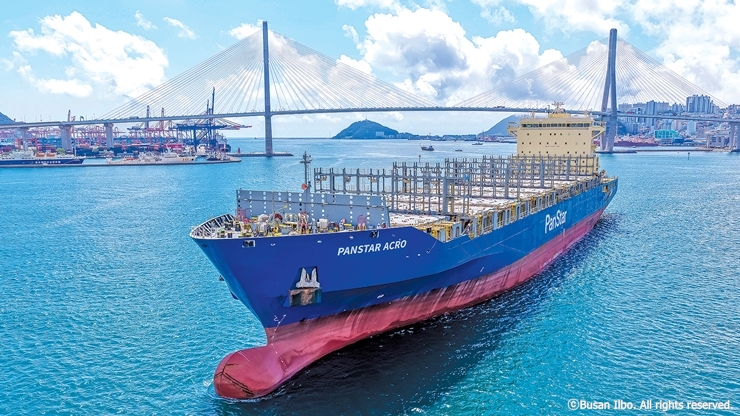 The route to the Arctic starts in Busan
PanStar Acro Busan is heading north. The first Korean container ship to travel the Arctic shipping route departed from Busan New Port on Aug. 22. The pilot voyage is being undertaken by the 2,800-TEU (twenty-foot equivalent unit) PanStar Acro, operated by Busan-based PanStar Line. The ice-class PanStar Acro will sail the Northern Sea Route through the Bering Strait and across the Arctic Ocean to call at Felixstowe, U.K.; Rotterdam, the Netherlands; Hamburg, Germany; and Gdansk, Poland. The trip is more than a trial run; PanStar is testing the commercial viability of the route by transporting 837 TEU of cargo, including auto parts, synthetic resins, used cars, food and K-beauty products. A successful operation could bring significant upside to Busan's economy. The journey is expected to take about 45 days. Compared with the traditional passage through the Suez Canal, the Arctic route connecting Asia and Europe shortens the trip by about 7,000 kilometers and 10 days, reducing transit time by about 30%. The shorter travel time may allow shippers to trim logistics costs and diversify their supply chains. A business agreement between Busan City and PanStar Line will have the city provide administrative support and help secure cargo. Using data gathered on the route, cargo and vessel operations, the city can shape related industries and support policies, laying the groundwork for Busan to become a leading power in Arctic shipping.
The route to the Arctic starts in Busan
PanStar Acro Busan is heading north. The first Korean container ship to travel the Arctic shipping route departed from Busan New Port on Aug. 22. The pilot voyage is being undertaken by the 2,800-TEU (twenty-foot equivalent unit) PanStar Acro, operated by Busan-based PanStar Line. The ice-class PanStar Acro will sail the Northern Sea Route through the Bering Strait and across the Arctic Ocean to call at Felixstowe, U.K.; Rotterdam, the Netherlands; Hamburg, Germany; and Gdansk, Poland. The trip is more than a trial run; PanStar is testing the commercial viability of the route by transporting 837 TEU of cargo, including auto parts, synthetic resins, used cars, food and K-beauty products. A successful operation could bring significant upside to Busan's economy. The journey is expected to take about 45 days. Compared with the traditional passage through the Suez Canal, the Arctic route connecting Asia and Europe shortens the trip by about 7,000 kilometers and 10 days, reducing transit time by about 30%. The shorter travel time may allow shippers to trim logistics costs and diversify their supply chains. A business agreement between Busan City and PanStar Line will have the city provide administrative support and help secure cargo. Using data gathered on the route, cargo and vessel operations, the city can shape related industries and support policies, laying the groundwork for Busan to become a leading power in Arctic shipping.
-
 Busan on track to welcome 4 million foreign visitors
Foreign tourists take a commemorative photo at Haeundae Beach.Foreigners try on hanbok at Gamcheon Culture Village. Busan welcomed 2,420,629 international visitors in the first half of 2026, already achieving 60.5% of its annual target of 4 million. Compared with the same period last year, the number of international visitors rose 43.9% from 1,682,415. In June alone, Busan welcomed 484,057 international visitors, the highest monthly figure recorded this year. Taiwan remained Busan's largest source market with 477,606 visitors, followed by China (468,876), Japan (291,141), the United States (219,147) and the Philippines (93,061). Visitor numbers from Taiwan increased 54% year on year, accounting for the largest share of cumulative arrivals in the first half of the year at 19.7%. The city also found that hosting major performances attracts international visitors. Using data from mobile carrier KT and credit card company BC, the analysis showed that the area within a 3-kilometer radius of Busan Asiad Main Stadium recorded approximately 730,000 visits by international visitors during the BTS concert week from June 8 to 14, up 341.9% from the previous week. Spending at nearby businesses also increased by 114.8% during the same period. Building on this momentum, Busan aims to focus on the quality of tourism by encouraging visitors to stay longer and return. To strengthen its identity as a maritime capital, Busan plans to introduce new marine transportation options, including an amphibious tour bus and water taxis. The city will also expand experiential tourism programs linked to major events such as the Busan Fireworks Festival and Starry Night in Busan: Night Festa. Busan will continue to make travel more convenient for international visitors by enhancing the Visit Busan Pass and expanding partnerships with global tourism platforms.
Busan on track to welcome 4 million foreign visitors
Foreign tourists take a commemorative photo at Haeundae Beach.Foreigners try on hanbok at Gamcheon Culture Village. Busan welcomed 2,420,629 international visitors in the first half of 2026, already achieving 60.5% of its annual target of 4 million. Compared with the same period last year, the number of international visitors rose 43.9% from 1,682,415. In June alone, Busan welcomed 484,057 international visitors, the highest monthly figure recorded this year. Taiwan remained Busan's largest source market with 477,606 visitors, followed by China (468,876), Japan (291,141), the United States (219,147) and the Philippines (93,061). Visitor numbers from Taiwan increased 54% year on year, accounting for the largest share of cumulative arrivals in the first half of the year at 19.7%. The city also found that hosting major performances attracts international visitors. Using data from mobile carrier KT and credit card company BC, the analysis showed that the area within a 3-kilometer radius of Busan Asiad Main Stadium recorded approximately 730,000 visits by international visitors during the BTS concert week from June 8 to 14, up 341.9% from the previous week. Spending at nearby businesses also increased by 114.8% during the same period. Building on this momentum, Busan aims to focus on the quality of tourism by encouraging visitors to stay longer and return. To strengthen its identity as a maritime capital, Busan plans to introduce new marine transportation options, including an amphibious tour bus and water taxis. The city will also expand experiential tourism programs linked to major events such as the Busan Fireworks Festival and Starry Night in Busan: Night Festa. Busan will continue to make travel more convenient for international visitors by enhancing the Visit Busan Pass and expanding partnerships with global tourism platforms.
Enjoy Busan
-
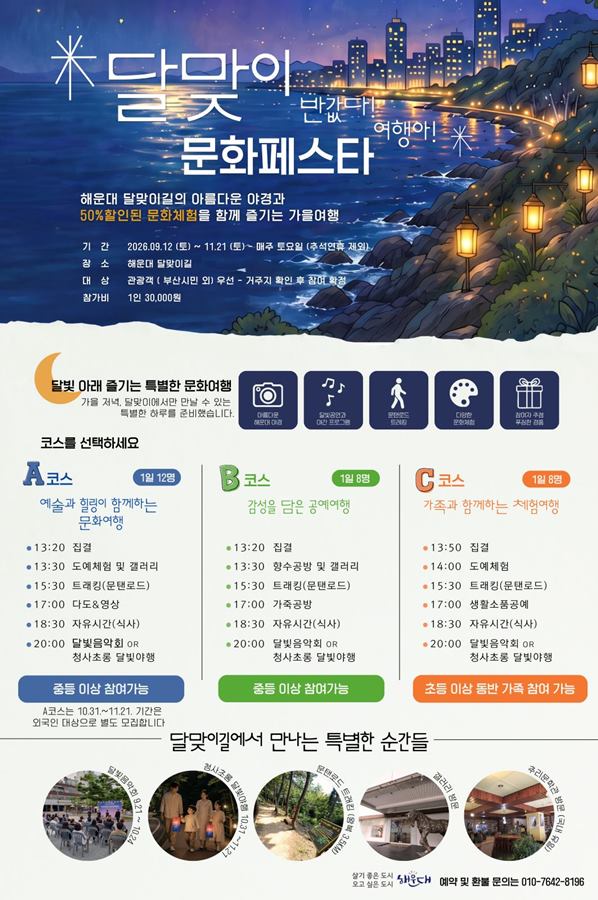 What to do this fall: Dalmaji Culture Festa
source: visit busanSpend Saturdays this fall with Dalmaji Culture Festa. The weekly event offers visitors a full day of cultural activities on Dalmaji Hill, one of Busan's most scenic coastal landscapes. Programs will be offered every Saturday from Sept. 12 to Nov. 21, except Sept. 26 (Chuseok).There are three packages available:* A Course (up to 12 people): Centered on the theme of “Art and Healing,” this course includes a pottery workshop and a traditional tea ceremony. Open to middle school students and older.* B Course (8 people): Participants can exercise their creativity through perfume making and leather crafting. Open to middle school students and older.* C Course (8 people): Designed for families with children, this course features easy-to-follow activities such as pottery and candle making. Open to elementary school students and older.* Note: A Course will be offered exclusively for international tourists from Oct. 31 to Nov. 21.A and B courses begin at 1:20 p.m., while C starts at 1:50 p.m. Each program includes a leisurely trek along Moon Tan Road. At 8 p.m., participants can choose between a moonlight concert and a walking tour featuring traditional Korean lanterns to conclude their experience.Tickets are available at a special 50% discount for just 30,000 won. For more information and reservations, please visit the website linked below. ※ Dalmaji Culture Festa, Saturdays from Sept. 12 to Nov. 21.◎ Reservations: Click ◎ Meeting Point: 64, Dalmaji-gil, Haeundae-gu, Busan◎ Google Map: Click ◎ Price: 30,000 won<Today's Vocabulary - 오늘의 단어>scenic: 경치 좋은 pottery: 도자기 creativity: 창의성 include: 포함하다 Editor: Song SoomiCopy Editors: Ryu Hyoseung, Anton J. Mapoy
What to do this fall: Dalmaji Culture Festa
source: visit busanSpend Saturdays this fall with Dalmaji Culture Festa. The weekly event offers visitors a full day of cultural activities on Dalmaji Hill, one of Busan's most scenic coastal landscapes. Programs will be offered every Saturday from Sept. 12 to Nov. 21, except Sept. 26 (Chuseok).There are three packages available:* A Course (up to 12 people): Centered on the theme of “Art and Healing,” this course includes a pottery workshop and a traditional tea ceremony. Open to middle school students and older.* B Course (8 people): Participants can exercise their creativity through perfume making and leather crafting. Open to middle school students and older.* C Course (8 people): Designed for families with children, this course features easy-to-follow activities such as pottery and candle making. Open to elementary school students and older.* Note: A Course will be offered exclusively for international tourists from Oct. 31 to Nov. 21.A and B courses begin at 1:20 p.m., while C starts at 1:50 p.m. Each program includes a leisurely trek along Moon Tan Road. At 8 p.m., participants can choose between a moonlight concert and a walking tour featuring traditional Korean lanterns to conclude their experience.Tickets are available at a special 50% discount for just 30,000 won. For more information and reservations, please visit the website linked below. ※ Dalmaji Culture Festa, Saturdays from Sept. 12 to Nov. 21.◎ Reservations: Click ◎ Meeting Point: 64, Dalmaji-gil, Haeundae-gu, Busan◎ Google Map: Click ◎ Price: 30,000 won<Today's Vocabulary - 오늘의 단어>scenic: 경치 좋은 pottery: 도자기 creativity: 창의성 include: 포함하다 Editor: Song SoomiCopy Editors: Ryu Hyoseung, Anton J. Mapoy
-
 Busan's favorite season: festival
Just as leaves put on their colorful coats with the arrival of autumn, Busan turns into a vibrant festival stage, with events taking place across the city from September through November. In this edition, we bring together some of Busan's signature fall festivals in one colorful picture. From contemporary art, cycling and film to webtoons, music and fireworks, there's something for everyone to enjoy. Also, keep your eyes peeled: Five Boogis are hiding throughout the illustration above, each enjoying the festivals in their own way. Found them all? Scan the QR code to check your answers, then upload a photo as proof of your catch for a chance to win a prize! ◎Entry period: Through Sept. 30◎Winners announced: Busan Children's Newspaper website (busan.go.kr/kids)※Click to participant the event<Autumn Festivals>■ Busan Biennale 부산비엔날레 Under the theme "Dissident Chorus," 46 artists and collectives from 22 countries examine the political and social possibilities of sound. * Date: Through Nov. 1* Venues: Busan Museum of Contemporary Art, Space OneZ and the former Busan Nam High School■ 2026 Seven Bridges Tour: Riding in Busan 2026 세븐 브릿지 투어 Four thousand cyclists will take a 77-km loop around the city, pedaling through challenging terrain and scenic vistas. Riders will cross four sea bridges and two undersea tunnels.* Date: Sept. 20* Venue: Major bridges and roads across Busan■ 2026 Busan International Rock Festival 2026 부산국제록페스티벌 Korea's longest-running international rock festival brings Korean and global acts to the banks of the Nakdong Estuary. Headline acts include heavy metal bands Avenged Sevenfold and Megadeth.* Date: Oct. 2-4* Venue: Samnak Eco Park■ 31st Busan International Film Festival 제31회 부산국제영화제 Asia's largest film festival signals the arrival of autumn in Busan. This year돴s edition honors Michelle Yeoh as Asian Filmmaker of the Year.* Date: Oct. 6-15* Venues: Busan Cinema Center, Nampo-dong and cinemas across Busan■ 10th Busan Global Webtoon Festival 제10회 부산글로벌웹툰페스티벌 The festival brings webtoons off the screen, connecting Korean and international creators with readers through exhibitions and events.* Date: To be held in October* Venue: Busan Cultural Content Complex (tentative)■ 21st Busan Fireworks Festival 제21회 부산불꽃축제 Watch a spectacular fireworks display light up the night sky against the iconic backdrop of Gwangandaegyo Bridge.* Date: Nov. 7* Venues: Gwangalli Beach, Haeundae Marine City, Igidae and surrounding areasLearn More: https://m.site.naver.com/2fejz
Busan's favorite season: festival
Just as leaves put on their colorful coats with the arrival of autumn, Busan turns into a vibrant festival stage, with events taking place across the city from September through November. In this edition, we bring together some of Busan's signature fall festivals in one colorful picture. From contemporary art, cycling and film to webtoons, music and fireworks, there's something for everyone to enjoy. Also, keep your eyes peeled: Five Boogis are hiding throughout the illustration above, each enjoying the festivals in their own way. Found them all? Scan the QR code to check your answers, then upload a photo as proof of your catch for a chance to win a prize! ◎Entry period: Through Sept. 30◎Winners announced: Busan Children's Newspaper website (busan.go.kr/kids)※Click to participant the event<Autumn Festivals>■ Busan Biennale 부산비엔날레 Under the theme "Dissident Chorus," 46 artists and collectives from 22 countries examine the political and social possibilities of sound. * Date: Through Nov. 1* Venues: Busan Museum of Contemporary Art, Space OneZ and the former Busan Nam High School■ 2026 Seven Bridges Tour: Riding in Busan 2026 세븐 브릿지 투어 Four thousand cyclists will take a 77-km loop around the city, pedaling through challenging terrain and scenic vistas. Riders will cross four sea bridges and two undersea tunnels.* Date: Sept. 20* Venue: Major bridges and roads across Busan■ 2026 Busan International Rock Festival 2026 부산국제록페스티벌 Korea's longest-running international rock festival brings Korean and global acts to the banks of the Nakdong Estuary. Headline acts include heavy metal bands Avenged Sevenfold and Megadeth.* Date: Oct. 2-4* Venue: Samnak Eco Park■ 31st Busan International Film Festival 제31회 부산국제영화제 Asia's largest film festival signals the arrival of autumn in Busan. This year돴s edition honors Michelle Yeoh as Asian Filmmaker of the Year.* Date: Oct. 6-15* Venues: Busan Cinema Center, Nampo-dong and cinemas across Busan■ 10th Busan Global Webtoon Festival 제10회 부산글로벌웹툰페스티벌 The festival brings webtoons off the screen, connecting Korean and international creators with readers through exhibitions and events.* Date: To be held in October* Venue: Busan Cultural Content Complex (tentative)■ 21st Busan Fireworks Festival 제21회 부산불꽃축제 Watch a spectacular fireworks display light up the night sky against the iconic backdrop of Gwangandaegyo Bridge.* Date: Nov. 7* Venues: Gwangalli Beach, Haeundae Marine City, Igidae and surrounding areasLearn More: https://m.site.naver.com/2fejz
-
 Head to Dadaepo Beach for fun, food and music this September
Discover a new side of Dadaepo Beach this September at the Starry Night Music Campnic. The event features an outdoor picnic and live music as part of 2026 Starry Night in Busan: Night Festa, the city’s signature nighttime tourism program. Making the most of Busan’s diverse landscapes and attractions, the program showcases the city’s distinctive after-dark charms through a variety of hands-on activities and engaging content. Every Friday and Saturday from Sept. 4 through 19, an exciting lineup of events will take place at Dadaepo Beach:- Sunset Eatnic: Enjoy a lively nighttime market against a panoramic sunset backdrop and sample a variety of snacks to make your evening even more enjoyable.- Night Music Campnic: Soak up a romantic evening under a canopy of stars with live music in a cozy camping and picnic setting. - Play Meongnic: A special sports day for your furry friends! Make unforgettable memories with your pet through a variety of activities specially designed for dogs. Only dogs weighing 9 kg or less are allowed in the designated area. In addition, a jogging event will take place on Sept. 18, inviting participants to slow down and reconnect with nature. Registration is required, with admission priced at 15,000 won. ※ 2026 Starry Night: Night Music Campnic, Sept. 4 through 19 ◎ Dadaepo Beach: 680 Dadae-ro, Dadae-dong, Saha-gu◎ Google Maps: Click ◎ Tickets: Click ◎ Tickets for the Play Meongnic program: Click <Today's Vocabulary - 오늘의 단어>showcase: 선보이다 soak: 흠뻑 젖다 unfogettable: 잊을 수 없는 admission: 입장료Editor: Song SoomiCopy Editors: Ryu Hyoseung, Anton J. Mapoy
Head to Dadaepo Beach for fun, food and music this September
Discover a new side of Dadaepo Beach this September at the Starry Night Music Campnic. The event features an outdoor picnic and live music as part of 2026 Starry Night in Busan: Night Festa, the city’s signature nighttime tourism program. Making the most of Busan’s diverse landscapes and attractions, the program showcases the city’s distinctive after-dark charms through a variety of hands-on activities and engaging content. Every Friday and Saturday from Sept. 4 through 19, an exciting lineup of events will take place at Dadaepo Beach:- Sunset Eatnic: Enjoy a lively nighttime market against a panoramic sunset backdrop and sample a variety of snacks to make your evening even more enjoyable.- Night Music Campnic: Soak up a romantic evening under a canopy of stars with live music in a cozy camping and picnic setting. - Play Meongnic: A special sports day for your furry friends! Make unforgettable memories with your pet through a variety of activities specially designed for dogs. Only dogs weighing 9 kg or less are allowed in the designated area. In addition, a jogging event will take place on Sept. 18, inviting participants to slow down and reconnect with nature. Registration is required, with admission priced at 15,000 won. ※ 2026 Starry Night: Night Music Campnic, Sept. 4 through 19 ◎ Dadaepo Beach: 680 Dadae-ro, Dadae-dong, Saha-gu◎ Google Maps: Click ◎ Tickets: Click ◎ Tickets for the Play Meongnic program: Click <Today's Vocabulary - 오늘의 단어>showcase: 선보이다 soak: 흠뻑 젖다 unfogettable: 잊을 수 없는 admission: 입장료Editor: Song SoomiCopy Editors: Ryu Hyoseung, Anton J. Mapoy
Food
-
.jpg&fileext=jpg&filetype=image/jpeg&filesize=94215) A sweet escape: Busan's best bingsu
source: Busan Tourism ArchiveFew things offer a sweeter escape from Korea's hot, humid summer than a bowl of bingsu. Made with ice shaved as fine and light as fresh snow, Korea's signature summer dessert comes in countless varieties - from timeless classics topped with sweet red beans, condensed milk and chewy injeolmi rice cakes to modern creations featuring fresh seasonal fruit, rich matcha and silky cream.Sampling different styles is part of the fun for locals and visitors alike, and bingsu's eye-catching presentation makes each bowl as enjoyable to photograph as it is to eat.To help readers find some of Busan's best bingsu, the Blue Ribbon Survey - Korea's first restaurant guide - recommends nine establishments known for their distinctive takes on the dessert. Head out and grab a bowl or two. After all, the hotter the summer gets, the more refreshing every spoonful becomes.🍨 Bingsu Eateries in Busan : Click <Today's Vocabulary - 오늘의 단어>escape: 도피 variety: 다양한 종류 recommend: 추천하다 establishment: 시설 distinctive: 특별한 Editor: Song SoomiCopy Editors: Ryu Hyoseung, Anton J. Mapoy
A sweet escape: Busan's best bingsu
source: Busan Tourism ArchiveFew things offer a sweeter escape from Korea's hot, humid summer than a bowl of bingsu. Made with ice shaved as fine and light as fresh snow, Korea's signature summer dessert comes in countless varieties - from timeless classics topped with sweet red beans, condensed milk and chewy injeolmi rice cakes to modern creations featuring fresh seasonal fruit, rich matcha and silky cream.Sampling different styles is part of the fun for locals and visitors alike, and bingsu's eye-catching presentation makes each bowl as enjoyable to photograph as it is to eat.To help readers find some of Busan's best bingsu, the Blue Ribbon Survey - Korea's first restaurant guide - recommends nine establishments known for their distinctive takes on the dessert. Head out and grab a bowl or two. After all, the hotter the summer gets, the more refreshing every spoonful becomes.🍨 Bingsu Eateries in Busan : Click <Today's Vocabulary - 오늘의 단어>escape: 도피 variety: 다양한 종류 recommend: 추천하다 establishment: 시설 distinctive: 특별한 Editor: Song SoomiCopy Editors: Ryu Hyoseung, Anton J. Mapoy
-
 A sweet escape: Busan's best bingsu
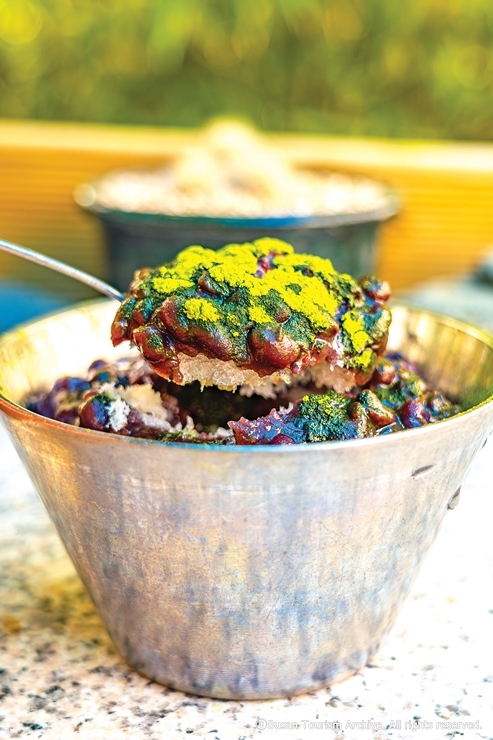
Few things offer a sweeter escape from Korea's hot, humid summer than a bowl of bingsu. Made with ice shaved as fine and light as fresh snow, Korea's signature summer dessert comes in countless varieties - from timeless classics topped with sweet red beans, condensed milk and chewy injeolmi rice cakes to modern creations featuring fresh seasonal fruit, rich matcha and silky cream. Sampling different styles is part of the fun for locals and visitors alike, and bingsu's eye-catching presentation makes each bowl as enjoyable to photograph as it is to eat. To help readers find some of Busan's best bingsu, the Blue Ribbon Survey - Korea's first restaurant guide - recommends nine establishments known for their distinctive takes on the dessert. Head out and grab a bowl or two. After all, the hotter the summer gets, the more refreshing every spoonful becomes.Namcheon Nokcha Patbingsu in Suyeong-gu is best known for its signature Boseong green tea patbingsu. The dessert features sweet red beans and green tea powder over finely shaved ice.Peach Bingsu at DADAE DE LAMugwort Rice Cake Bingsu (left) and Blueberry Bingsu (right) at GojaeClassic Patbingsu at Baekro AnggeumGoogle Maps: Click
A sweet escape: Busan's best bingsu
Few things offer a sweeter escape from Korea's hot, humid summer than a bowl of bingsu. Made with ice shaved as fine and light as fresh snow, Korea's signature summer dessert comes in countless varieties - from timeless classics topped with sweet red beans, condensed milk and chewy injeolmi rice cakes to modern creations featuring fresh seasonal fruit, rich matcha and silky cream. Sampling different styles is part of the fun for locals and visitors alike, and bingsu's eye-catching presentation makes each bowl as enjoyable to photograph as it is to eat. To help readers find some of Busan's best bingsu, the Blue Ribbon Survey - Korea's first restaurant guide - recommends nine establishments known for their distinctive takes on the dessert. Head out and grab a bowl or two. After all, the hotter the summer gets, the more refreshing every spoonful becomes.Namcheon Nokcha Patbingsu in Suyeong-gu is best known for its signature Boseong green tea patbingsu. The dessert features sweet red beans and green tea powder over finely shaved ice.Peach Bingsu at DADAE DE LAMugwort Rice Cake Bingsu (left) and Blueberry Bingsu (right) at GojaeClassic Patbingsu at Baekro AnggeumGoogle Maps: Click
-
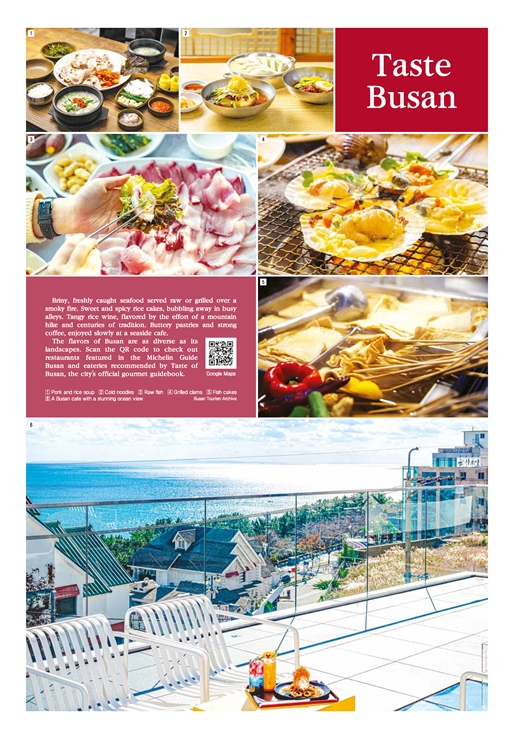 Taste Busan
Briny, freshly caught seafood served raw or grilled over a smoky fire. Sweet and spicy rice cakes, bubbling away in busy alleys. Tangy rice wine, flavored by the effort of a mountain hike and centuries of tradition. Buttery pastries and strong coffee, enjoyed slowly at a seaside cafe. The flavors of Busan are as diverse as its landscapes. Check out restaurants featured in the Michelin Guide Busan and eateries recommended by Taste of Busan, the city's official gourmet guidebook.
Taste Busan
Briny, freshly caught seafood served raw or grilled over a smoky fire. Sweet and spicy rice cakes, bubbling away in busy alleys. Tangy rice wine, flavored by the effort of a mountain hike and centuries of tradition. Buttery pastries and strong coffee, enjoyed slowly at a seaside cafe. The flavors of Busan are as diverse as its landscapes. Check out restaurants featured in the Michelin Guide Busan and eateries recommended by Taste of Busan, the city's official gourmet guidebook.
Life
-
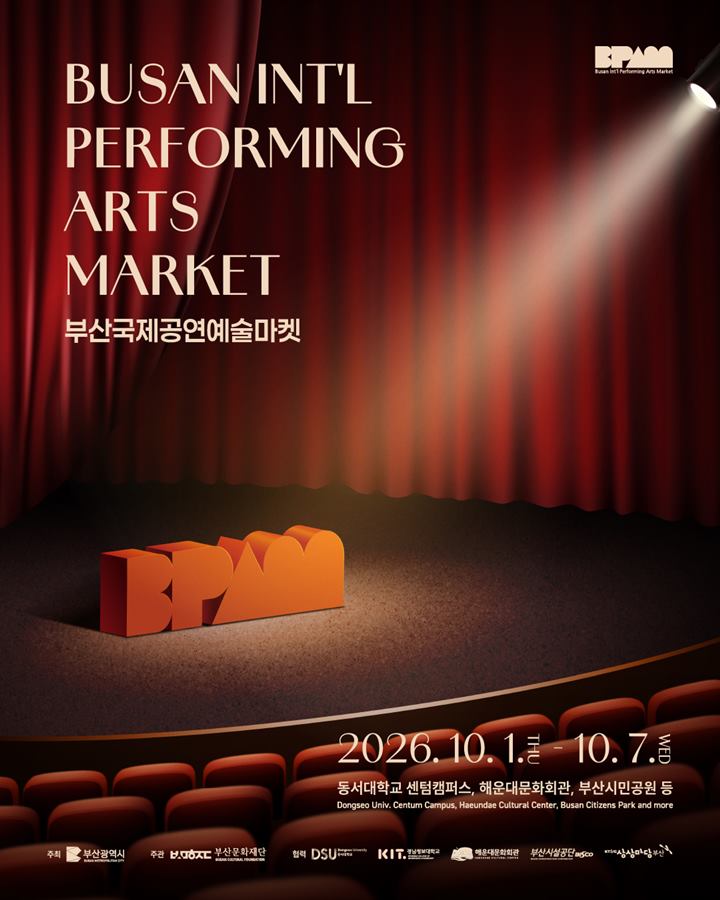 Experimental ‘Macbeth’ to open 2026 Busan International Performing Arts Market
The 2026 Busan International Performing Arts Market will bring about 100 works from 13 countries to Busan from Oct. 1 to 7, with performances at Dongseo University's Centum Campus, Haeundae Cultural Center, Busan Citizens Park and other venues across the city.Now in its fourth year, BPAM returns under the slogan "A New Wave of Performing Arts," with works from Korea, Japan, Taiwan, the United States, Spain and Canada. The event is built to connect artists, industry professionals and audiences, and organizers expect more than 400 performing arts professionals to attend.Ara Kim, a leading figure in Korean experimental theater, opens the festival on Oct. 1 with "The Sound of Macbeth" at Dongseo University's Sohyang Theater Woori Bank Hall. Drawing on Shakespeare's language and themes, the production reinterprets the tragedy of “Macbeth” through sound, using actors' voices, movement and music to explore the desires and destructive impulses that drive people to ruin.The festival program is organized into four main categories:Official: Full-length works and showcases invited by BPAM organizers.Wave: Projects by Busan-based artists.Next Stage: Performances by promising young local artists.Link: Collaborations between artists and local festivals, staged in neighborhoods and public spaces citywide.Street B, the market's street arts program, brings performances to Busan Citizens Park and other public spaces. Organizers selected 23 Korean and 11 international teams from 227 submissions.The full program and tickets are available on the BPAM website.※ 2026 Busan International Performing Arts Market, Oct. 1 to 7◎ Website: Click ◎ Tickets: Click <Today's Vocabulary - 오늘의 단어>experimental: 실험적인 tragedy: 비극 desire: 욕망 destructive: 파괴적인 submission: 출품작Editor: Song SoomiCopy Editors: Ryu Hyoseung, Anton J. Mapoy
Experimental ‘Macbeth’ to open 2026 Busan International Performing Arts Market
The 2026 Busan International Performing Arts Market will bring about 100 works from 13 countries to Busan from Oct. 1 to 7, with performances at Dongseo University's Centum Campus, Haeundae Cultural Center, Busan Citizens Park and other venues across the city.Now in its fourth year, BPAM returns under the slogan "A New Wave of Performing Arts," with works from Korea, Japan, Taiwan, the United States, Spain and Canada. The event is built to connect artists, industry professionals and audiences, and organizers expect more than 400 performing arts professionals to attend.Ara Kim, a leading figure in Korean experimental theater, opens the festival on Oct. 1 with "The Sound of Macbeth" at Dongseo University's Sohyang Theater Woori Bank Hall. Drawing on Shakespeare's language and themes, the production reinterprets the tragedy of “Macbeth” through sound, using actors' voices, movement and music to explore the desires and destructive impulses that drive people to ruin.The festival program is organized into four main categories:Official: Full-length works and showcases invited by BPAM organizers.Wave: Projects by Busan-based artists.Next Stage: Performances by promising young local artists.Link: Collaborations between artists and local festivals, staged in neighborhoods and public spaces citywide.Street B, the market's street arts program, brings performances to Busan Citizens Park and other public spaces. Organizers selected 23 Korean and 11 international teams from 227 submissions.The full program and tickets are available on the BPAM website.※ 2026 Busan International Performing Arts Market, Oct. 1 to 7◎ Website: Click ◎ Tickets: Click <Today's Vocabulary - 오늘의 단어>experimental: 실험적인 tragedy: 비극 desire: 욕망 destructive: 파괴적인 submission: 출품작Editor: Song SoomiCopy Editors: Ryu Hyoseung, Anton J. Mapoy
-
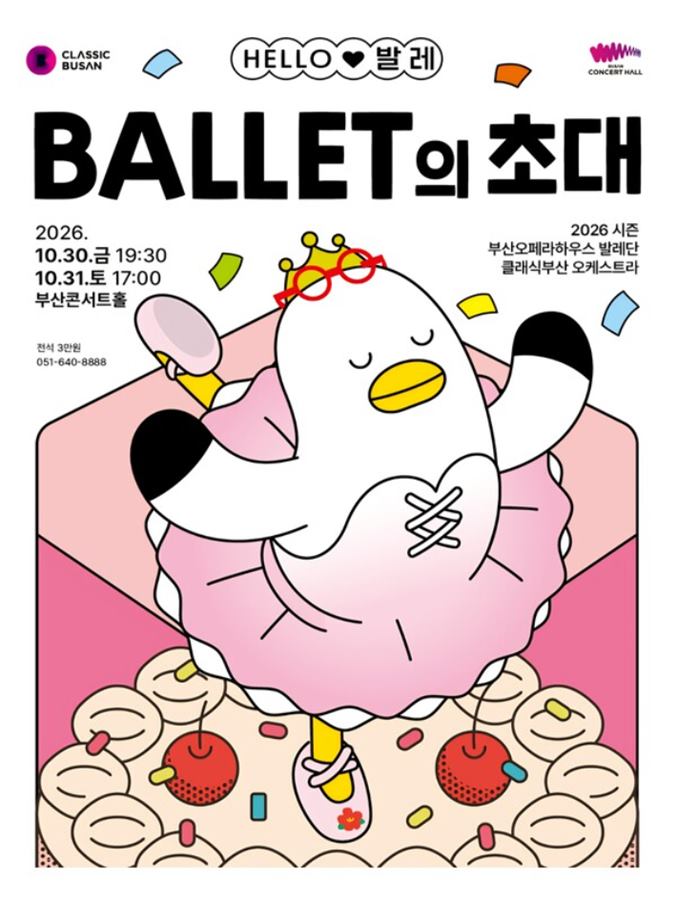 Family-friendly ballet at Busan Concert Hall, Oct. 30-31
Classic Busan will stage "Hello Ballet: An Invitation to Ballet" at Busan Concert Hall on Oct. 30 and 31, pairing dancers with a 55-piece orchestra.The 80-minute gala will feature scenes from major ballet works such as “Romeo and Juliet” and “Swan Lake.” The show will also include scenes from “Dear Ballerina,” an original work by the Busan Opera House Ballet Company. Hoi-woong Yoo, a former professional dancer, will provide commentary and narration, introducing each excerpt so first-time viewers can follow the stories and appreciate the beautiful dancing. Sung Jin Kim will conduct the Classic Busan Orchestra.The performance on Oct. 30 begins at 7:30 p.m., while the show on Oct. 31 starts at 5 p.m. All seats cost 30,000 won, with discounts for eligible groups, and are available through the Busan Concert Hall website and NOL Interpark Ticket. Children aged 4 and up may attend.※ “Hello Ballet: An Invitation to Ballet,” Oct. 30 and 31◎ Busan Concert Hall: 250 Dongpyeong-ro, Busanjin-gu- Dates and Times: Oct. 30, 7:30 p.m. / Oct. 31, 5 p.m.- Price: All seats 30,000 won◎ Tickets: - via the Busan Concert Hall: Click - via the NOL Interpark Tickets: Click ◎ Google Maps: Click <Today's Vocabulary - 오늘의 단어>invitation: 초대 commentary: 해설 conduct: 지휘하다 eligible: 자격이 있는Editor: Song SoomiCopy Editors: Ryu Hyoseung, Anton J. Mapoy
Family-friendly ballet at Busan Concert Hall, Oct. 30-31
Classic Busan will stage "Hello Ballet: An Invitation to Ballet" at Busan Concert Hall on Oct. 30 and 31, pairing dancers with a 55-piece orchestra.The 80-minute gala will feature scenes from major ballet works such as “Romeo and Juliet” and “Swan Lake.” The show will also include scenes from “Dear Ballerina,” an original work by the Busan Opera House Ballet Company. Hoi-woong Yoo, a former professional dancer, will provide commentary and narration, introducing each excerpt so first-time viewers can follow the stories and appreciate the beautiful dancing. Sung Jin Kim will conduct the Classic Busan Orchestra.The performance on Oct. 30 begins at 7:30 p.m., while the show on Oct. 31 starts at 5 p.m. All seats cost 30,000 won, with discounts for eligible groups, and are available through the Busan Concert Hall website and NOL Interpark Ticket. Children aged 4 and up may attend.※ “Hello Ballet: An Invitation to Ballet,” Oct. 30 and 31◎ Busan Concert Hall: 250 Dongpyeong-ro, Busanjin-gu- Dates and Times: Oct. 30, 7:30 p.m. / Oct. 31, 5 p.m.- Price: All seats 30,000 won◎ Tickets: - via the Busan Concert Hall: Click - via the NOL Interpark Tickets: Click ◎ Google Maps: Click <Today's Vocabulary - 오늘의 단어>invitation: 초대 commentary: 해설 conduct: 지휘하다 eligible: 자격이 있는Editor: Song SoomiCopy Editors: Ryu Hyoseung, Anton J. Mapoy
-
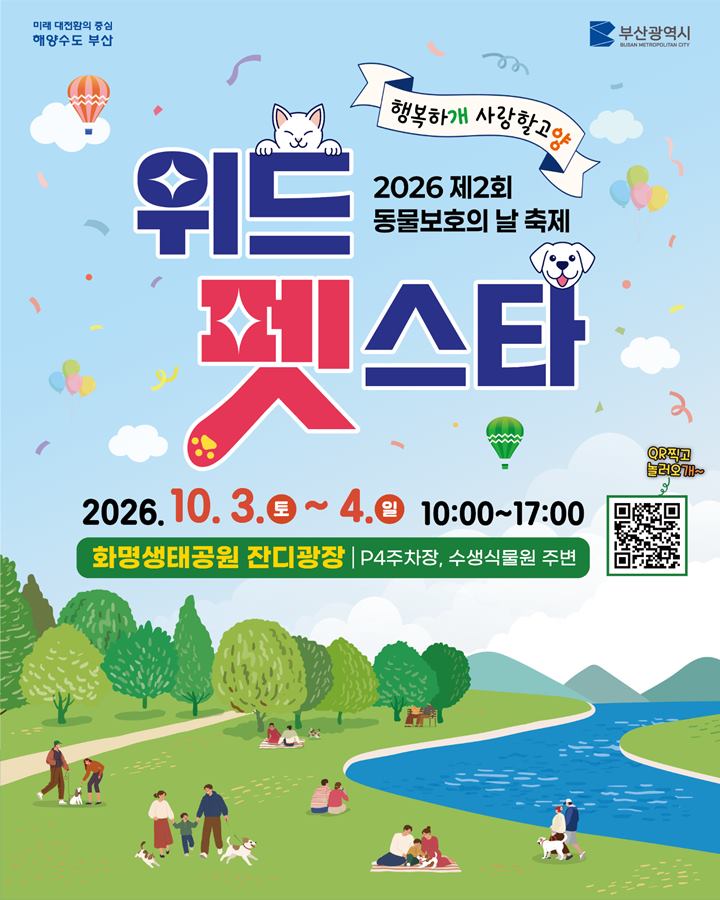 Celebrate World Animal Day at the 2026 With PETSTA this October
Busan will host the 2026 With PETSTA on Oct. 3 and 4 at the Lawn Square of Hwamyeong Eco Park. From 10 a.m. to 5 p.m. each day, the festival will bring together pet lovers and their furry companions for a weekend filled with fun and engaging activities. Under the theme of “Autumn Picnic with Dogs and Cats,” pet owners and those without pets are invited to enjoy the outdoors together amid lush greenery and crisp autumn air. With a focus on creating a welcoming space where everyone can mingle, the festival features a variety of programs, including a professional consultant on pet behavior and educational sessions on pet etiquette. Three signature programs require pre-registration through the designated website by Sept. 20: * Autumn Camping: Enjoy camping with your furry companion. Thirty families will receive a campsite free of charge and spend an autumn evening together at the park. Selection will be based on stories submitted with the application, such as how applicants first met their pets and the special memories they have shared. Selected participants can use the campsite from 2 p.m. on Oct. 3 until noon the following day. Only families whose pets are officially registered are eligible to participate. (Application: Click) * Daeng Daeng Run: Ready, set, run! This energetic activity invites 100 families to hit the trails with their dogs on Oct. 3. Participants will run approximately 2 kilometers through Hwamyeong Eco Park and receive a participation gift package that includes a T-shirt and dog treats. Applications are accepted on a first-come, first-served basis. (Application: Click) * Daeng Daeng Walk: Held on Oct. 4 to celebrate World Animal Day, this program invites participants to take a relaxing stroll with their beloved dogs. Participation is free, and participants will also receive gifts. Applications are accepted on a first-come, first-served basis. (Application: Click) In addition to the signature programs, a variety of on-site activities will be open to everyone. Highlights include informative sessions led by renowned dog trainer Hyung-wook Kang and veterinarian Myung-chul Kim, who will share advice on caring for dogs and cats. A special talent show will also give animal companions a chance to show off their unique personalities. From practical activities such as Pet CPR training and sanitary grooming sessions to playful experiences like pet tarot readings and personal color tests for dogs, there will be plenty to discover. Surrounded by soothing greenery and clear autumn skies, come enjoy a fun-filled weekend with your beloved pets and make memories to cherish for years to come. For more information on how to participate in specific programs, please visit the website linked below. ◎ 2026 With PETSTA, Oct. 3 to 4- Hwamyeong Eco Park: 1718-17 Hwamyeong-dong, Buk-gu- Google Maps: Click - Notice: Click <Today's Vocabulary - 오늘의 단어>companion: 동반자 amid: ~로 에워싸인 mingle: 함께 어울리다 informative: 정보성의 veterinarian: 수의사 Editor: Song SoomiCopy Editors: Ryu Hyoseung, Anton J. Mapoy
Celebrate World Animal Day at the 2026 With PETSTA this October
Busan will host the 2026 With PETSTA on Oct. 3 and 4 at the Lawn Square of Hwamyeong Eco Park. From 10 a.m. to 5 p.m. each day, the festival will bring together pet lovers and their furry companions for a weekend filled with fun and engaging activities. Under the theme of “Autumn Picnic with Dogs and Cats,” pet owners and those without pets are invited to enjoy the outdoors together amid lush greenery and crisp autumn air. With a focus on creating a welcoming space where everyone can mingle, the festival features a variety of programs, including a professional consultant on pet behavior and educational sessions on pet etiquette. Three signature programs require pre-registration through the designated website by Sept. 20: * Autumn Camping: Enjoy camping with your furry companion. Thirty families will receive a campsite free of charge and spend an autumn evening together at the park. Selection will be based on stories submitted with the application, such as how applicants first met their pets and the special memories they have shared. Selected participants can use the campsite from 2 p.m. on Oct. 3 until noon the following day. Only families whose pets are officially registered are eligible to participate. (Application: Click) * Daeng Daeng Run: Ready, set, run! This energetic activity invites 100 families to hit the trails with their dogs on Oct. 3. Participants will run approximately 2 kilometers through Hwamyeong Eco Park and receive a participation gift package that includes a T-shirt and dog treats. Applications are accepted on a first-come, first-served basis. (Application: Click) * Daeng Daeng Walk: Held on Oct. 4 to celebrate World Animal Day, this program invites participants to take a relaxing stroll with their beloved dogs. Participation is free, and participants will also receive gifts. Applications are accepted on a first-come, first-served basis. (Application: Click) In addition to the signature programs, a variety of on-site activities will be open to everyone. Highlights include informative sessions led by renowned dog trainer Hyung-wook Kang and veterinarian Myung-chul Kim, who will share advice on caring for dogs and cats. A special talent show will also give animal companions a chance to show off their unique personalities. From practical activities such as Pet CPR training and sanitary grooming sessions to playful experiences like pet tarot readings and personal color tests for dogs, there will be plenty to discover. Surrounded by soothing greenery and clear autumn skies, come enjoy a fun-filled weekend with your beloved pets and make memories to cherish for years to come. For more information on how to participate in specific programs, please visit the website linked below. ◎ 2026 With PETSTA, Oct. 3 to 4- Hwamyeong Eco Park: 1718-17 Hwamyeong-dong, Buk-gu- Google Maps: Click - Notice: Click <Today's Vocabulary - 오늘의 단어>companion: 동반자 amid: ~로 에워싸인 mingle: 함께 어울리다 informative: 정보성의 veterinarian: 수의사 Editor: Song SoomiCopy Editors: Ryu Hyoseung, Anton J. Mapoy
Views
-
 Chuseok seen through children's eyes
The Busan Children Newspaper held a contest to select the cover artwork for its autumn edition. Participants had to depict what Chuseok, Korea’s major autumn harvest holiday, means to them. Here are the five award-winning entries. From joyful family gatherings to whimsical scenes, each piece displays the warmth and festive spirit of Chuseok. [Grand Prize]Title: My Family’s Bountiful and Peaceful ChuseokArtist: Sumin Kim (3rd grader, Geoje Elementary School)Explanation:
My painting was inspired by “Irworobongdo,” a folding screen from the Joseon Dynasty, traditionally placed behind the king, symbolizing wishes for the nation's peace and prosperity and abundant harvests for the people. In the same spirit, I wanted to express my wishes for my family’s health and happiness as we celebrate Chuseok, a holiday associated with abundance and gratitude. Along with the iconic elements of Irowobongdo—the sun, moon and five peaks—I wanted to depict the abundance of the autumn harvest. My family dressed in Hanbok, traditional Korean clothing, is also featured in the painting, capturing a joyful holiday moment and highlighting the beauty of Korean traditions.
[Excellent Prize]Title: Happy Chuseok with a Spoonful of Moon Artist: Bomi Seo (6th grader, Dalsan Elementary School)Explanation:
My painting captures a happy family moment, with everyone gathered together and enjoying the Chuseok holiday. By climbing the ladder to the moon, we get ingredients for songpyeon, half-moon-shaped rice cakes traditionally enjoyed during Chuseok, and make this special holiday treat together.
[Excellent Prize]Title: Happy Chuseok Artist: Minha Kim (2nd grader, Sangdang Elementary School)Explanation:
I painted a delightful Chuseok moment with my family, with a wooden boat floating on a clear river. Since the number seven symbolizes good luck, I included seven persimmons, a classic autumn fruit.
[Participation Prize]Title: Moon Rabbit Is Showering Us with Happy Songpyeon Artist: Dayun Park (2nd grader, Gaya Elementary School)Explanation:
I imagined a special Chuseok scene, in which a moon rabbit brings happiness and smiles to my family from the huge full moon. With songpyeon and sparkling stars raining down on us, my painting captures my family smiling together and enjoying a wonderful Chuseok night.
[Participation Prize]Title: My family Travels with the Moonlight Whale on Chuseok Artist: Jiwoo Yun (6th grader, Mujeong Elementary School)Explanation:
The moonlight whale travels across Busan’s vast ocean, carrying my family’s love, hope, smiles, health and happiness. In the prosperous spirit of Chuseok, I wish happiness and all the best to every family celebrating the holiday.
Chuseok seen through children's eyes
The Busan Children Newspaper held a contest to select the cover artwork for its autumn edition. Participants had to depict what Chuseok, Korea’s major autumn harvest holiday, means to them. Here are the five award-winning entries. From joyful family gatherings to whimsical scenes, each piece displays the warmth and festive spirit of Chuseok. [Grand Prize]Title: My Family’s Bountiful and Peaceful ChuseokArtist: Sumin Kim (3rd grader, Geoje Elementary School)Explanation:
My painting was inspired by “Irworobongdo,” a folding screen from the Joseon Dynasty, traditionally placed behind the king, symbolizing wishes for the nation's peace and prosperity and abundant harvests for the people. In the same spirit, I wanted to express my wishes for my family’s health and happiness as we celebrate Chuseok, a holiday associated with abundance and gratitude. Along with the iconic elements of Irowobongdo—the sun, moon and five peaks—I wanted to depict the abundance of the autumn harvest. My family dressed in Hanbok, traditional Korean clothing, is also featured in the painting, capturing a joyful holiday moment and highlighting the beauty of Korean traditions.
[Excellent Prize]Title: Happy Chuseok with a Spoonful of Moon Artist: Bomi Seo (6th grader, Dalsan Elementary School)Explanation:
My painting captures a happy family moment, with everyone gathered together and enjoying the Chuseok holiday. By climbing the ladder to the moon, we get ingredients for songpyeon, half-moon-shaped rice cakes traditionally enjoyed during Chuseok, and make this special holiday treat together.
[Excellent Prize]Title: Happy Chuseok Artist: Minha Kim (2nd grader, Sangdang Elementary School)Explanation:
I painted a delightful Chuseok moment with my family, with a wooden boat floating on a clear river. Since the number seven symbolizes good luck, I included seven persimmons, a classic autumn fruit.
[Participation Prize]Title: Moon Rabbit Is Showering Us with Happy Songpyeon Artist: Dayun Park (2nd grader, Gaya Elementary School)Explanation:
I imagined a special Chuseok scene, in which a moon rabbit brings happiness and smiles to my family from the huge full moon. With songpyeon and sparkling stars raining down on us, my painting captures my family smiling together and enjoying a wonderful Chuseok night.
[Participation Prize]Title: My family Travels with the Moonlight Whale on Chuseok Artist: Jiwoo Yun (6th grader, Mujeong Elementary School)Explanation:
The moonlight whale travels across Busan’s vast ocean, carrying my family’s love, hope, smiles, health and happiness. In the prosperous spirit of Chuseok, I wish happiness and all the best to every family celebrating the holiday.
-
 Busan hosts largest UNESCO heritage gathering ever
The 48th session of the UNESCO World Heritage Committee, held in Busan, concluded successfully as the first edition hosted in Korea. A record 3,111 participants from 162 countries attended, the largest gathering in the committee's history. The sprawling Korea Pavilion at BEXCO drew more than 10,000 visitors daily, while merchandise sales topped 100 million won within five days.An installation inspired by the 19th-century painting "Gangsan Mujindo"(Rivers and Mountains Without End).Exhibition space inspired by "Seowon," the Confucian academies of the Joseon Dynasty.A child experiencing the "Yeongsanjae," a ritual that reenacts Buddha delivering the Lotus Sutra.Posters depicting Korea's cultural heritage.Children's drawings of Busan's national heritage.Media art combines the glow of ancient tombs with the melodies of the gayageum."Gakjajang," traditional calligraphic engraving."Geobukseon," Korea's iconic Turtle Ship.Busan Pavilion.
Busan hosts largest UNESCO heritage gathering ever
The 48th session of the UNESCO World Heritage Committee, held in Busan, concluded successfully as the first edition hosted in Korea. A record 3,111 participants from 162 countries attended, the largest gathering in the committee's history. The sprawling Korea Pavilion at BEXCO drew more than 10,000 visitors daily, while merchandise sales topped 100 million won within five days.An installation inspired by the 19th-century painting "Gangsan Mujindo"(Rivers and Mountains Without End).Exhibition space inspired by "Seowon," the Confucian academies of the Joseon Dynasty.A child experiencing the "Yeongsanjae," a ritual that reenacts Buddha delivering the Lotus Sutra.Posters depicting Korea's cultural heritage.Children's drawings of Busan's national heritage.Media art combines the glow of ancient tombs with the melodies of the gayageum."Gakjajang," traditional calligraphic engraving."Geobukseon," Korea's iconic Turtle Ship.Busan Pavilion.
-
 What to do in May
May is one of the best months to visit Busan. Festivals take over the city's most iconic settings - beaches, temples, and hillside neighborhoods - turning familiar landmarks into something worth seeing all over again. Lotus lanterns float above temple courtyards, sand sculptures rise along Haeundae's shore and the smell of fresh coffee drifts through the streets. Whether you're drawn by the food, the art or simply the energy of a city in full spring bloom, May is an exciting time to be in Busan.■ Busan Lotus Lantern Festival 부산연등회◎Date: May 1 to 17◎Location: Song Sanghyeon Square, Busan Citizens Park In celebration of Buddha's birthday on May 24, various lotus lanterns will color Song Sanghyeon Square with an enchanting display. Wishing for good fortune, citizens can enjoy a delightful stroll among delicate lights featuring unique designs that capture the eye. On May 16, a street parade will take place at Busan Citizens Park, inviting people to hold lanterns and march together. ■ Global Yeong-do Coffee Festival 영도 커피페스티벌◎Date: May 15 to 17◎Location: Amir Park This vibrant festival has returned to brew Yeong-do into a hot spot! As the region rises as a home to numerous charming cafes, the event offers a perfect opportunity to enjoy unique coffees from around the world and experience themed activities such as roasting beans and making pour over coffee. ■ Haeundae Sand Festival 해운대모래축제◎Date: May 15 to 18◎Location: Haeundae Beach Witness the magical transformation of sand at Haeundae Beach! Eleven professional sculptors from Korea, China and France will turn ordinary sand into massive, meticulous art pieces under the theme of "Time Travel in Busan." While the festival runs for three days, the majestic sand sculptures will remain on display until June 14 for all to enjoy. ■ Centum Beer Festival 센텀맥주축제◎Date: May 22 to 31◎Location: Busan Cinema Center Enjoy ice-cold, all-you-can-drink beer with a single admission ticket! This year, the festival has enhanced its appeal by expanding its food zone and participatory activities. While the core identity remains focused on high-quality beer, each day will feature new entertainment themes, ranging from costumes and tango to retro nights.■ Busan Global Citizen Festival 부산세계시민축제◎Date: May 23◎Location: North Port Waterfront Park (Chinsu Park) North Port will become a cultural hub where K-culture and global traditions converge. The Busan Global Citizen Festival invites you to experience cultures from around the world. While enjoying international delicacies, charming performances and engaging programs, you will find yourself feeling closer to the world and to our international neighbors. More events: Click
What to do in May
May is one of the best months to visit Busan. Festivals take over the city's most iconic settings - beaches, temples, and hillside neighborhoods - turning familiar landmarks into something worth seeing all over again. Lotus lanterns float above temple courtyards, sand sculptures rise along Haeundae's shore and the smell of fresh coffee drifts through the streets. Whether you're drawn by the food, the art or simply the energy of a city in full spring bloom, May is an exciting time to be in Busan.■ Busan Lotus Lantern Festival 부산연등회◎Date: May 1 to 17◎Location: Song Sanghyeon Square, Busan Citizens Park In celebration of Buddha's birthday on May 24, various lotus lanterns will color Song Sanghyeon Square with an enchanting display. Wishing for good fortune, citizens can enjoy a delightful stroll among delicate lights featuring unique designs that capture the eye. On May 16, a street parade will take place at Busan Citizens Park, inviting people to hold lanterns and march together. ■ Global Yeong-do Coffee Festival 영도 커피페스티벌◎Date: May 15 to 17◎Location: Amir Park This vibrant festival has returned to brew Yeong-do into a hot spot! As the region rises as a home to numerous charming cafes, the event offers a perfect opportunity to enjoy unique coffees from around the world and experience themed activities such as roasting beans and making pour over coffee. ■ Haeundae Sand Festival 해운대모래축제◎Date: May 15 to 18◎Location: Haeundae Beach Witness the magical transformation of sand at Haeundae Beach! Eleven professional sculptors from Korea, China and France will turn ordinary sand into massive, meticulous art pieces under the theme of "Time Travel in Busan." While the festival runs for three days, the majestic sand sculptures will remain on display until June 14 for all to enjoy. ■ Centum Beer Festival 센텀맥주축제◎Date: May 22 to 31◎Location: Busan Cinema Center Enjoy ice-cold, all-you-can-drink beer with a single admission ticket! This year, the festival has enhanced its appeal by expanding its food zone and participatory activities. While the core identity remains focused on high-quality beer, each day will feature new entertainment themes, ranging from costumes and tango to retro nights.■ Busan Global Citizen Festival 부산세계시민축제◎Date: May 23◎Location: North Port Waterfront Park (Chinsu Park) North Port will become a cultural hub where K-culture and global traditions converge. The Busan Global Citizen Festival invites you to experience cultures from around the world. While enjoying international delicacies, charming performances and engaging programs, you will find yourself feeling closer to the world and to our international neighbors. More events: Click

 busan.go.kr +