

News
All hands on deck in Korea's maritime capital

Busan New Port in Gangseo-gu District is poised to become a global shipping and logistics hub for the emerging era of Arctic shipping, with plans to supply carbon-free and low-carbon fuels.
Busan is strengthening its maritime identity, anchored by one of the world's busiest ports and a growing network of maritime industries and public institutions.

Busan moved record volumes of cargo in 2025.
This identity is founded on Busan Port, the world's seventh-largest container port and second-largest transshipment hub. In 2025, the port handled a record 24.88 million TEUs - the standard unit for measuring container cargo - a 2% increase over the previous year. Transshipment cargo, which accounted for 14.1 million TEUs, or 57% of the total, continues to anchor Busan's role as Northeast Asia's premier logistics gateway.
The city is also drawing major shipping companies to its shores. SK Shipping and H-Line Shipping announced the relocation of their head offices to Busan in December 2025, followed by HMM, Korea's largest container carrier, which registered its new headquarters in Busan in May 2026. Heung-A Shipping confirmed its own relocation in July. Together, these moves are expected to strengthen shipping, port operations, ship management and maritime brokerage in the city while drawing skilled professionals to the region.
Busan's administrative and research capabilities are expanding alongside its private sector. Following the Ministry of Oceans and Fisheries' relocation to Busan in December 2025, the city is now home to several of Korea's key maritime institutions, including the Busan Port Authority, the Korea Ocean Business Corporation, the Korea Maritime Institute, the Korea Institute of Ocean Science & Technology and the Korea Hydrographic and Oceanographic Agency - creating a more integrated ecosystem linking policy, business support and research.

The city's legal infrastructure is also developing. The Busan Maritime and International Commercial Court is scheduled to open in March 2028 at the Dong-gu Cultural Platform. Once established, the court will specialize in maritime and international commercial disputes, thereby reinforcing Busan's role as a hub for dispute resolution.
_cw5.jpg&fileext=jpg&filetype=image/jpeg&filesize=69485)
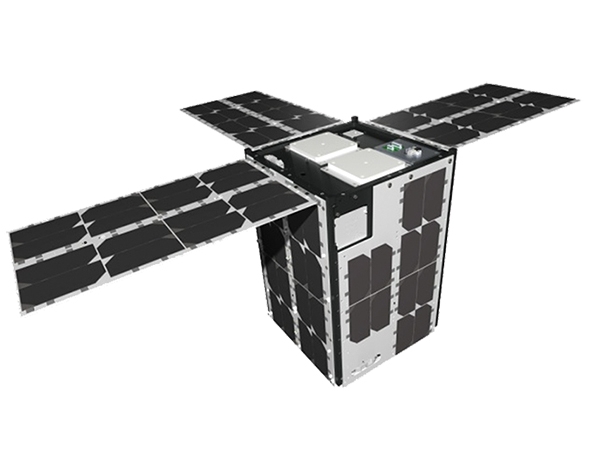
The BusanSat satellite measures fine dust.
Busan has also started space-based ocean observation. BusanSat, Korea's first municipal nanosatellite dedicated to ocean monitoring, launched successfully into orbit in May. The satellite will spend about a year tracking ocean surface conditions and fine particulate matter across Busan Port, the Yellow Sea and parts of the Pacific.