

Life
What Busan can learn from Barcelona's overtourism fight

The Sagrada Família, Gaudi's unfinished basilica
Bathed in Mediterranean sunshine and blessed with a beautiful coastline, Barcelona is Spain's second-largest city and one of Europe's most celebrated travel destinations. The city and its surrounding areas drew 26.1 million visitors in 2025.
Barcelona shares a special connection with Busan. The two cities established sister-city ties in 1983 and have much in common: distinctive urban landscapes shaped by the sea and mountains, thriving ports and vibrant cultural festivals.
Yet Barcelona's popularity has come at a cost. The city has become one of the most prominent symbols of overtourism, as growing visitor numbers put pressure on housing, public spaces and everyday life. Rising rents, crowded streets and persistent noise have fueled residents' anger, and some have left neighborhoods they called home for years. In response, Barcelona is shifting its focus from attracting more visitors to a more sustainable tourism model, one that lets the industry thrive without disrupting residents' lives.
During a visit by Busan city officials to Barcelona in September, José Antonio Donaire Benito, Barcelona's commissioner for sustainable tourism management, summed up the philosophy behind this shift: "Protecting the city's unique identity and the everyday lives of its residents is the essence of sustainable tourism."
This message is worth considering for Busan, a coastal destination with a growing global profile that faces a similar challenge: balancing tourism growth with residents' quality of life.
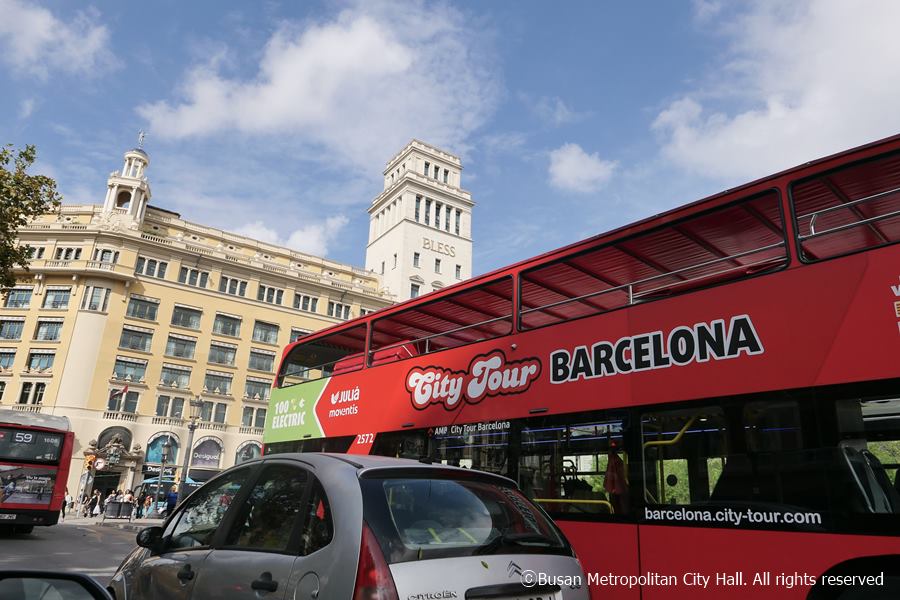
Barcelona City Tour bus
Growing pains in Busan's tourism 'golden age'
Busan's tourism industry has been enjoying remarkable growth. From January through August this year, the city welcomed 3,434,620 international visitors, passing the 3 million mark in early August, two months earlier than last year. Arrivals topped 500,000 in both July and August. The city is also drawing visitors from a wider range of countries, with growing numbers arriving not only from Asian markets but also from long-haul markets such as the United States and France.
The influx is bringing fresh energy to major commercial districts such as Haeundae, Gwangalli and Nampo-dong. But it also raises questions about how much pressure the city's neighborhoods and infrastructure can withstand. While increased foot traffic benefits local businesses, residents may face growing disruption from traffic congestion, noise and litter. These challenges make Barcelona's experience particularly relevant. Having grappled with the effects of mass tourism for years, Barcelona is now looking for ways to make tourism more beneficial to residents without compromising their daily lives.
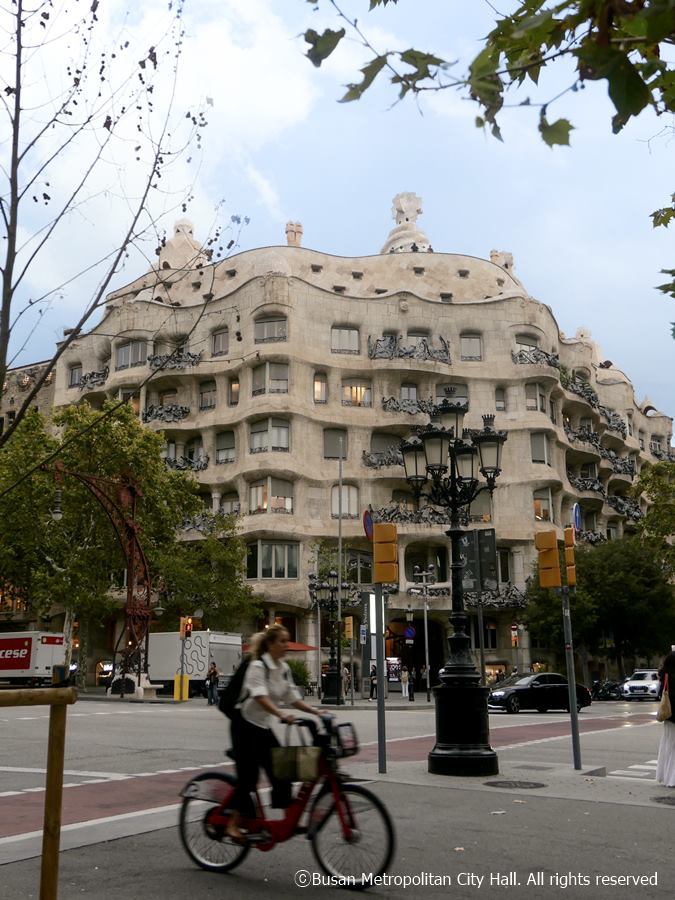
Casa Milà, apartment building designed by Antoni Gaudi
Homes, markets and buses for residents
Barcelona's approach to overtourism begins with a fundamental priority: protecting residents' access to housing and essential services. As tourist accommodation has spread through residential neighborhoods, the city has introduced measures to limit its impact. In 2017, Barcelona implemented the Special Urban Plan for Tourist Accommodation, known as PEUAT, which restricts new tourist accommodation in areas already under heavy pressure. The city has also announced that it will not renew the licenses of about 10,000 tourist apartments when they expire in November 2028, aiming to return these properties to residential use and ease the housing shortage.
Traditional markets are another focus. At La Boqueria, one of the city's best-known attractions, authorities have sought to preserve the market's role as a place where residents can shop for everyday groceries. Under a planned regulation backed by more than 90 percent of the market's vendors, fresh and traditional products, such as vegetables, fruit and fish, would need to make up at least half of the market's overall offering, with prepared takeaway food capped at 50 percent. The aim is to keep the market from becoming dominated by stalls selling snacks to tourists at the expense of local shoppers.
One remarkable example of Barcelona's resident-first approach involves public transportation. Near Park Güell, the No. 116 neighborhood bus winds its way through the area's steep hillside streets. The route was designed mainly to serve residents, particularly older people. But as tourists began following directions from digital map services, the buses became so crowded that residents often struggled to board.
Barcelona responded with an unusual measure: having the route removed from Google Maps and Apple Maps in 2024. By making the service less visible to tourists, the city restored convenient access for neighborhood residents. The change shifted some of the crowding to other lines, which the city has since reinforced. The initiative drew attention as a simple yet innovative way to reduce tourist pressure through digital platforms.
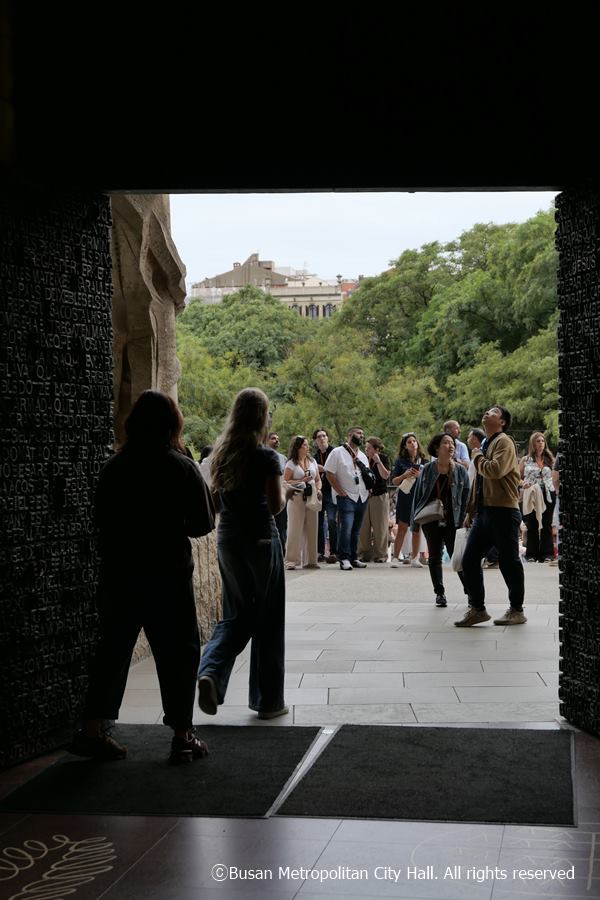
Visitors leaving the Sagrada Família
Putting tourism revenue to work for residents
Barcelona is also looking for ways to ensure that tourism contributes more directly to local communities, and tourist taxes are part of this strategy. In addition to Catalonia's regional tourist tax, Barcelona imposes a municipal surcharge on overnight stays and cruise passengers, with plans to increase certain charges over the coming years. The city is directing part of this revenue toward protecting everyday commerce in neighborhoods under intense tourism pressure. It has also bought commercial spaces to make room for businesses that serve residents' daily needs, rather than those aimed at tourists.
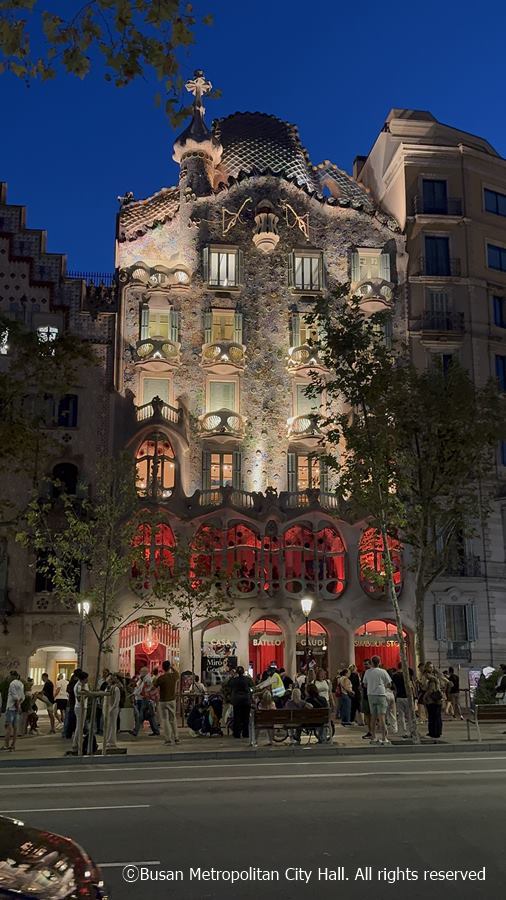
Casa Batlló, a Gaudí-designed house, at night
Keeping crowds and traffic in check
Data-driven technology and tighter regulation are another part of Barcelona's strategy for managing tourist traffic. To prevent large tour buses from overwhelming the city center, Barcelona has restricted where and when they can stop. Under its Zona Bus system, drivers must use designated stopping areas, some of which require advance booking, helping regulate access to major attractions. With pick-up and drop-off times limited to 10 minutes, the measures are designed to reduce the number of vehicles circulating through busy streets and ease traffic congestion.
The city is also paying closer attention to areas with particularly heavy visitor traffic, which it designates as high-traffic areas, known in Catalan as Espais de Gran Afluència (EGA). Through a dedicated data office, Barcelona is collecting and analyzing information on how visitors move through these areas. This information can help authorities identify high-pressure areas and develop strategies to distribute visitors more evenly across the city. One idea under consideration is an app that alerts visitors to crowded sites in real time and suggests alternatives.
.jpg&fileext=jpg&filetype=image/jpeg&filesize=181061)
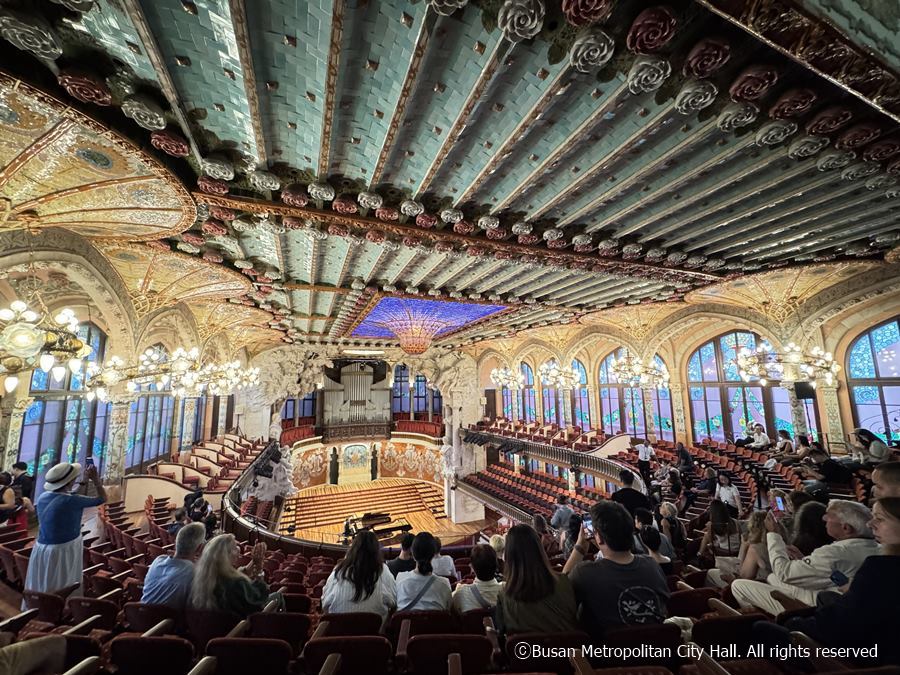
Palau de la Música Catalana
Lessons for Busan
The area around the Sagrada Família offers another example of Barcelona's efforts to balance tourism with neighborhood life. Through a program called Let's Play in the Squares, the city has organized Saturday play activities for local families and children in the gardens of a square beside the basilica, reclaiming the space for everyday community use.
For Busan, which is rapidly strengthening its position as an international coastal destination, the central question is no longer simply how to attract more visitors. It is how to welcome them while protecting residents' daily lives. From regulating tourist accommodation and managing crowded streets to supporting neighborhood businesses, Barcelona's policies share a common principle: Residents' quality of life must remain a priority. A truly sustainable tourism city is not just a place the world wants to visit. It is also a place where its own residents can continue to live well. That is the balance Busan now aims to strike as it welcomes a growing number of visitors.