

Life
Why Chuseok is more than 'Korean Thanksgiving'
cw25.jpg&fileext=jpg&filetype=image/jpeg&filesize=403473)
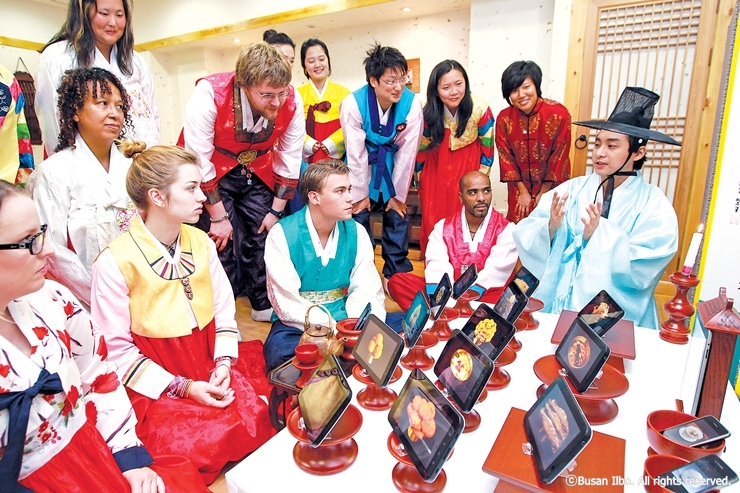
International students learn about charye, a memorial service for one's ancestors, at Inje Uni.
cw15.jpg&fileext=jpg&filetype=image/jpeg&filesize=390087)
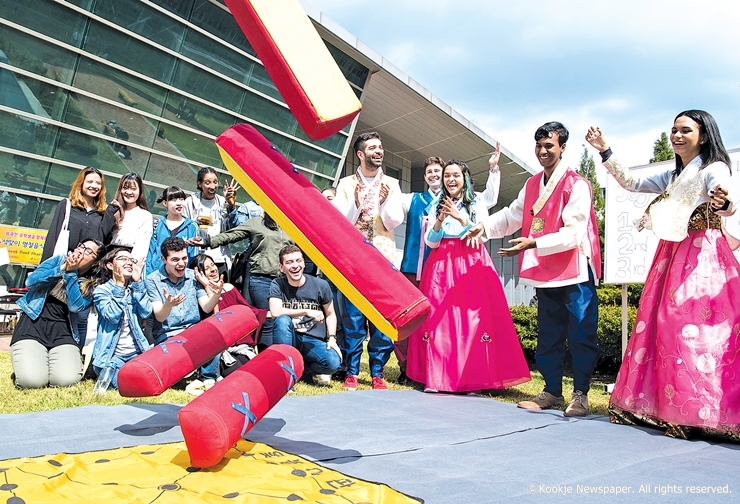
Playing yutnori at Dongseo Uni.
The Chuseok holiday, which falls Sept. 24-26 this year, is one of Korea's most beloved traditions. Because it follows the lunar calendar and lands on the 15th day of the eighth lunar month, it is also called Hangawi - "the great middle of autumn."
The holiday was originally a time to give thanks for nature's bounty, wish for a plentiful harvest and share meaningful moments with family. Much of that still holds. Many people travel to their hometowns to reunite with relatives, while others simply enjoy a few days off together.
Chuseok is often described in English as "Korean Thanksgiving," and the comparison holds up in places. Both holidays celebrate autumn's abundance, and both bring families around the same table.
The timing and the purpose differ, though. Chuseok traditionally came before the main harvest, when farmers gathered the year's first crops and hoped for more to come. Thanksgiving in the United States falls on the fourth Thursday in November, after the harvest is in, as a time to appreciate what it yielded.
Chuseok grew out of Korea's long agricultural history. Historical records suggest people were already celebrating around the 15th day of the eighth lunar month during the early Silla period, roughly 2,000 years ago, gathering to share food, sing and dance. Over the centuries, the occasion evolved into a day for wishing for a good harvest and honoring ancestors.
That second part is what most clearly sets Chuseok apart from its American counterpart. On the morning of the holiday, some families hold charye, a ceremony to express gratitude and respect to previous generations. The charye table is laid with dishes made from freshly harvested ingredients, including new-season rice and seasonal fruit. Afterward, the family shares the food and may head to the family gravesite for seongmyo, a visit to pay respects. In recent years, more households have chosen to simplify these customs or skip them altogether.
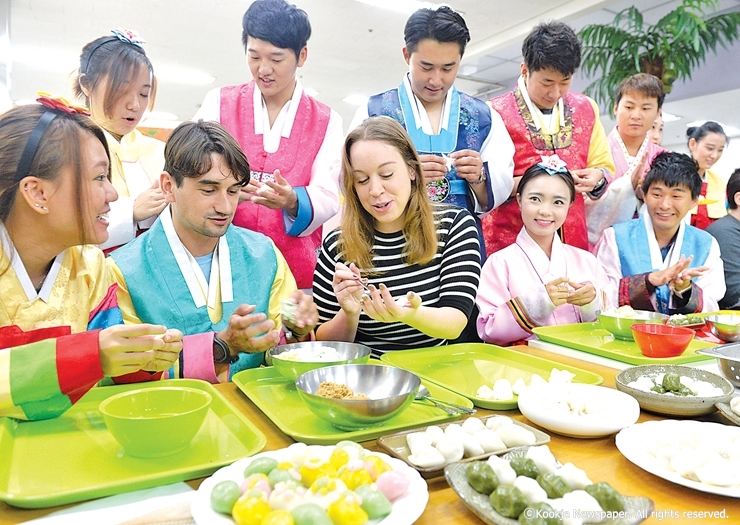
No Chuseok spread is complete without songpyeon, one of Korea's most recognizable holiday treats. The half-moon-shaped rice cakes are formed from rice flour dough and stuffed with fillings such as sesame seeds, beans and chestnuts. Steaming them over a bed of pine needles gives them a delicate, fragrant finish.
Other favorites round out the meal: jeon, savory pan-fried fritters; japchae, stir-fried glass noodles and vegetables; galbi-jjim, beef short ribs braised in a rich sauce; namul, seasoned vegetables; and whatever fruit is in season. Together they add up to a feast built on the abundance of the harvest.
Chuseok also comes with a full slate of games. In yutnori, a board game, players advance their pieces according to how four wooden sticks land when thrown. Depending on the region, families may also enjoy ganggangsullae, a circle dance; ssireum, Korean wrestling; and juldarigi, a tug-of-war.
These pastimes have long given families and neighbors a reason to celebrate the harvest side by side - and to strengthen the bonds that hold a community together.
<Chuseok Cultural Event)
■ Special Exhibition "A Time We Ran Together: Stories of Horses by Our Side" at Bokcheon Museum
To mark Bokcheon Museum's 30th anniversary, this special exhibition traces the relationship between people and horses throughout Korean history. It presents 316 pieces in 154 sets, including two designated Treasures, ranging from Gaya horse trappings to Joseon dynasty documents and paintings.
* Date: Sept. 22-Nov. 22
* Address: 63, Bokcheon-ro, Dongnae-gu
■ Sweet Hangawi Playground at Jeonggwan Museum
Explore artifacts in the special exhibition and take a quiz for a shot at the "Full Moon Capsule" lucky draw, then head to the outdoor courtyard for traditional folk games. The program is open to families with children on a first-come, first-served basis, with 100 admitted daily.
* Date: Sept. 25-26
* Address: 122, Jeonggwanjungang-ro, Jeonggwan-myeon, Gijang-gun
■ Hangawi Play Market at Busan National Science Museum
Step into Chuseok with folk-games, holiday crafts, family movies and making rice cakes. Register through the Smart Ticketing system in advance, or sign up on-site. The museum is closed Sept. 25, Chuseok Day.
* Date: Sept. 24, 26, 27
* Address: 59, Dongbusan-gwangwang 6-ro, Gijang-eup, Gijang-gun
■ Chuseok Cultural Events at Korea National Maritime Museum
Enjoy traditional folk games such as yutnori and tuho, plus the Hanbok Diver Feeding Show at 11:30 a.m. Sept. 25, when divers perform in hanbok, Korean traditional dress. Parking is free throughout the holiday.
* Date: Sept. 24-27
* Address: 45, Haeyang-ro 301beon-gil, Yeongdo-gu