

Food
The street foods that define Busan winters
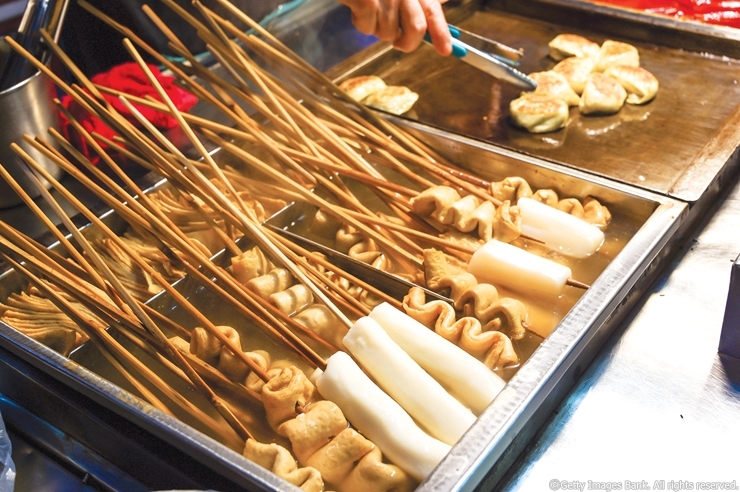
Skeweres of eomuk and multteok are reasonably priced, ranging from 1,000 to 1,500 won each. Most street vendors offer free soup in paper cups, making it a great way to enjoy them together.
In any neighborhood and at any hour, people will stand around vinyl tents, warmed by steam emanating from cooktops. These food stalls, ubiquitous nationwide, specialize in Korean snacks and beckon peckish passersby with promises of soul-warming meals. Through that magic combination of flavor and nostalgia, these comfort foods have the power to cure whatever ails you.
Broken heart? Tteokbokki.
Job-related stress? Gimbap.
Existential crisis? Ramyeon.
When what ails you is the weather, specifically biting winds and freezing temperatures, healing comes in two forms: "Eomuk," fish cakes, or "multteok," rice cakes in broth. These cold-weather staples warm the body and the mind.
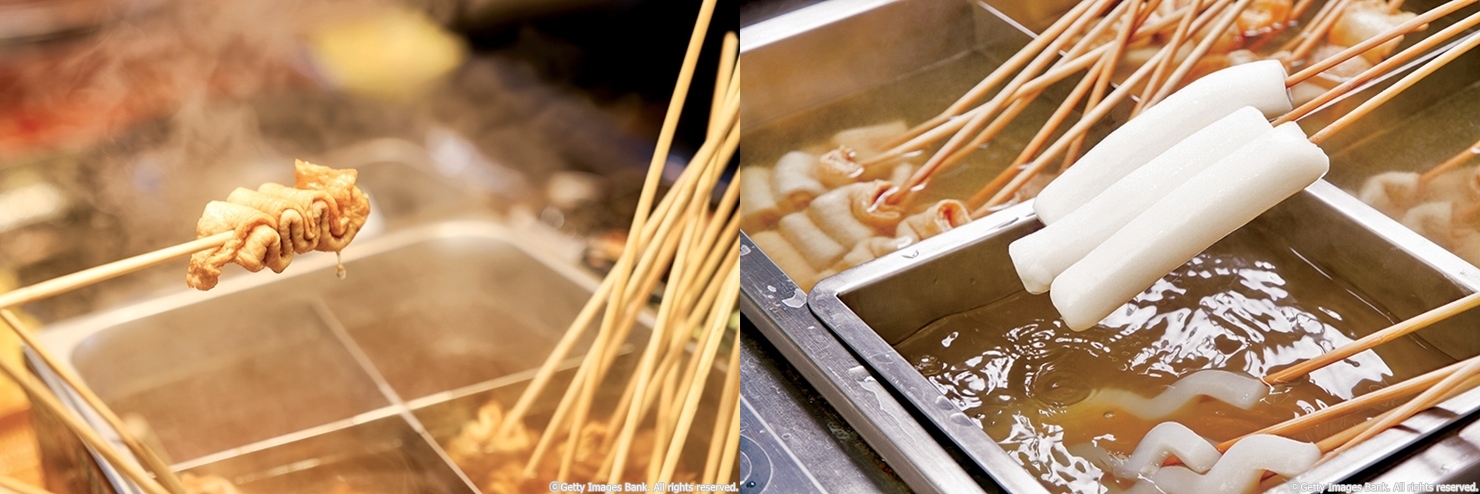
Eomuk and multteok are favored snacks year-round, but especially in winter.
■Busan eomuk
When it's cold out, many Koreans instinctively reach for eomuk. If you've spent any time wandering Busan streets, you know exactly what that is: Ribbons of skewered fish cakes relaxing in a warm and savory broth.
While enjoyed nationwide, Busan eomuk stands apart. Thanks to Busan's coastal location and access to fresh seafood, Busan eomuk delivers rich flavor and a firm bite, earning its place among the city's must-try specialties.
Eomuk traces its roots to Japanese "kamaboko" and "oden," the most familiar version being the pink-and-white half-moon fish cakes floating in a bowl of ramen. Fish cakes were introduced in Korea during the Japanese Occupation. Given Busan's port and proximity to Japan, several fish cake factories were established in the city. After liberation, Korean producers adapted the fish cakes to suit local tastes, creating what is now recognized as authentic, Busan-style eomuk.
What truly distinguishes Busan eomuk today is quality. Many Busan producers use up to 70 percent fish meat, well above the typical 50 to 60 percent of other producers, resulting in a cleaner, more robust taste (the filler is usually starch, flour and vegetables). Innovation continues with creative additions like black sesame or cream cheese, as well as playful forms such as eomuk noodles and croquettes. The classics remain, but there is always something new to discover.
■Multteok
Eomuk's longtime partner is multteok, long, chewy rice cakes skewered and gently soaked in the same fish cake broth. The result is a tender, springy and subtly savory snack. Common at Busan snack stalls since at least the 1960s, multteok is rarely found outside the region.
Sometimes used as a base for tteokbokki, multteok adds an extra layer of depth to the familiar sweet-spicy dish. For the most authentic experience, head to traditional markets in Jagalchi or Bujeon, where eomuk and multteok attract long lines at bustling street stalls.